12 Cat Wall Shelves Ideas to Create the Ultimate Indoor Cat Playground
If your cat loves climbing, jumping, and watching the world from above, adding wall shelves can completely change their indoor environment. Cat wall shelves make use of vertical space, keeping curious cats active while saving valuable floor space. From floating walkways and cozy hammocks to modern hexagon hideouts and natural climbing trees, these creative setups can fit nearly any home style.
Whether you have a playful kitten or a laid-back senior cat, these cat wall shelves ideas combine comfort, enrichment, and stylish home décor. Explore these inspiring designs to build a space your feline friend will love every single day.
Modern Floating Cat Wall Shelves Ideas with Hammock Bridge
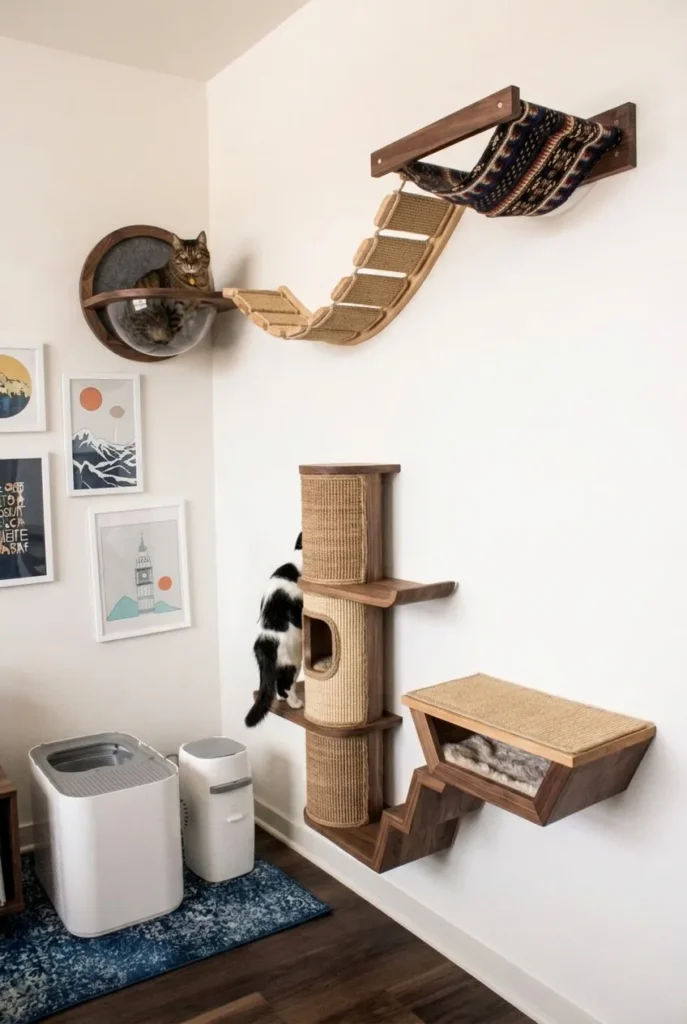
Create an exciting climbing route by installing floating wooden shelves connected with a suspended fabric bridge. Add a cozy wall-mounted bed and scratching post to give your cat multiple places to rest and play. The clean wood finish blends beautifully with modern interiors while encouraging healthy exercise and exploration.
- Why You’ll Love It: Combines climbing, lounging, and scratching in one sleek design.
- Best For: Modern apartments and small homes.
- Budget Tip: Build simple floating shelves yourself and add an affordable rope bridge.
Luxury Cat Wall Shelves Ideas with Tree Climbing Tower
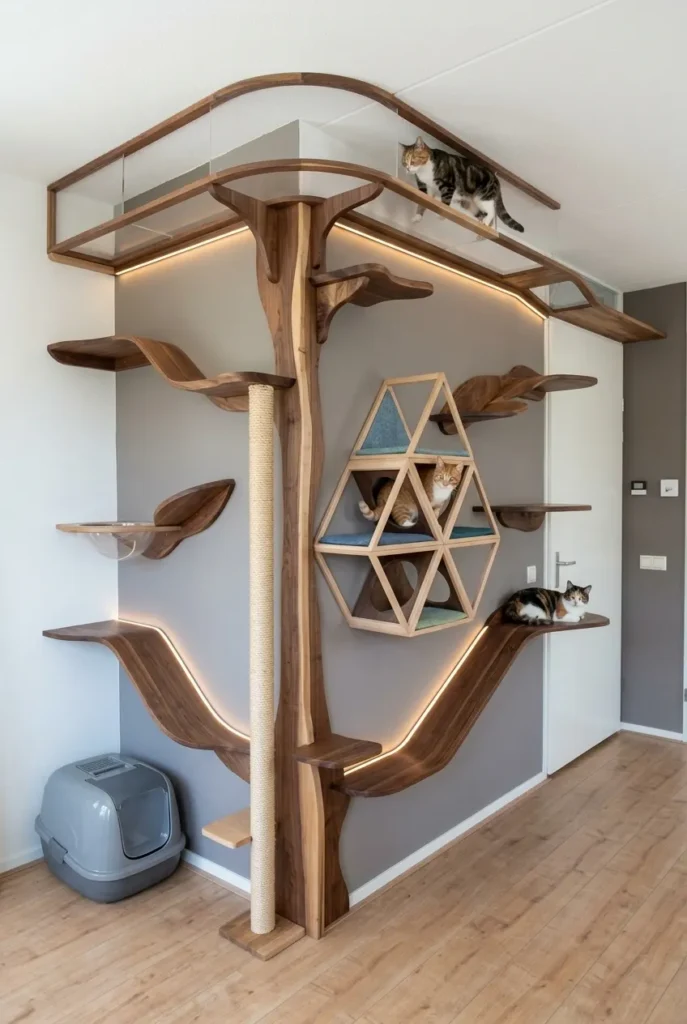
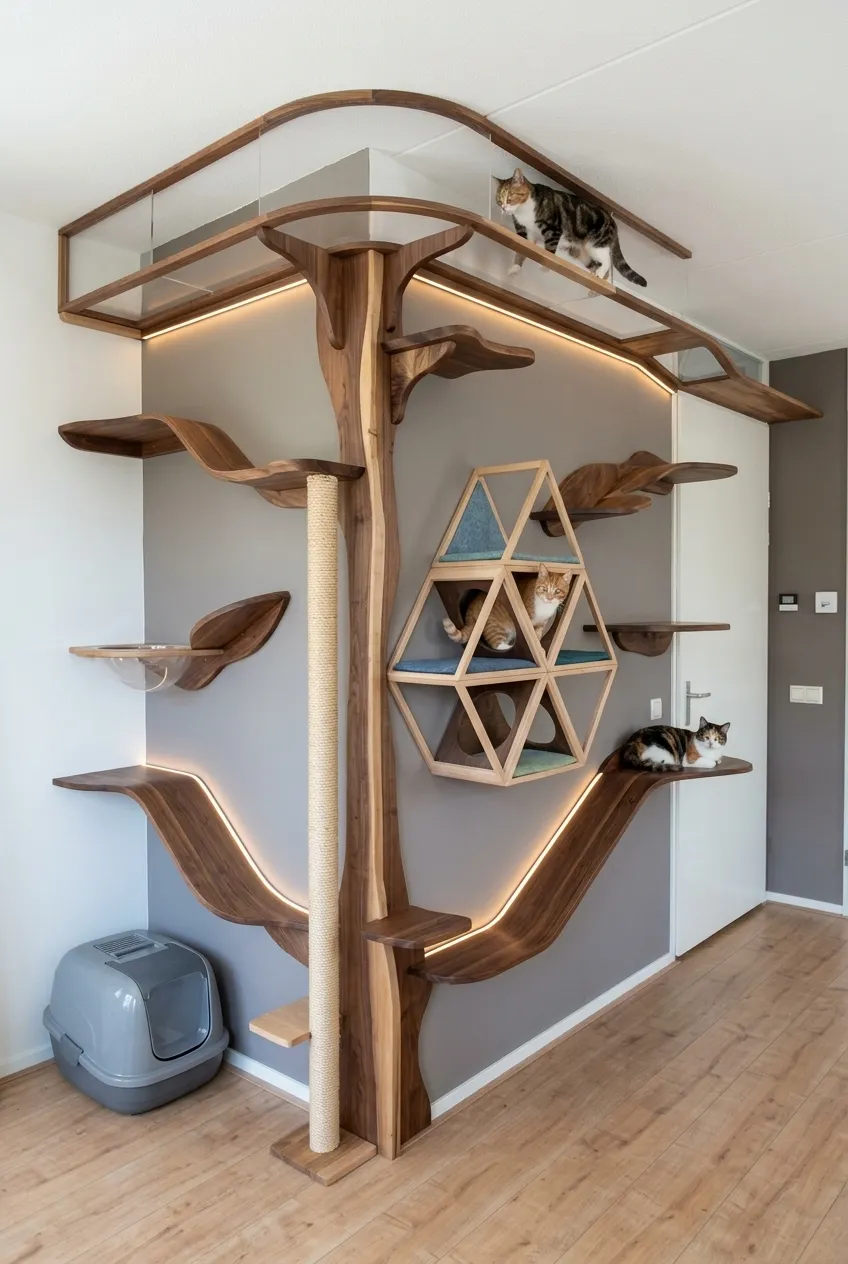
Turn an empty wall into a dramatic indoor cat playground featuring a sculptural wooden tree, elevated walkways, geometric hideouts, and LED accent lighting. Multiple platforms encourage active climbing while giving each cat its own perch. This statement setup doubles as functional furniture and eye-catching wall art.
- Why You’ll Love It: Creates a stunning feature wall that cats can enjoy for hours.
- Best For: Multi-cat households and spacious living rooms.
- Budget Tip: Start with a few shelves and gradually expand the climbing system over time.
Cozy Cat Wall Shelves Ideas for Indoor Cat Playroom
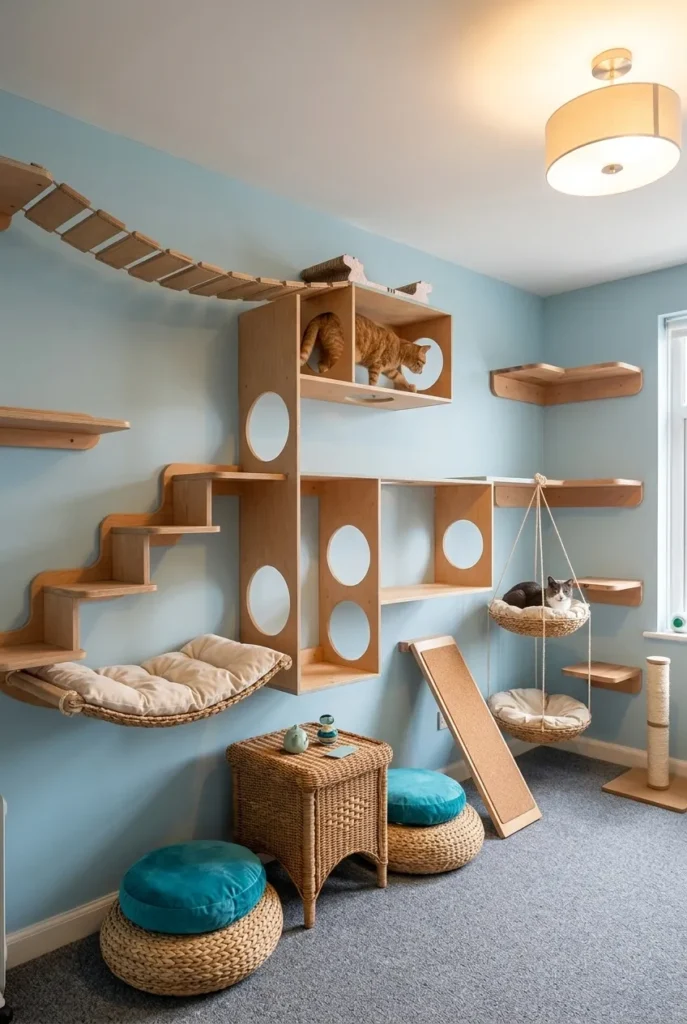
Design a dedicated cat room using wall-mounted cubes, soft hammocks, scratching ramps, and floating steps. The combination of resting spots and climbing paths keeps indoor cats mentally stimulated while preserving open floor space. Soft pastel walls help create a calm and relaxing environment.
- Why You’ll Love It: Offers endless entertainment while keeping your home organized.
- Best For: Spare rooms and dedicated pet spaces.
- Budget Tip: Mix affordable plywood shelves with ready-made hammocks for a custom look.
Minimalist White Cat Wall Shelves Ideas with Hexagon Cubes
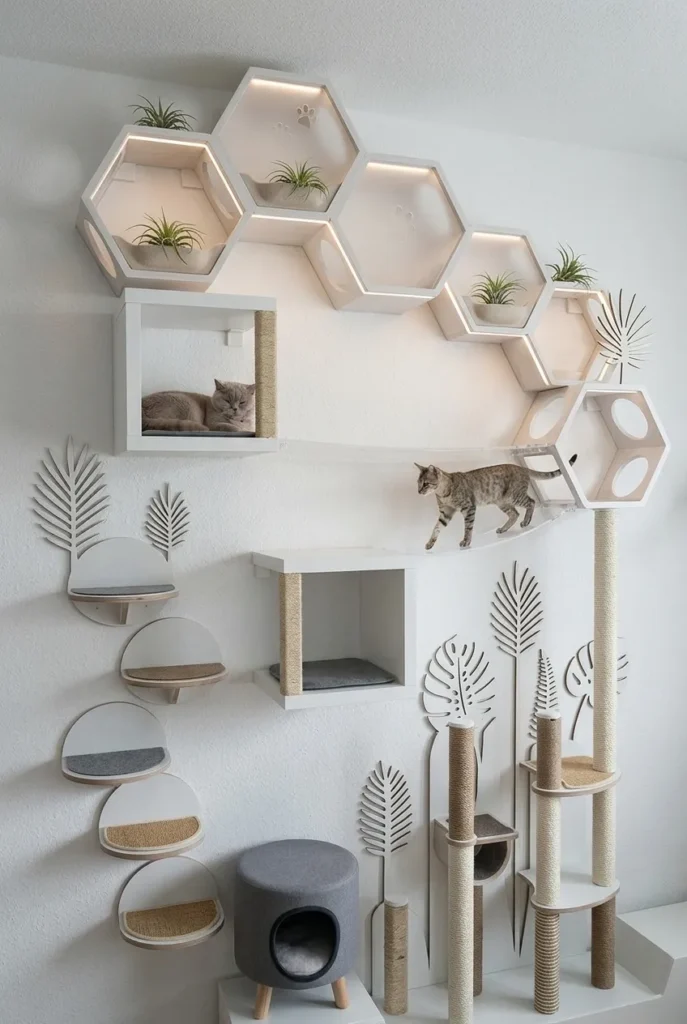
Choose crisp white hexagon shelves connected with clear acrylic bridges to create an airy and contemporary climbing system. Integrated scratching posts and soft resting platforms provide comfort without overwhelming the room. The monochromatic palette works beautifully with Scandinavian-inspired interiors.
- Why You’ll Love It: Brightens the room while giving cats plenty of vertical space.
- Best For: Minimalist and Scandinavian homes.
- Budget Tip: Paint inexpensive wooden shelves white for a similar designer appearance.
Scandinavian Cat Wall Shelves Ideas with Honeycomb Hideouts
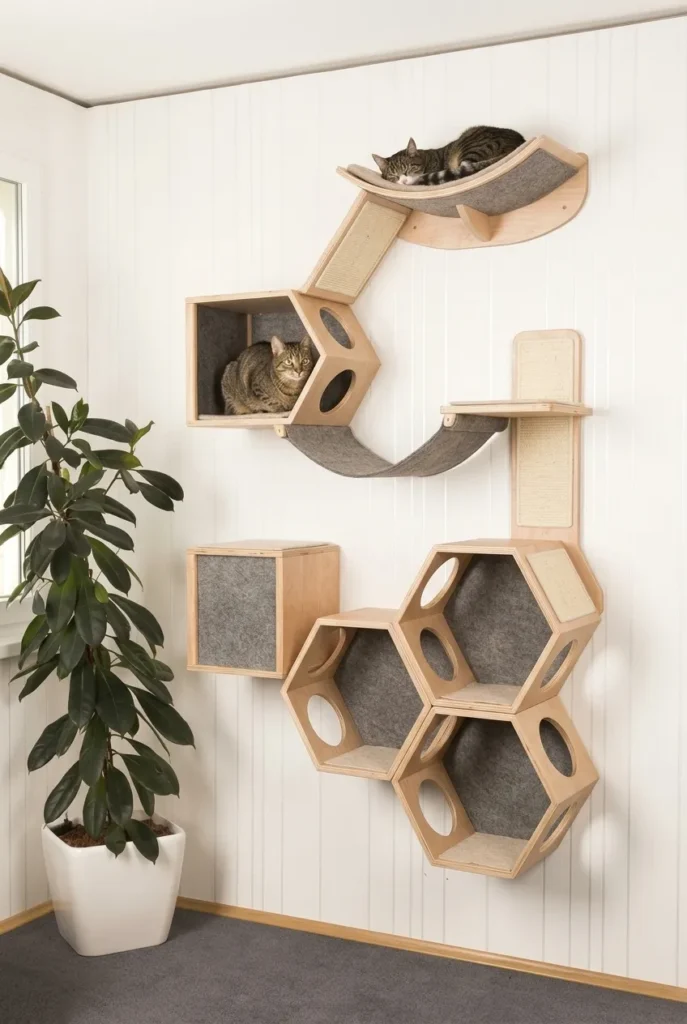
Bring warmth and simplicity into your home with light wood hexagon shelves connected by curved scratching bridges and elevated loungers. Soft neutral fabrics and clean lines give the setup a calming appearance while offering multiple levels for climbing, hiding, and relaxing. The natural materials blend beautifully with modern and Scandinavian interiors.
- Why You’ll Love It: Offers a stylish climbing wall that complements minimalist décor.
- Best For: Scandinavian-inspired homes and cozy living rooms.
- Budget Tip: Combine unfinished plywood shelves with felt liners for an affordable custom design.
Elegant Cat Wall Shelves Ideas with Ornate Cat Highway
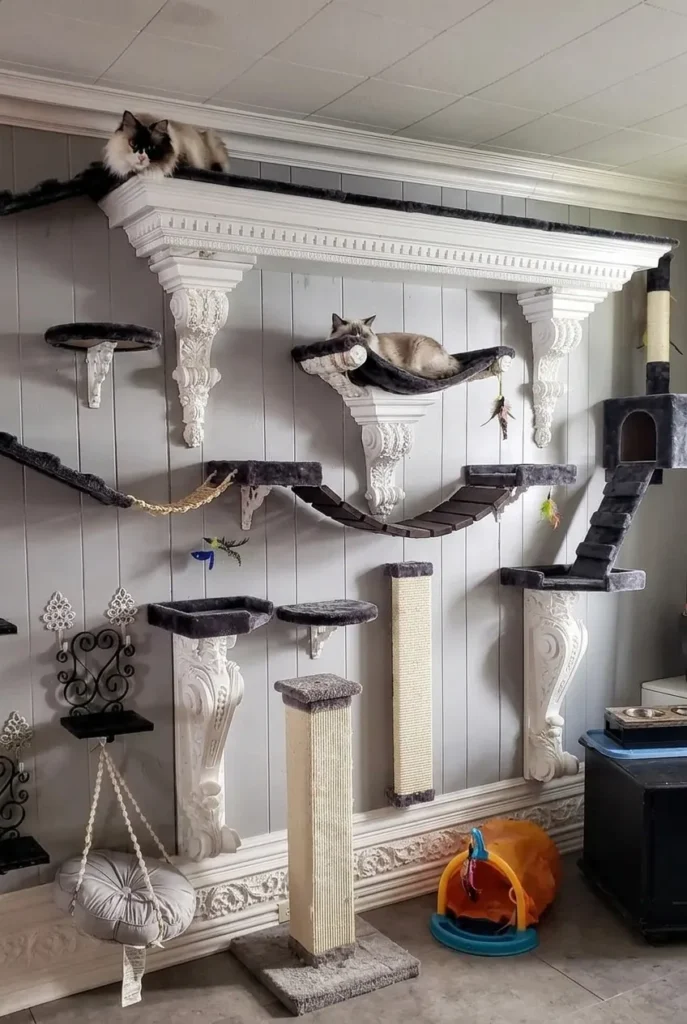
Add elegance to your cat’s climbing area by incorporating decorative corbels, plush wall beds, floating steps, rope bridges, and tall scratching posts. Traditional molding details create a luxurious look while giving your cat elevated lounging spots throughout the room. This design blends pet furniture seamlessly into classic home décor.
- Why You’ll Love It: Combines timeless architecture with functional cat enrichment.
- Best For: Traditional homes and elegant interiors.
- Budget Tip: Repurpose decorative shelf brackets from thrift stores to achieve a high-end appearance.
Natural Birch Tree Cat Wall Shelves Ideas
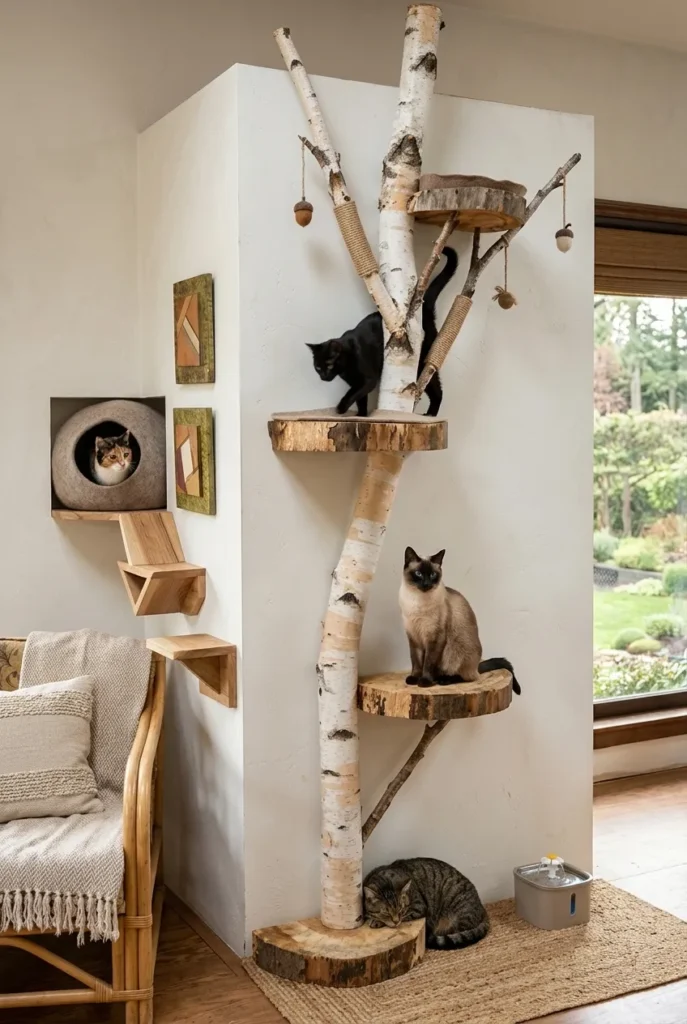
Create an indoor nature-inspired playground using real birch trunks, solid wood platforms, and cozy cat hideaways. The vertical tree encourages climbing while natural bark textures satisfy your cat’s instinct to explore. Pair the design with woven rugs and houseplants for a warm organic atmosphere.
- Why You’ll Love It: Brings outdoor climbing experiences safely indoors.
- Best For: Rustic homes and nature-inspired spaces.
- Budget Tip: Use reclaimed tree branches and leftover wood planks to reduce project costs.
Window Corner Cat Wall Shelves Ideas with Hanging Bed
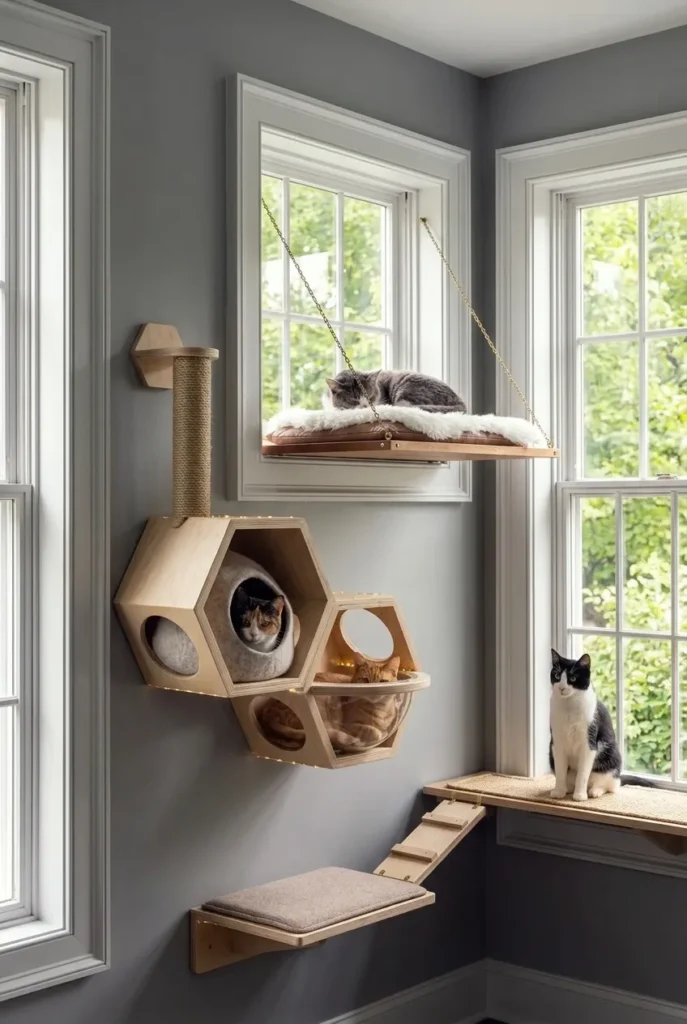
Position floating shelves around bright windows so your cat can enjoy sunshine, bird watching, and afternoon naps. Add a suspended window hammock and enclosed hexagon cubbies to create multiple cozy observation points. This layout keeps your cat entertained while maximizing natural light.
- Why You’ll Love It: Gives cats front-row seats to outdoor views all day long.
- Best For: Homes with large windows and indoor-only cats.
- Budget Tip: Install shelves near existing window ledges instead of building a large climbing wall.
Modern Hexagon Cat Wall Shelves Ideas for Small Spaces
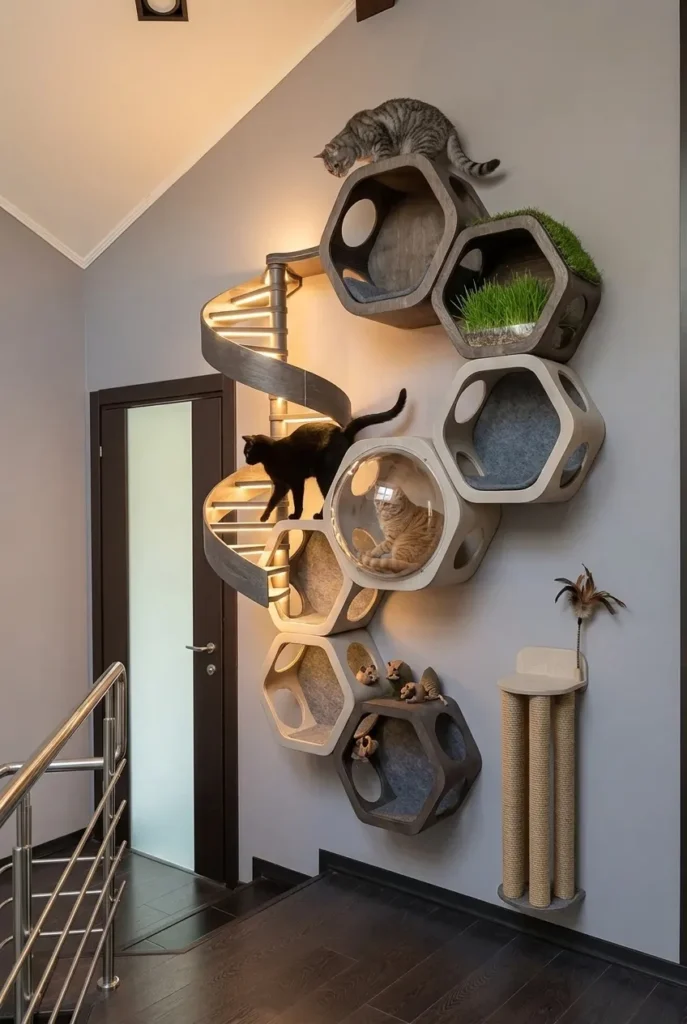
Mix geometric wall cubbies with a compact spiral staircase to create an eye-catching vertical playground. Alternate enclosed hideouts with open platforms so your cat has both private resting areas and elevated lookout spots. Soft LED lighting underneath the shelves adds a modern designer touch while making nighttime climbing easier.
- Why You’ll Love It: Turns an empty wall into a functional architectural feature.
- Best For: Contemporary homes with tall walls.
- Budget Tip: Install hexagon shelves first and add decorative lighting later as your budget allows.
Stylish Cat Wall Shelves Ideas with Wooden Tree Design
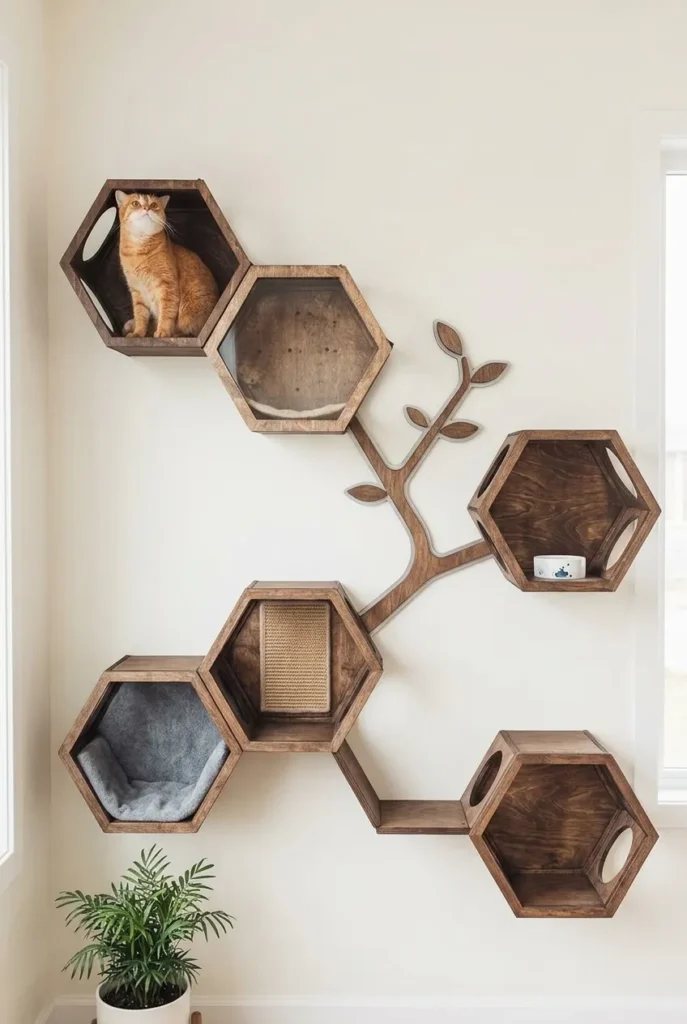
Create a playful statement wall using hexagon shelves connected by a decorative tree branch silhouette. Each cubby serves as a resting spot while integrated scratching panels encourage healthy claw maintenance. The organic shape adds personality without overwhelming the room.
- Why You’ll Love It: Blends artistic wall décor with everyday cat furniture.
- Best For: Family rooms and creative home offices.
- Budget Tip: Paint a tree mural behind simple shelves to create a custom built-in appearance.
Colorful Cat Wall Shelves Ideas with Woven Cat Tunnel
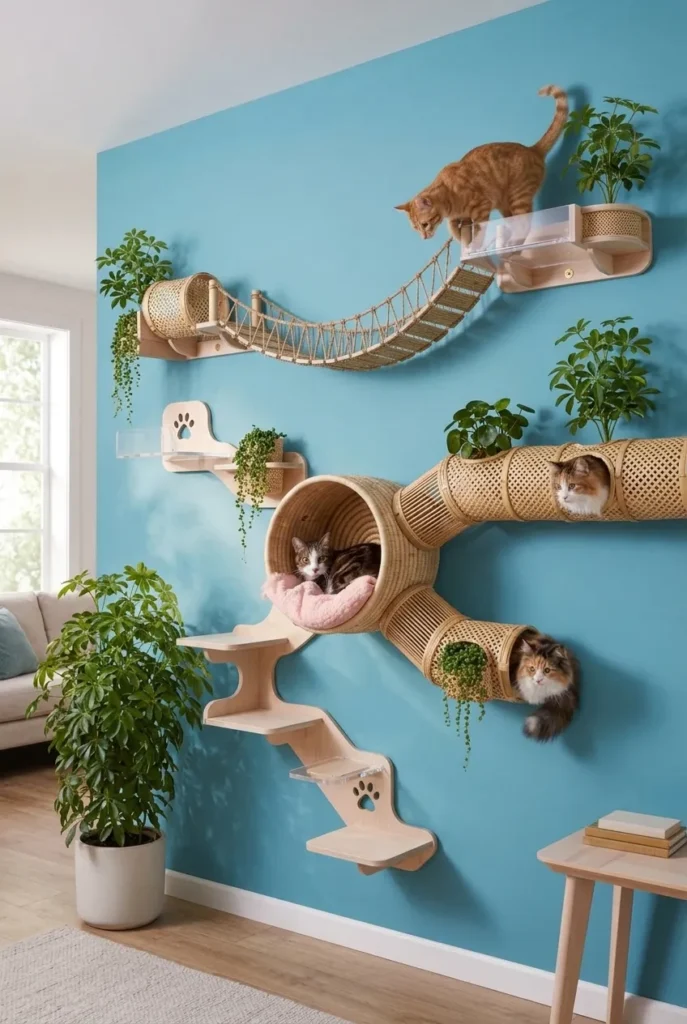
Design a resort-inspired climbing wall using woven rattan tunnels, rope bridges, floating platforms, and lush indoor plants. Cats can crawl through the enclosed tunnels before relaxing inside soft circular beds. The natural textures create a cozy environment that feels both playful and sophisticated.
- Why You’ll Love It: Adds warmth and texture while encouraging active play.
- Best For: Boho, coastal, and tropical-inspired interiors.
- Budget Tip: Incorporate wicker baskets and woven accessories for an affordable coordinated look.
Space-Saving Corner Cat Wall Shelves Ideas for Apartments
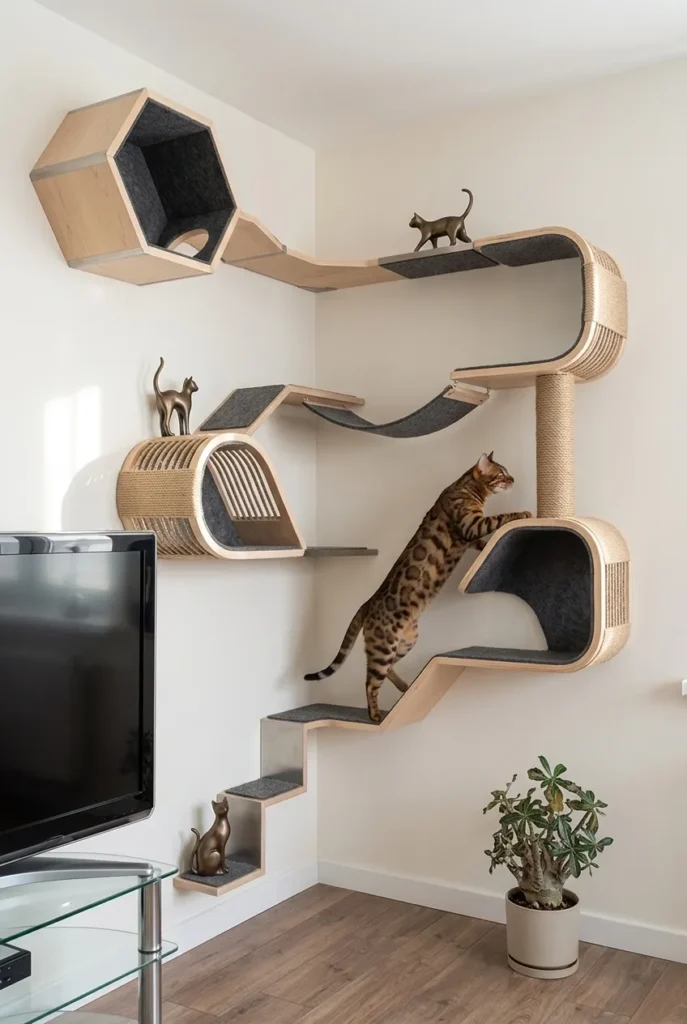
Install sleek curved wooden loungers connected by wall-mounted walkways to create a streamlined climbing route. Rounded platforms provide comfortable resting spots while enclosed sleeping pods offer privacy throughout the day. This clean design fits seamlessly into modern living rooms.
- Why You’ll Love It: Creates a polished custom-built appearance without bulky furniture.
- Best For: Contemporary homes and compact apartments.
- Budget Tip: Use plywood with rounded edges instead of expensive designer pieces.
Conclusion
Creating cat wall shelves is one of the best ways to enrich your cat’s daily life while keeping your floors clear and your home beautifully organized. Whether you prefer sleek modern platforms, rustic wooden trees, Scandinavian-inspired cubes, or playful rope bridges, there’s a design to match every decorating style and budget. By combining climbing paths, cozy resting spots, scratching areas, and elevated observation points, you can give your cat a stimulating environment that supports both physical activity and mental well-being. Use these cat wall shelves ideas as inspiration to build a safe, functional, and stylish vertical playground your feline friend will enjoy every day.
FAQs
What is the best height for cat wall shelves?
Most cats enjoy climbing, so shelves installed between 4 and 7 feet high work well. Create multiple levels with safe spacing so your cat can comfortably jump from one shelf to another.
How far apart should cat wall shelves be?
For most adult cats, spacing shelves about 10 to 18 inches vertically and 12 to 18 inches horizontally provides comfortable movement. Senior cats may benefit from closer spacing.
What material is best for cat wall shelves?
Solid wood and quality plywood are among the best choices because they are durable, sturdy, and easy to customize. Adding carpet, felt, or sisal also improves traction and comfort.
Can cat wall shelves support large cats?
Yes. When properly anchored into wall studs and built with strong materials, cat wall shelves can safely support larger breeds such as Maine Coons, Ragdolls, and Norwegian Forest Cats.
Can I build DIY cat wall shelves?
Yes. Many DIY cat wall shelf projects use plywood, pine boards, floating shelf brackets, carpet remnants, and sisal rope. Simple designs can often be completed with basic woodworking tools.
Where should I install cat wall shelves?
Popular locations include living rooms, home offices, hallways, bedrooms, and areas near windows where cats can enjoy sunlight and watch birds or outdoor activity.
How many wall shelves does a cat need?
The ideal number depends on your available wall space and the number of cats you have. Even a small climbing path with three to five shelves can provide excellent enrichment for a single cat.
Do cat wall shelves damage walls?
Like floating shelves, they require mounting holes, but proper installation minimizes damage. If removed later, the holes can usually be patched and repainted without much difficulty.