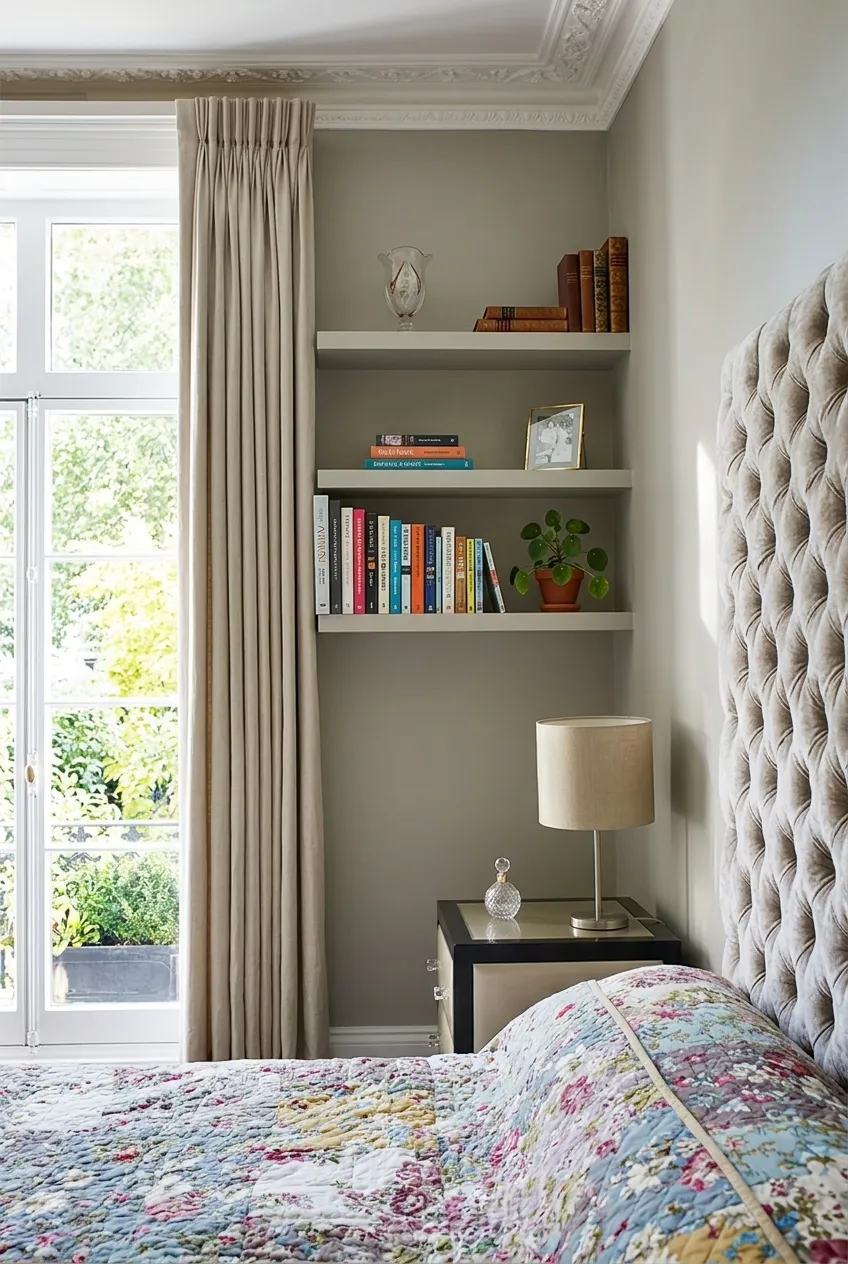
14 Bedroom Bookshelf Ideas for Small Spaces, Storage & Style
Bedroom bookshelf ideas can turn everyday book storage into a thoughtful part of the room’s design. Whether you keep a small stack of bedtime reads or have a growing collection that needs a permanent home, the right shelving can organize books while adding character to otherwise unused walls, corners, alcoves, and bedside areas.
The best setup depends on the bedroom’s size, layout, and how many books you want close at hand. Built-in shelves can use vertical space efficiently, floating shelves suit compact rooms, and shelving around a headboard can combine storage with a striking focal point.
These bedroom bookshelf ideas explore practical and decorative ways to store, display, and arrange books without making a sleeping space feel crowded. Each concept can also be adapted with artwork, lighting, plants, baskets, and personal objects to make the shelves feel connected to the rest of the bedroom.
Built-In Bookshelves Around the Bed
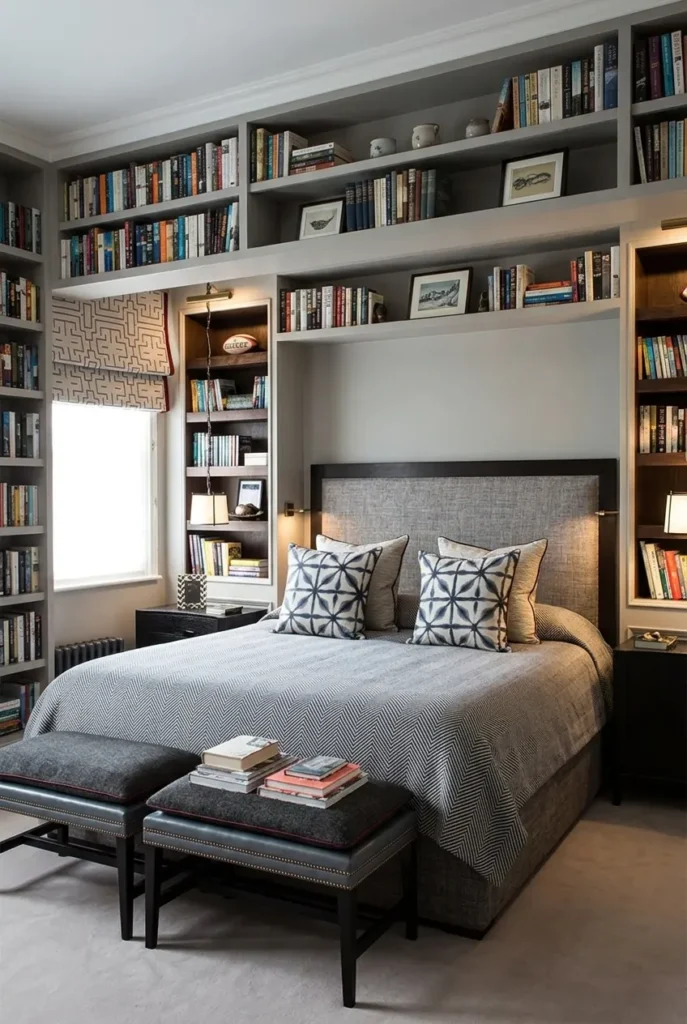
Built-in bookshelves framing the bed can turn an ordinary sleeping area into a cozy bedroom library while making excellent use of vertical wall space. Shelving can rise on both sides of the headboard and continue above it, creating room for books without requiring separate bookcases elsewhere in the bedroom.
For a calmer appearance, paint the shelves in the same color as the surrounding wall or headboard. Leave a few open areas between books for artwork, ceramics, or small decorative objects, and consider integrating bedside lighting into the shelving so nightstands stay relatively clear.
Best Suitable For: Primary bedrooms, book lovers, medium to large bedrooms, and rooms needing substantial storage.
Floating Bookshelves Above the Nightstand
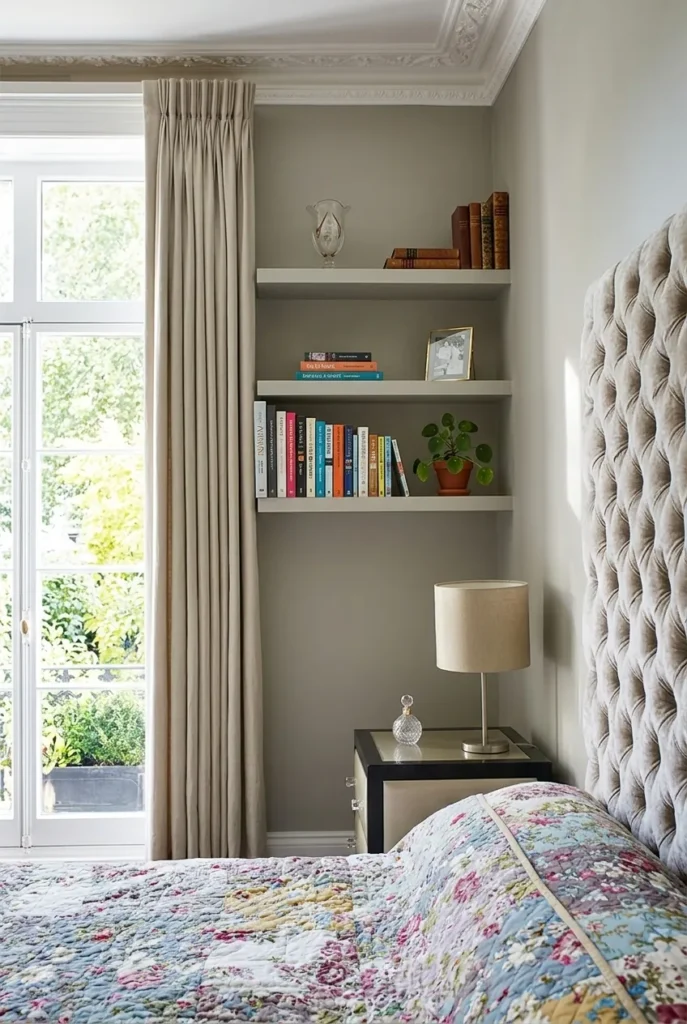
Floating shelves provide bedroom bookshelf storage without taking up valuable floor area. A pair or trio positioned above a nightstand can hold current reads, framed photographs, small plants, and decorative pieces while leaving the bedside table available for everyday essentials.
Choose shelves that coordinate with the room’s furniture for a connected look. Natural wood can warm a neutral bedroom, while shelves painted to match the wall create a quieter appearance. Avoid placing overloaded shelving directly above sleeping areas, and use suitable fixings for the wall type and intended load.
Best Suitable For: Small bedrooms, apartments, minimalist spaces, guest rooms, and compact bedside areas.
Alcove Bookshelves for an Awkward Corner
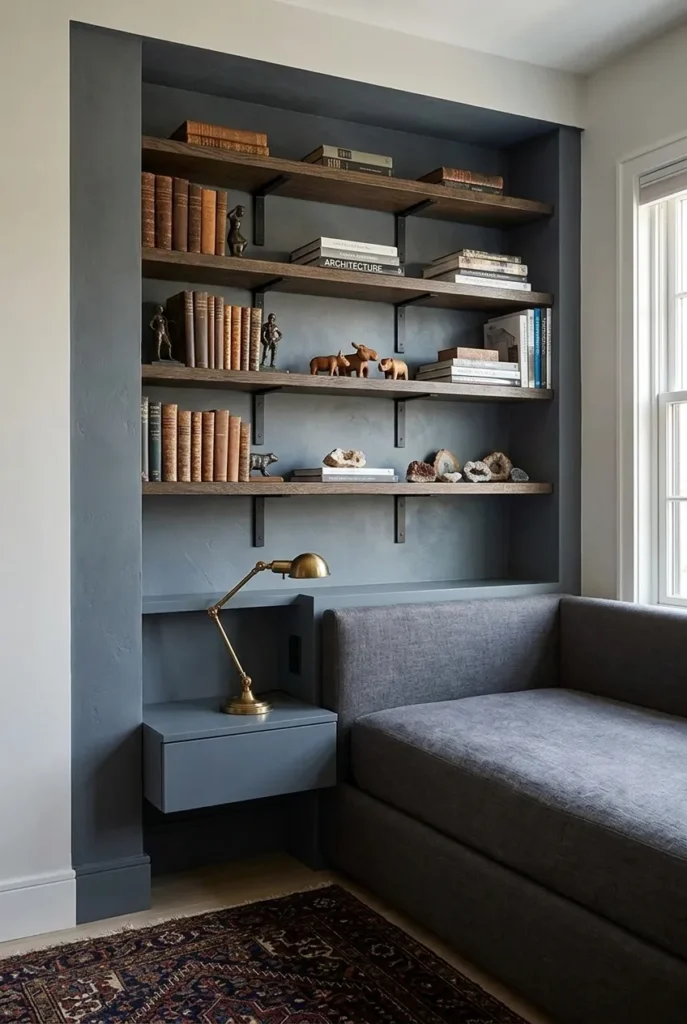
An unused alcove can become one of the most practical places for bedroom bookshelves. Rather than filling the recess with freestanding furniture that does not quite fit, made-to-measure shelves can span the available width and turn an awkward architectural feature into useful storage.
If the alcove sits beside the bed, begin the shelves above nightstand height so the lower wall remains functional. Painting the shelving and recess in a similar shade can make the installation feel like part of the architecture rather than an extra piece of furniture.
Best Suitable For: Small bedrooms, older homes, bedrooms with chimney breasts, narrow alcoves, and awkward layouts.
Window-Framing Bookshelves with a Cozy Seat
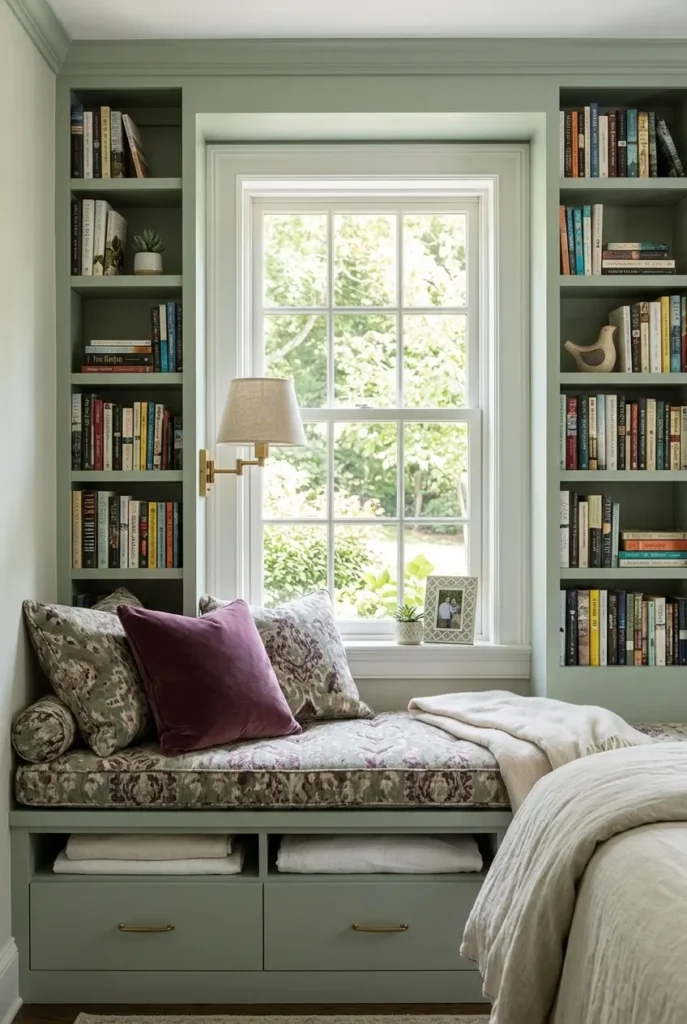
Bookshelves positioned around a bedroom window can combine book storage with a comfortable reading destination. Narrow shelving on either side uses wall space that might otherwise remain empty, while a bench or window seat below creates a natural place to sit with a book.
Add a padded seat, cushions, and a nearby reading light to make the area more comfortable. Closed drawers beneath the bench can hold bedding or less attractive essentials, allowing the open shelves to remain focused on books and decorative pieces.
Best Suitable For: Bedrooms with large windows, reading enthusiasts, guest rooms, and rooms with unused window walls.
Low Bookshelf Beneath a Bedroom Window
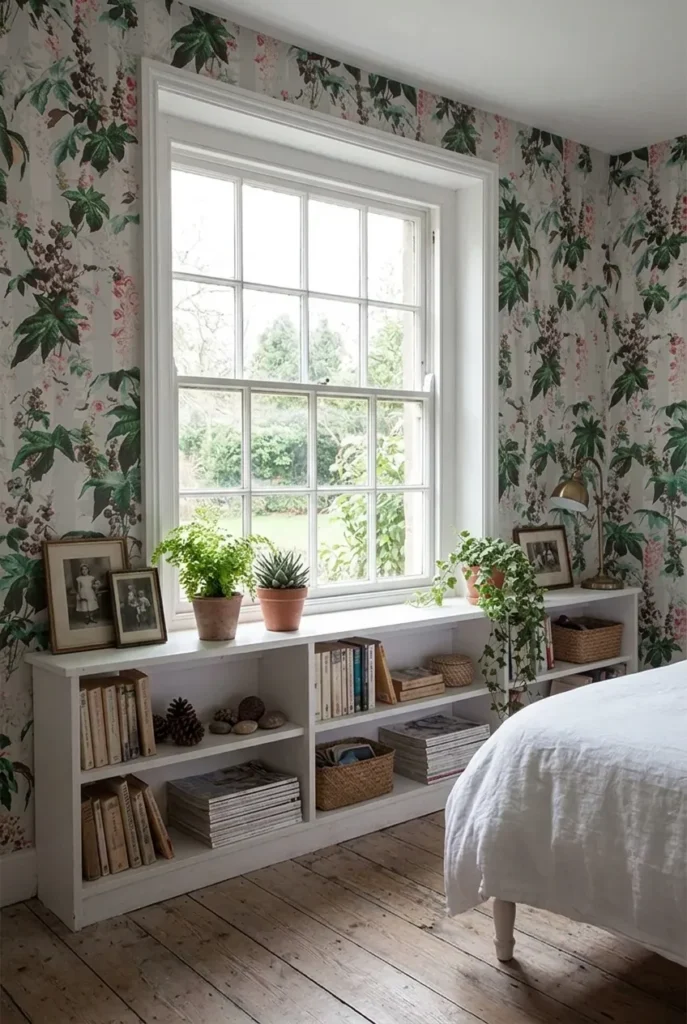
When tall bookcases would block light or overwhelm a small bedroom, low shelving beneath a window can provide useful storage while maintaining an open feeling. A long, low bookcase is particularly effective for paperbacks, magazines, decor, and baskets.
The top can function as a display ledge for plants, photographs, or a small lamp if the window height allows. In attic bedrooms or rooms with unusual architecture, low shelving can also fit where full-height furniture cannot.
Best Suitable For: Small bedrooms, attic rooms, bedrooms with low windows, teen rooms, and minimalist interiors.
Floor-to-Ceiling Bedroom Library Wall
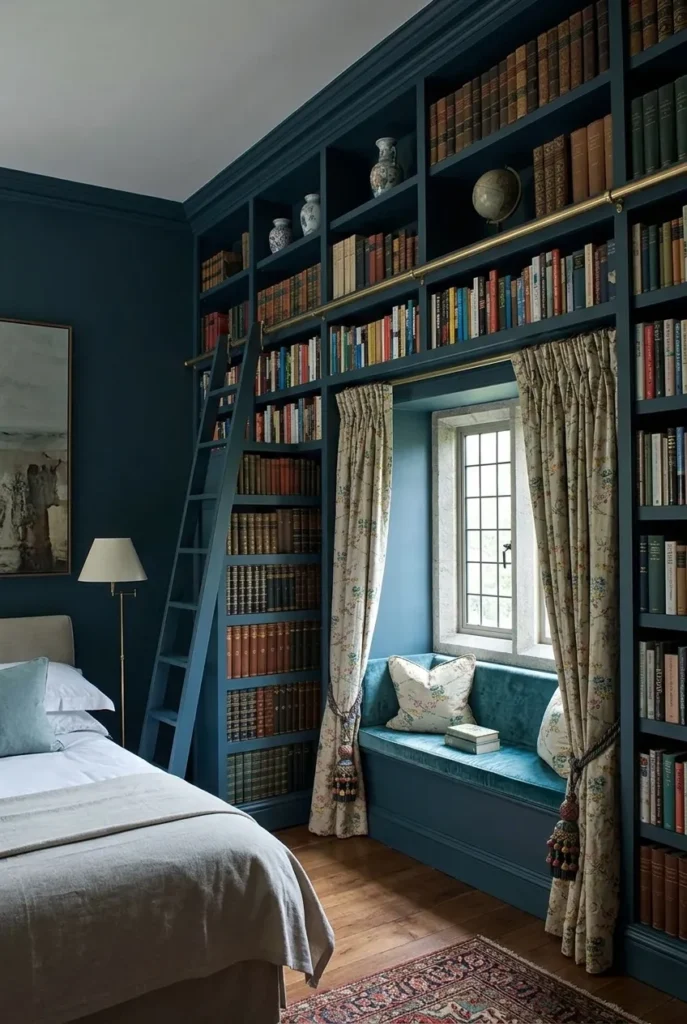
For a large book collection, dedicate one wall to floor-to-ceiling shelving. The result can feel like a private library while keeping books organized in one location rather than scattered across multiple pieces of furniture.
Arrange frequently read books at comfortable reaching height and reserve higher shelves for less-used volumes or decorative pieces. Painting the bookcase and wall in the same color can reduce visual fragmentation, especially when the shelves contain books with many different spine colors.
Best Suitable For: Avid readers, large bedrooms, guest room libraries, home study bedrooms, and extensive book collections.
Headboard Bookshelf with Hidden Storage
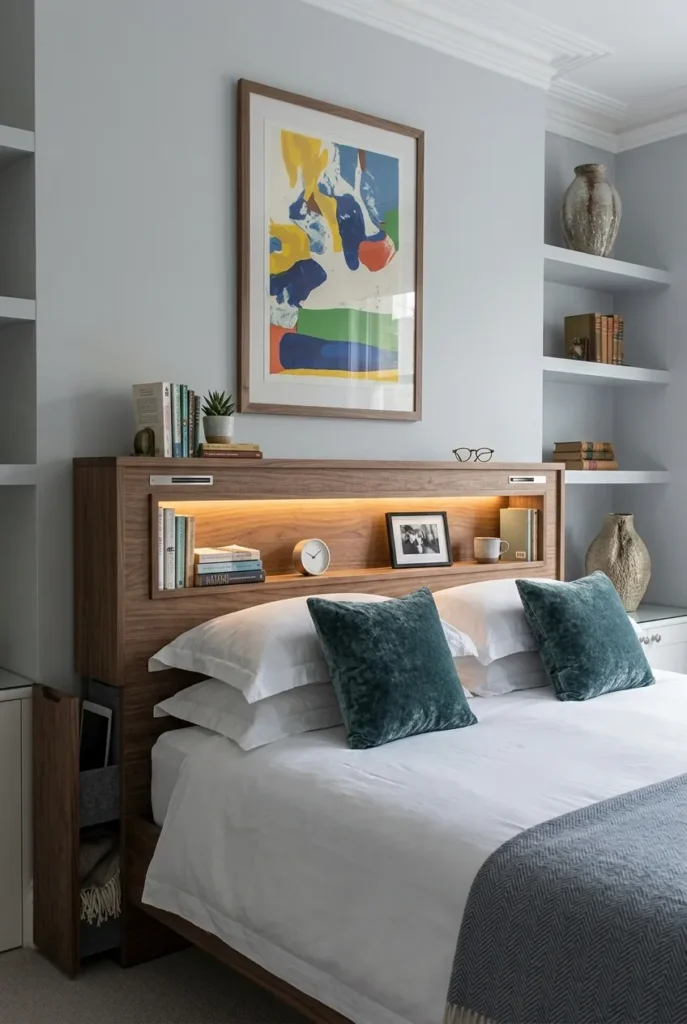
A bookshelf incorporated into the headboard is a clever option when you want books close to the bed without installing a large shelving system. Shallow niches can hold bedtime reads, a small clock, photographs, and other essentials while keeping everything within arm’s reach.
Choose a design with enclosed compartments underneath or at the sides if additional bedroom storage is needed. Integrated lighting can make the headboard even more practical and reduce the need for large nightstands.
Best Suitable For: Compact bedrooms, studio apartments, avid nighttime readers, and multifunctional bedroom layouts.
Narrow Wall Bookshelf for a Small Bedroom
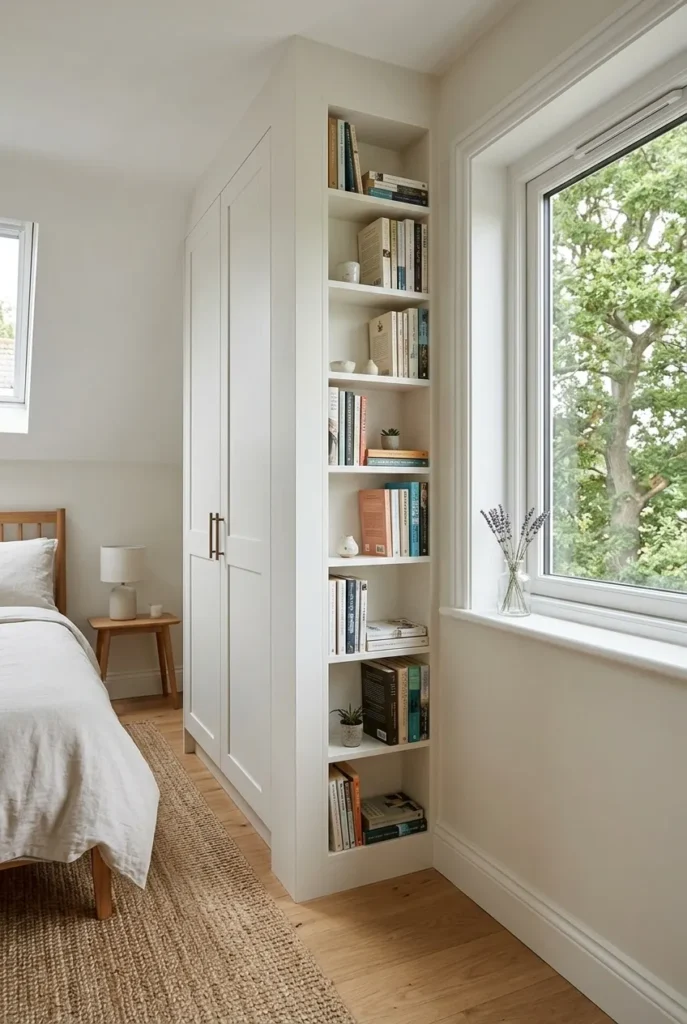
A slim bookshelf can fit into spaces where a traditional bookcase would interrupt circulation. Look at narrow walls beside wardrobes, between a door and window, or alongside the bed for overlooked areas that could accommodate shallow shelving.
Since most standard books do not require very deep shelves, a narrow design can still hold a useful collection. Keeping the unit close to the wall color can make it feel less prominent in a compact bedroom.
Best Suitable For: Small bedrooms, apartments, narrow layouts, guest rooms, and bedrooms with limited floor space.
Reading Nook Bookshelf in the Bedroom Corner
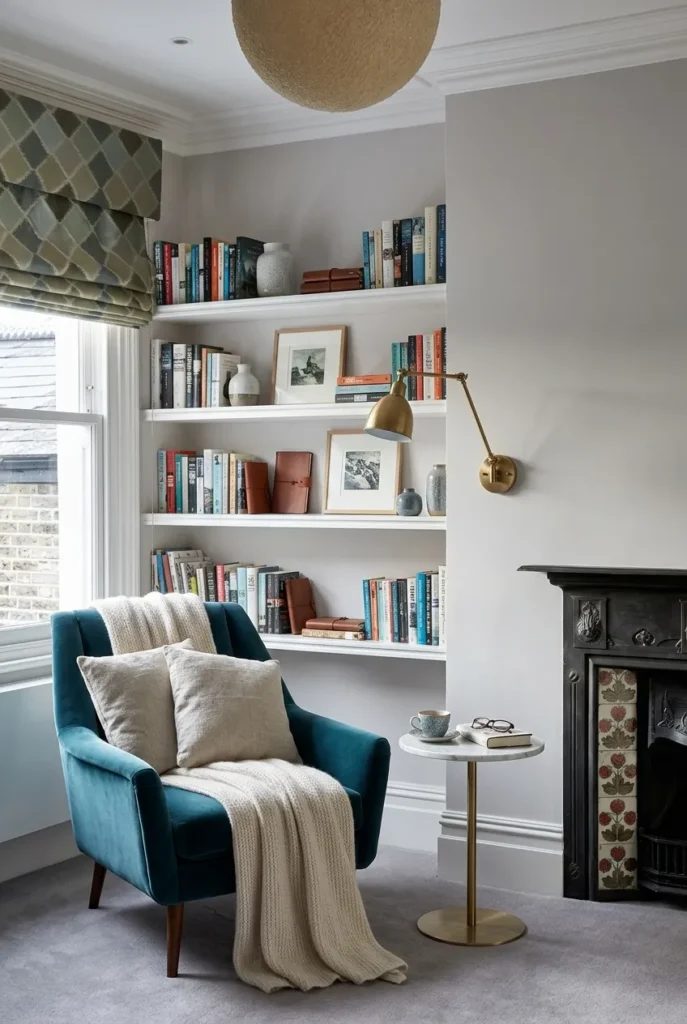
A quiet bedroom corner can become a small reading nook with a comfortable chair and bookshelf positioned within easy reach. The setup gives books a dedicated home while creating another functional zone beyond sleeping and dressing.
Add a floor lamp or wall-mounted reading light, a small side table, and a cushion or throw. Shelves can run vertically beside the chair or occupy the wall behind it, depending on the available space.
Best Suitable For: Book lovers, spacious bedrooms, guest rooms, cozy interiors, and unused bedroom corners.
Modern Wall-Mounted Bookshelf Display
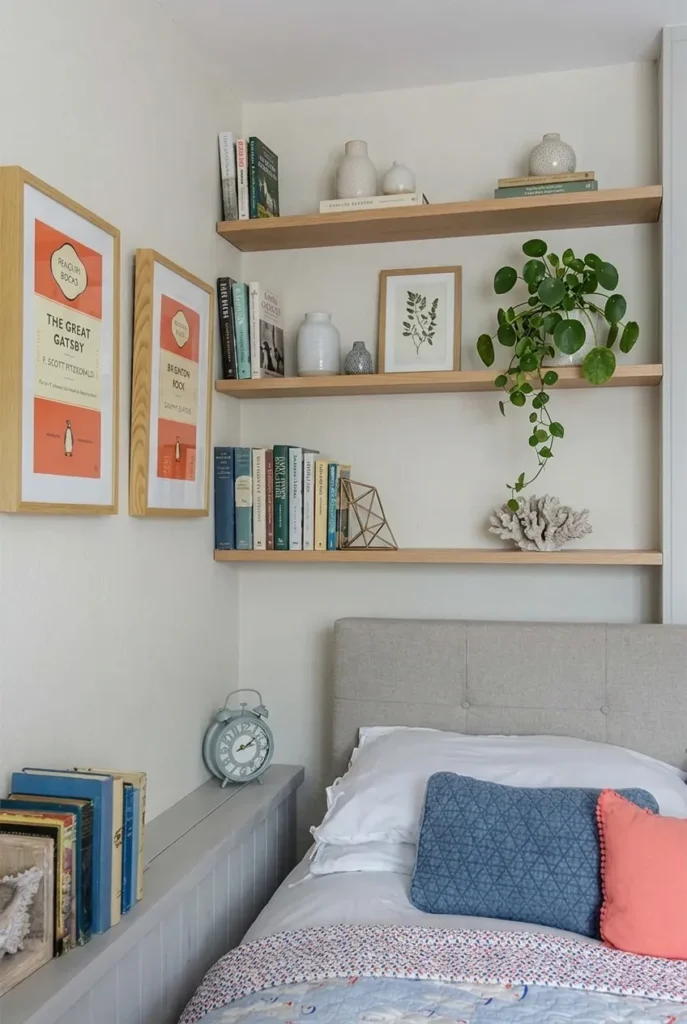
Wall-mounted bedroom bookshelf ideas can treat books as part of the decor rather than hiding them away. Arrange several shelves with deliberate gaps between them and mix books with ceramics, framed prints, plants, and meaningful objects for a lighter alternative to a solid bookcase.
Keeping some open space on each shelf prevents the arrangement from feeling crowded. For a modern bedroom, use simple shelf profiles and repeat materials or colors already present in the furniture.
Best Suitable For: Modern bedrooms, contemporary apartments, design-focused spaces, and medium-sized book collections.
Built-In Shelving Under a Sloped Ceiling
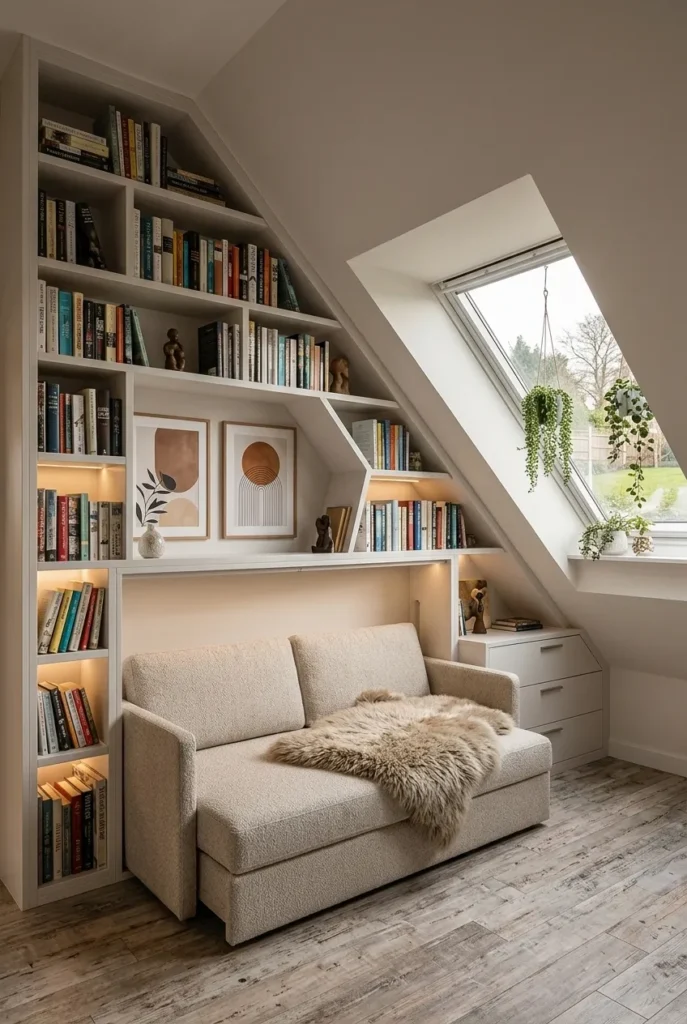
Attic bedrooms often have low eaves and angled ceilings that make conventional furniture difficult to position. Custom bookshelves following the roofline can turn these awkward sections into practical storage without taking space from the taller areas of the room.
If custom joinery is not practical, arrange several low modular bookcases beneath the slope. Keeping the units consistent in height and finish can make separate pieces appear more like one continuous installation.
Best Suitable For: Attic bedrooms, loft conversions, sloped ceilings, teen bedrooms, and unusual room layouts.
Bookshelf Nightstand for Double-Duty Storage
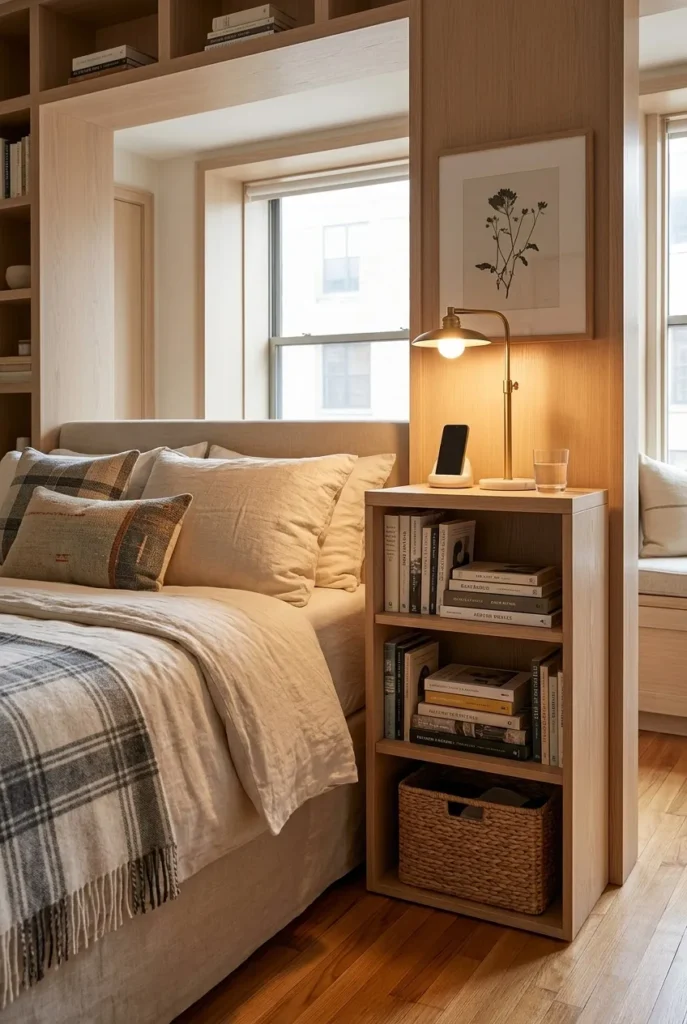
When every inch counts, replace a conventional nightstand with a compact bookcase or bedside table featuring open shelving. The top remains available for a lamp, phone, or glass of water, while the lower shelves hold books neatly beside the bed.
A narrow unit works particularly well in small bedrooms where separate bedside storage and bookshelves would take up too much room. Use a basket on the lowest shelf if you need somewhere to hide chargers and smaller belongings.
Best Suitable For: Tiny bedrooms, studio apartments, guest rooms, renters, and bedside reading setups.
Color-Matched Bookshelves for a Seamless Look
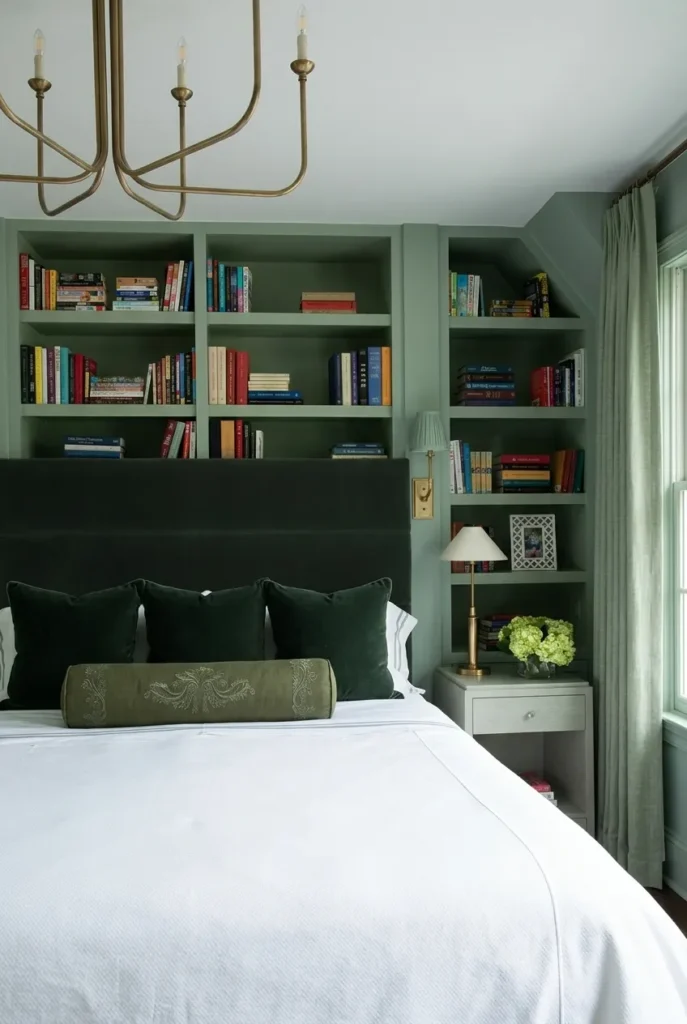
Painting bookshelves in the same shade as the bedroom walls can make substantial storage feel quieter and more architectural. This works particularly well with built-in shelving, where matching colors allow the structure to recede visually while books and decorative objects provide the contrast.
Soft neutrals create a calm backdrop, while dusty blue, sage, terracotta, or deeper shades can give the room more character. Carry the color into nearby trim or cabinetry if you want the shelves to feel fully integrated.
Best Suitable For: Color-drenched bedrooms, built-in storage, small rooms, modern interiors, and cohesive decorating schemes.
Low Bookshelves for a Kids’ Bedroom
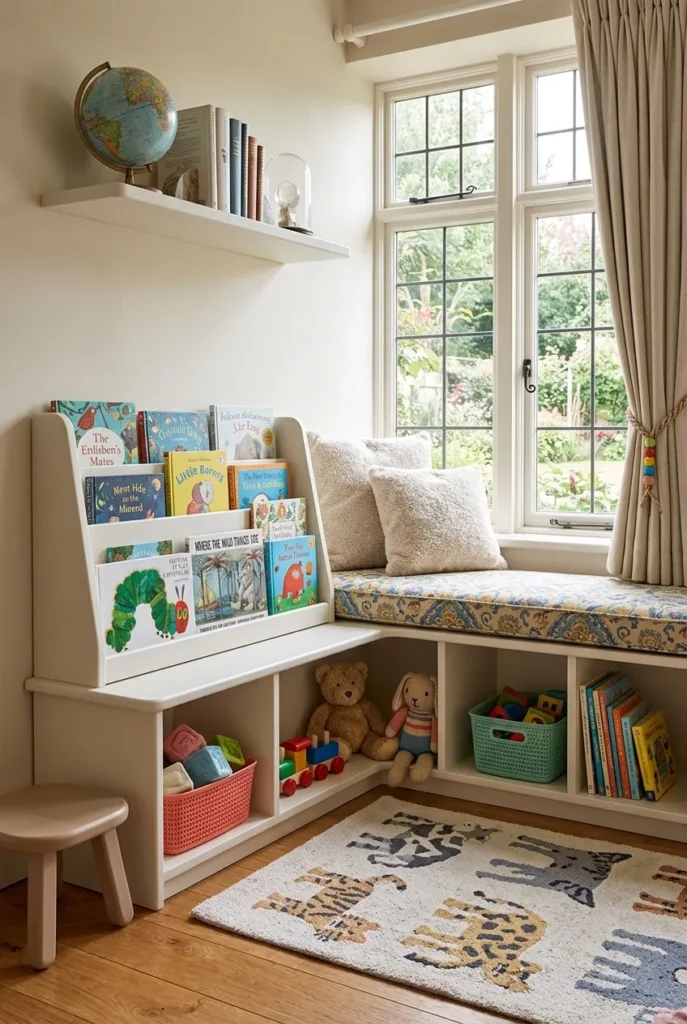
Low shelving makes books easier for children to see, choose, and return without relying on an adult to reach higher shelves. A combination of front-facing book ledges and open cubbies can keep favorite stories visible while providing room for toys and baskets.
Position everyday books at child-friendly height and use higher storage for items that require supervision. Rounded edges, secure wall anchoring, and sturdy construction are important considerations when adding shelving to a child’s bedroom.
Best Suitable For: Kids’ bedrooms, nurseries, play-and-sleep spaces, shared rooms, and small reading corners.
Conclusion
Bedroom bookshelf ideas work best when storage is planned around the room rather than added wherever a bookcase happens to fit. Alcoves, window walls, headboards, corners, low eaves, and narrow sections beside furniture can all provide useful opportunities for shelving while preserving valuable bedroom floor space.
Consider how many books you actually need in the bedroom, which ones you want within reach of the bed, and whether the shelves should stand out or blend into the walls. Built-in shelving can accommodate larger collections, while floating shelves, narrow bookcases, bedside storage, and low modular units provide flexible options for smaller spaces.
Frequently Asked Questions
Where is the best place to put a bookshelf in a bedroom?
The best location depends on the bedroom layout and how often you use the books. Shelves beside the bed make nighttime reads easy to reach, while alcoves, window walls, corners, and areas beneath sloped ceilings can provide storage without sacrificing important floor space. If you have a large collection, a dedicated wall of built-in shelving may be more practical.
How can I add bookshelves to a small bedroom?
Use vertical and overlooked areas before adding bulky freestanding furniture. Floating shelves, narrow wall-mounted units, bookshelf nightstands, low shelving beneath windows, and shelves fitted into alcoves can provide book storage with a smaller footprint. Matching shelving to the wall color can also help substantial storage feel less visually heavy.
How do you style bedroom bookshelves without making them look cluttered?
Start with the books you actually want to keep in the bedroom and leave some open space rather than filling every shelf. Mix horizontal and vertical book arrangements where practical, then add a limited number of objects such as framed photographs, ceramics, or small plants. Repeating colors and materials already used elsewhere in the bedroom can help the bookshelf feel like part of the room rather than a separate display.