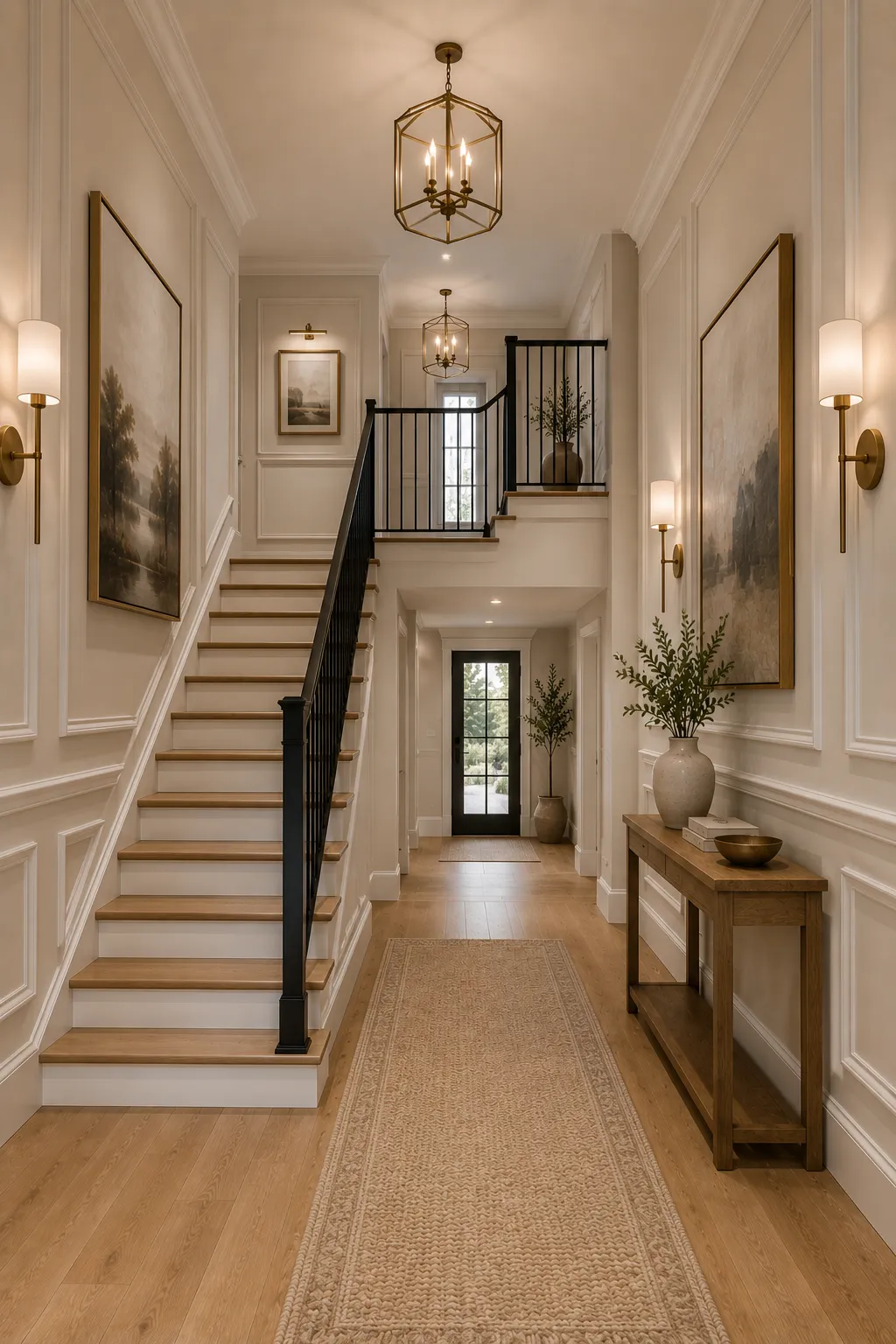
12 Split Level Entryway Ideas That Look Designer-Approved
A split-level entryway creates a unique first impression, but it can also feel awkward to decorate when different levels, stairs, and sightlines compete for attention.
The good news is that a few thoughtful design choices can make the space feel intentional, stylish, and welcoming. These split-level-entryway-ideas are designed to help you create a polished entrance that feels cohesive from every angle. Whether your home leans modern, traditional, or somewhere in between, the right details can make a dramatic difference.
In my experience, split-level foyers look their best when they balance function and visual flow. Small upgrades like statement lighting, layered textures, and architectural details often have a bigger impact than a complete makeover. The ideas below will help transform your entry into a designer-approved space that feels warm, organized, and inviting.
Statement Stair Runners
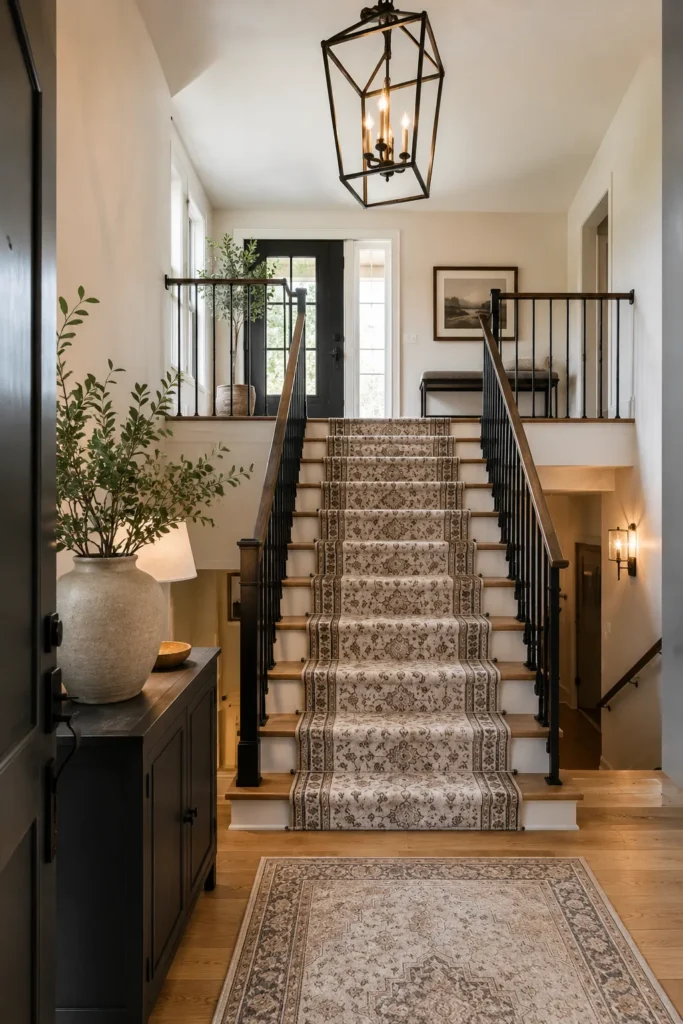
- Adds color and texture to the entryway
- Creates a polished custom look
- Defines the staircase as a focal point
- Softens hard flooring surfaces
A stair runner instantly elevates a split-level entryway by drawing the eye upward and creating visual continuity between levels. Patterned runners can introduce personality while neutral options create a timeless designer feel. I’ve noticed that even simple staircases feel more refined when layered with texture, making the entire entrance look more intentional and welcoming.
Oversized Pendant Lighting
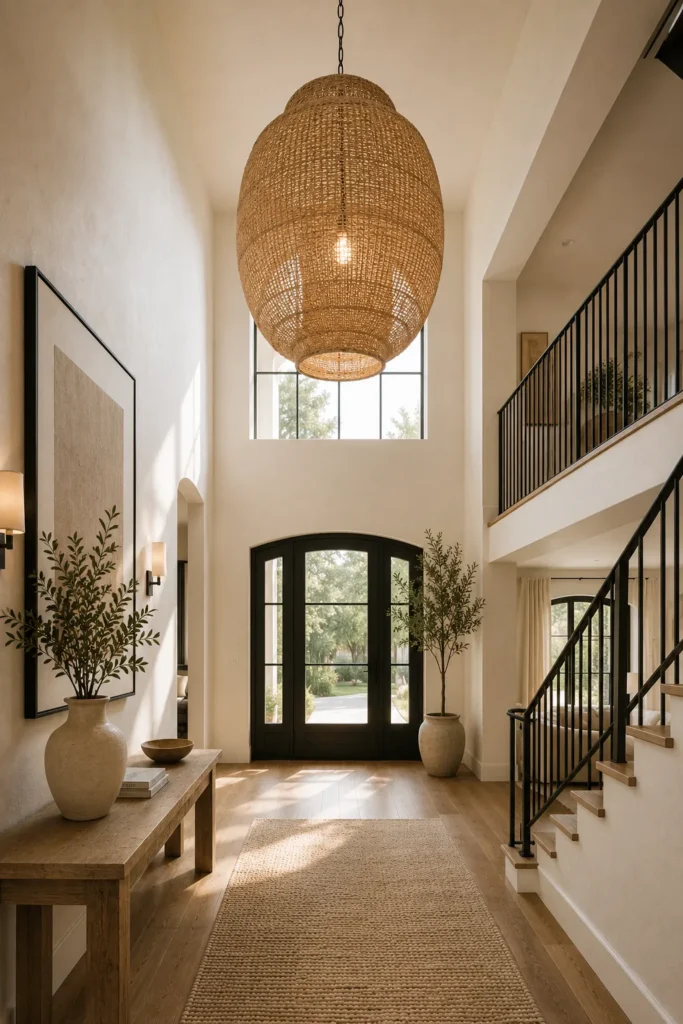
- Fills vertical space beautifully
- Creates a dramatic focal point
- Improves lighting throughout the foyer
- Adds designer-inspired character
Split-level homes often feature tall ceilings that can feel empty without the right lighting. An oversized pendant fixture helps anchor the space while adding warmth and style. Choosing a fixture with sculptural details can instantly make the entry feel custom designed, giving guests a memorable first impression as soon as they walk through the door.
Two-Tone Wall Colors
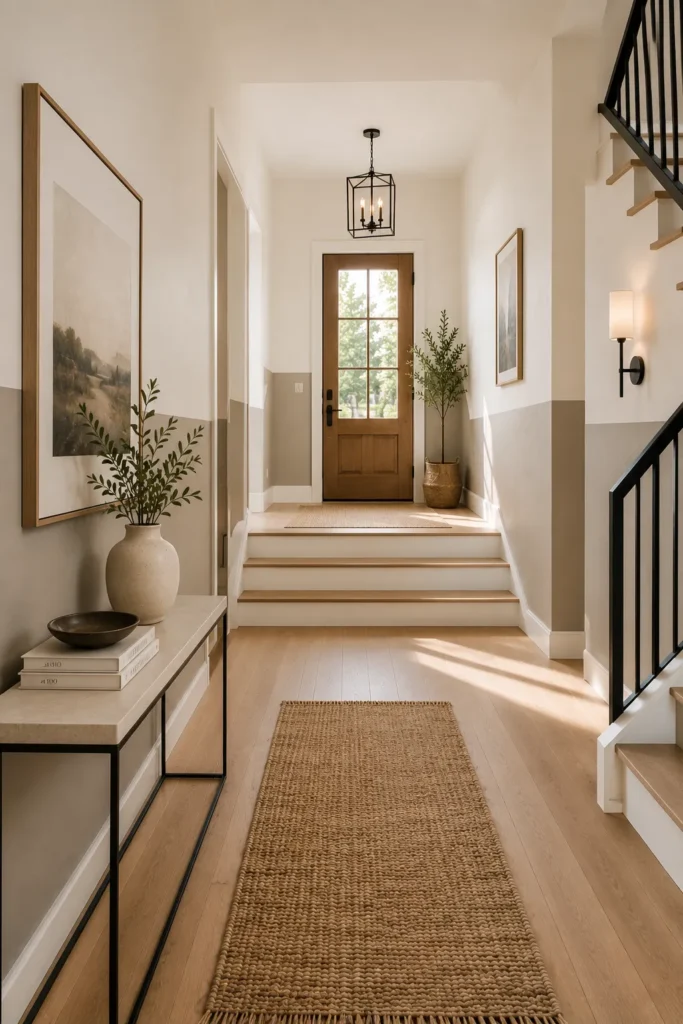
- Highlights architectural features
- Creates visual depth
- Adds personality without clutter
- Helps connect multiple levels
Two-tone wall treatments work exceptionally well in split-level layouts because they emphasize the home’s unique structure. Using a lighter shade above and a deeper tone below creates balance while helping the space feel layered. This approach also makes stairways and transitions appear more intentional, giving the entryway a professionally designed appearance.
Floating Console Tables
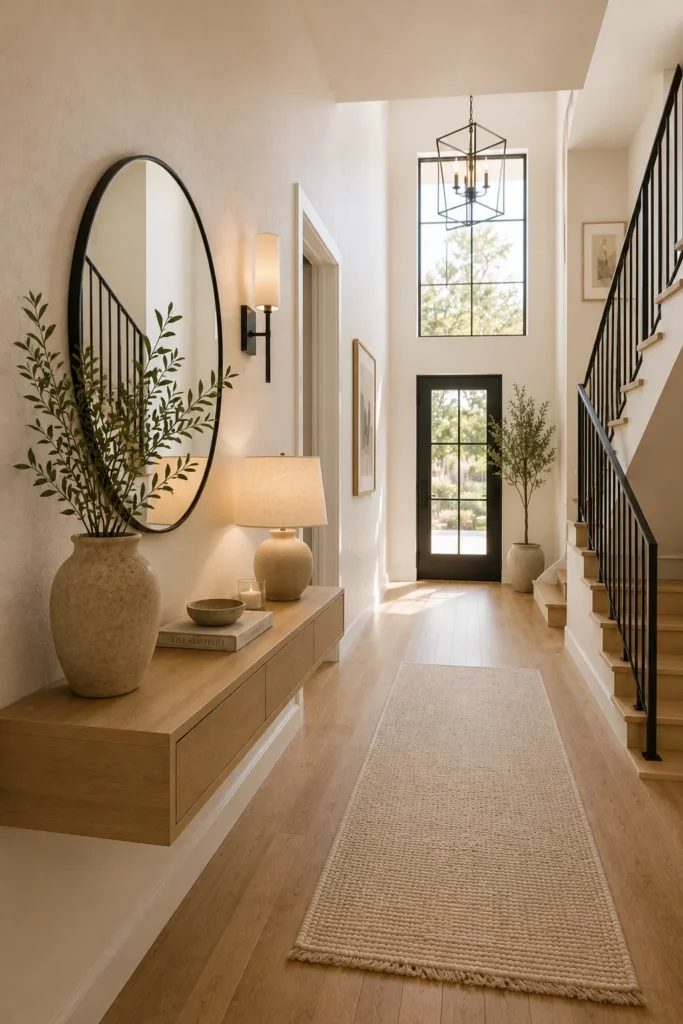
- Keeps floor space open
- Adds storage without bulk
- Creates a modern look
- Works well in compact foyers
Floating consoles provide functionality while maintaining an airy appearance. Because split-level entries can sometimes feel busy due to staircases and multiple pathways, wall-mounted furniture helps reduce visual weight. Pairing a floating console with a mirror or artwork above creates a stylish focal point while preserving valuable floor space.
Floor-To-Ceiling Mirrors
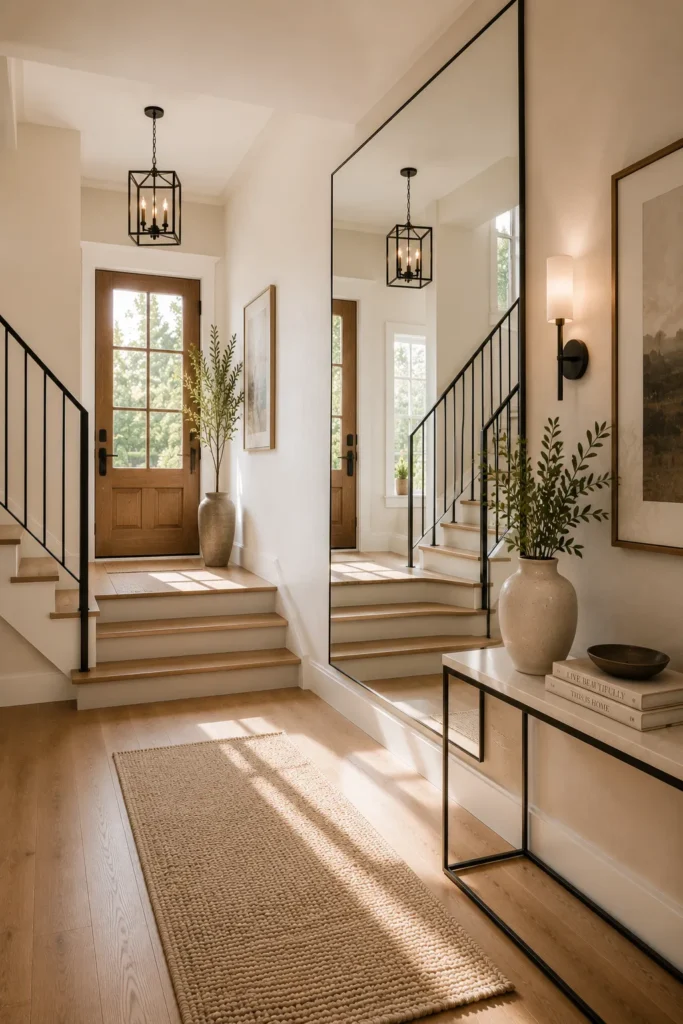
- Reflects natural light
- Makes the space feel larger
- Adds elegance and height
- Creates a brighter atmosphere
Large mirrors are one of the simplest ways to make a split-level foyer feel more spacious. They reflect both natural and artificial light while visually expanding the entry. In my experience, floor-to-ceiling mirrors are especially effective near stair landings because they create depth and make the entire space feel more open and inviting.
Natural Wood Accents
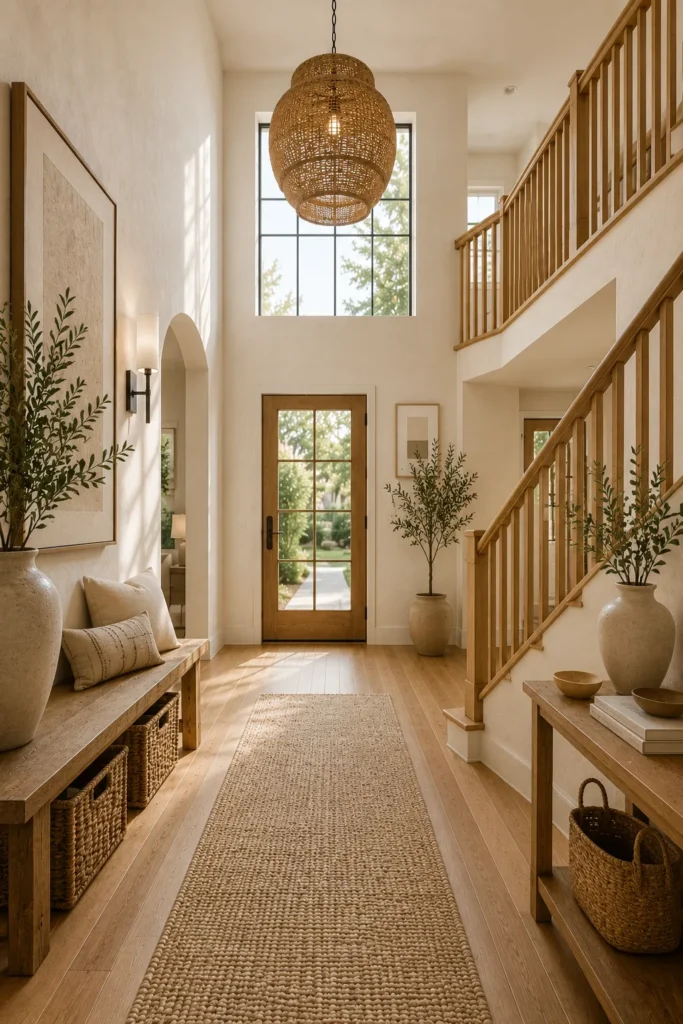
- Adds warmth to the entryway
- Balances modern finishes
- Creates a welcoming atmosphere
- Works with many design styles
Natural wood elements help soften the structural lines often found in split-level homes. Whether incorporated through stair railings, benches, or decorative accents, wood introduces warmth and texture. Lighter finishes create an airy Scandinavian-inspired look, while darker woods add richness and sophistication that feels timeless and designer-approved.
Gallery Wall Displays
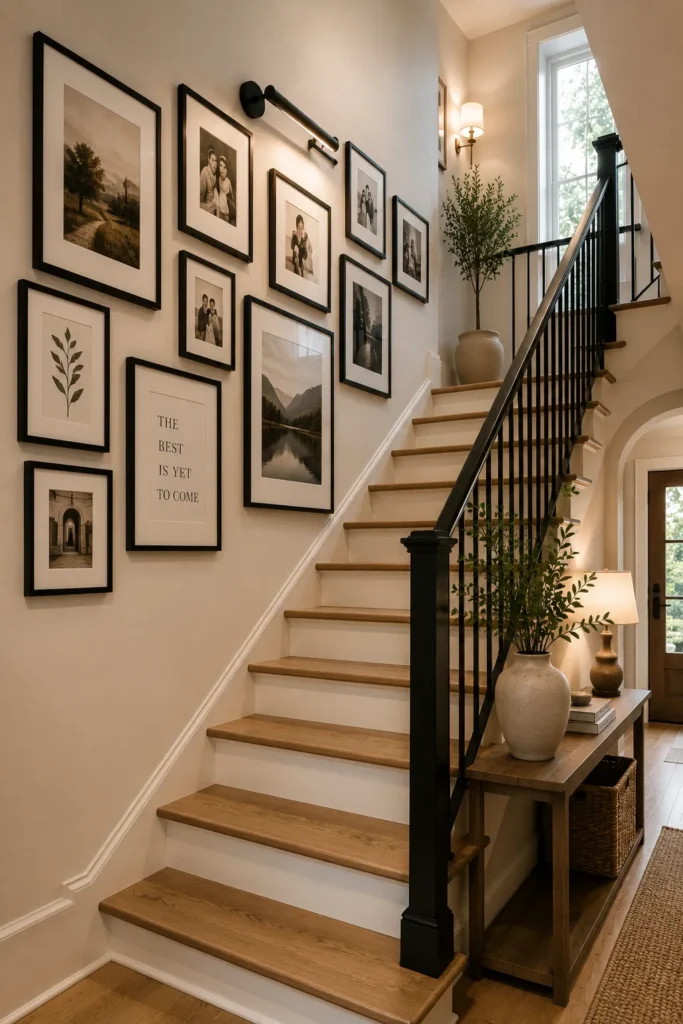
- Adds personality to blank walls
- Creates visual interest along staircases
- Makes the entry feel curated
- Works with both modern and classic homes
A gallery wall can transform an overlooked split-level staircase into a standout design feature. Mixing artwork, family photos, and decorative frames creates a layered look that feels personal and intentional. I’ve noticed that keeping frame colors consistent helps maintain a polished appearance while still allowing the display to feel collected over time.
Built-In Entry Storage
- Reduces everyday clutter
- Maximizes unused wall space
- Creates a custom designer look
- Improves daily organization
Built-in storage helps split-level foyers feel cleaner and more functional. Cabinets, cubbies, or integrated benches provide dedicated places for shoes, bags, and seasonal items. This approach keeps the entrance organized while making the space feel thoughtfully designed rather than crowded with multiple standalone storage pieces.
Black Metal Railings
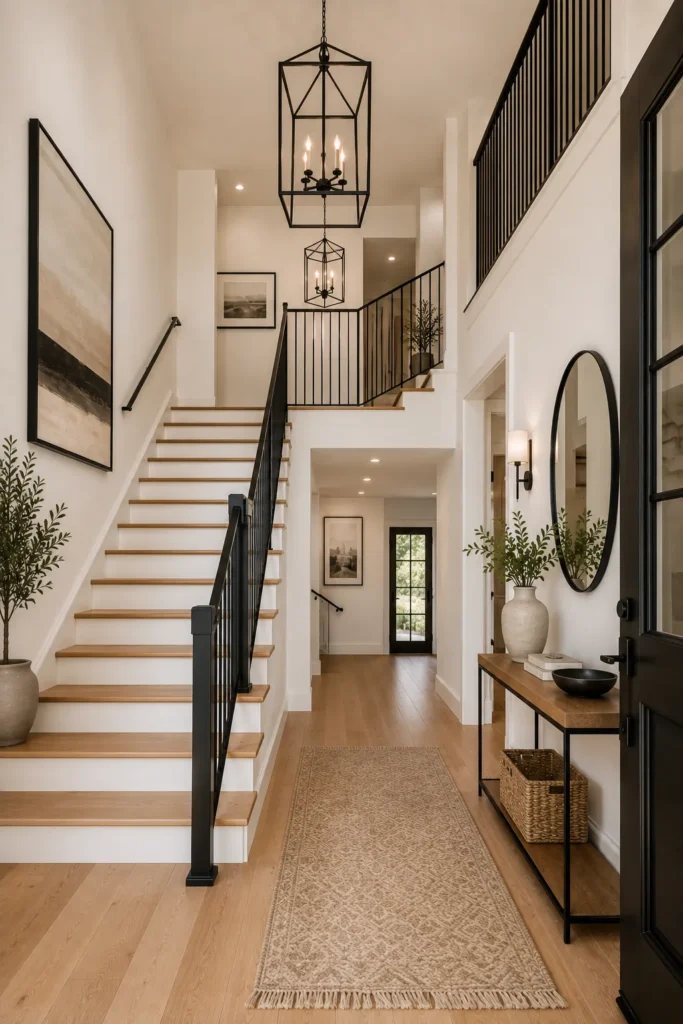
- Creates a modern architectural statement
- Adds contrast and definition
- Works with many interior styles
- Makes staircases feel more updated
Replacing outdated railings with sleek black metal designs can instantly modernize a split-level entryway. The clean lines create a sophisticated architectural element that complements both light and dark color palettes. In my experience, black railings add just enough contrast to make the staircase feel intentional without overwhelming the surrounding decor.
Layered Area Rugs
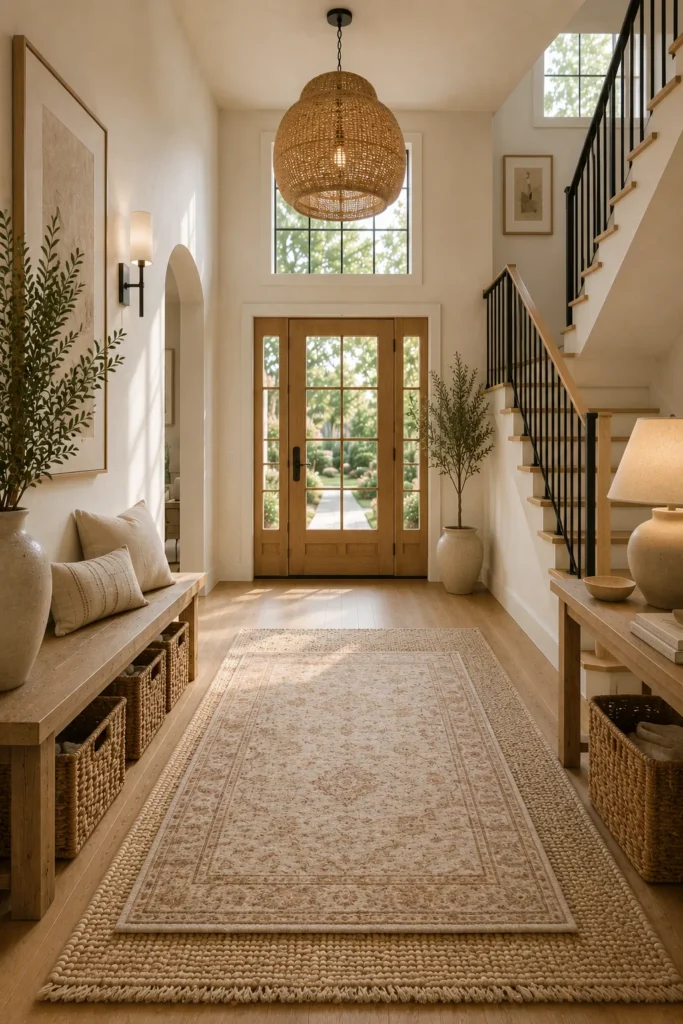
- Adds texture and warmth
- Defines the entry zone
- Softens hard flooring surfaces
- Creates a cozy first impression
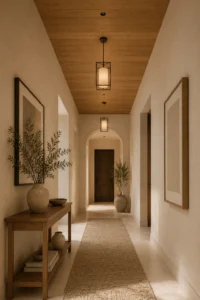
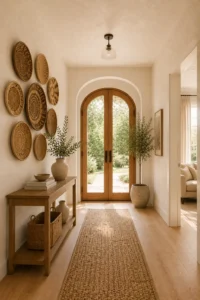
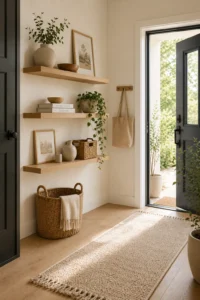
Layered rugs bring depth and comfort to split-level foyers, especially when the space feels open or unfinished. Combining natural textures with subtle patterns helps ground the entryway while adding visual interest. This simple update can make the area feel more inviting and connected to the rest of the home.
Architectural Wall Molding
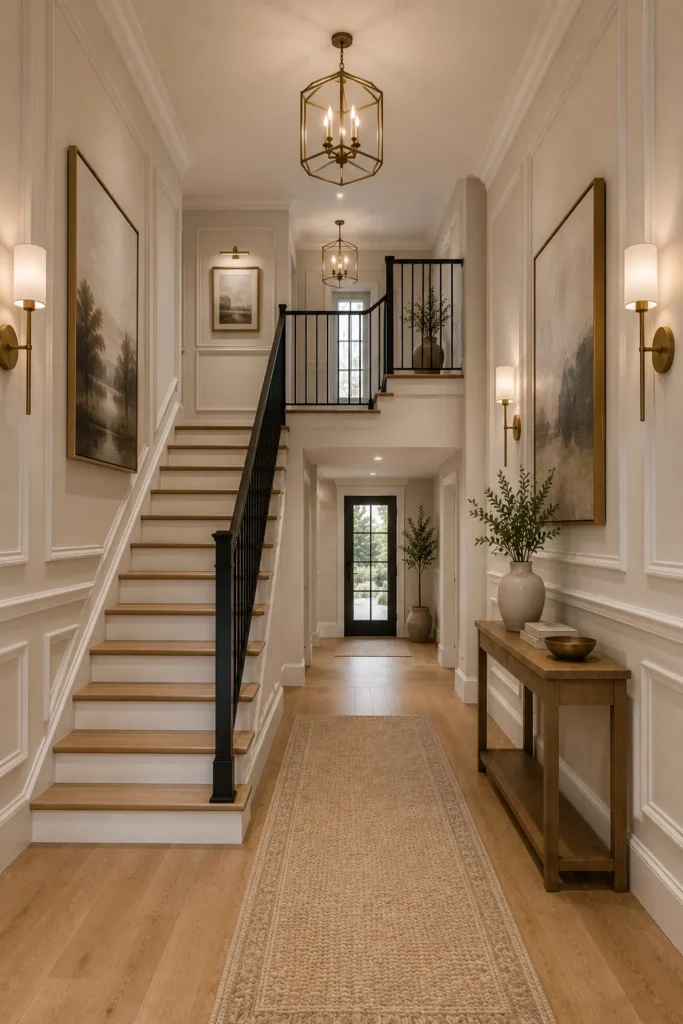
- Adds depth to plain walls
- Creates a high-end custom appearance
- Enhances traditional and modern homes
- Elevates the overall entry design
Wall molding instantly gives a split-level foyer a more refined and custom feel. Simple panel molding can add dimension without overwhelming the space, while more detailed profiles create a classic look. I’ve seen this upgrade dramatically improve plain entryways by making them appear more thoughtfully designed and visually balanced.
Indoor Statement Trees
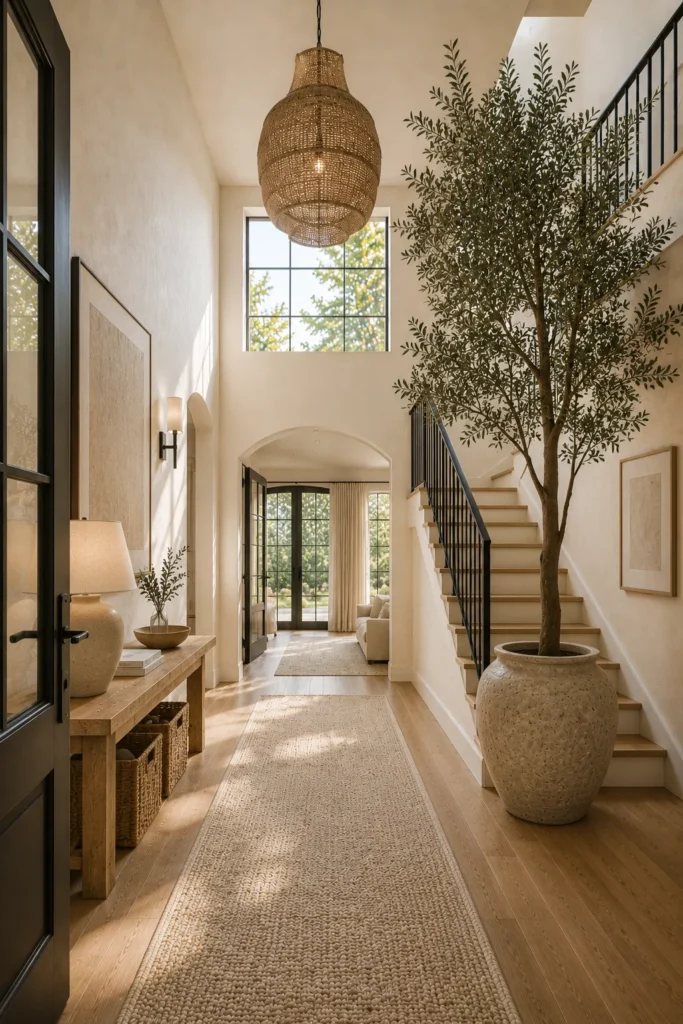
- Adds life and natural texture
- Fills empty corners beautifully
- Creates a welcoming atmosphere
- Enhances the overall scale of the foyer
A large indoor tree can soften the lines of a split-level entryway while adding height and visual interest. Olive trees, fiddle leaf figs, and similar plants work especially well in foyers with tall ceilings. The natural greenery creates an inviting atmosphere and helps the space feel fresh, balanced, and professionally styled.
Conclusion
A designer-approved split-level entryway is all about creating balance, flow, and visual interest. From statement lighting and custom storage to architectural details and natural textures, these ideas can help transform an ordinary entrance into a memorable focal point. Even small upgrades can make a significant difference in how the space looks and feels.
If these split-level-entryway-ideas inspired you, save this article on Pinterest for future reference, try one or two ideas in your own home, and share it with anyone looking to refresh their entryway. A more stylish and welcoming first impression is often easier to achieve than you might think.
FAQ
How do I make a split-level entryway feel larger?
Use mirrors, light colors, and open furniture designs to create a brighter and more spacious appearance.
What type of lighting works best in a split-level foyer?
Oversized pendants, chandeliers, and layered lighting help fill vertical space and create a balanced look.
Are split-level entryways difficult to decorate?
Not at all. Focusing on visual flow, storage, and cohesive design elements helps create a polished and welcoming entrance.
What design style works best for split-level homes?
Modern, transitional, Scandinavian, and contemporary styles often work well because they emphasize clean lines and open spaces.