16 Creative Basement Kitchenette Ideas to Upgrade Your Lower-Level Living Area
A well-designed basement-kitchenette can completely transform a lower level from dark and forgotten into a warm, functional gathering space. With the right lighting, textures, and layout ideas, even compact basement kitchens can feel stylish, cozy, and surprisingly luxurious without needing a massive renovation.
From moody wet bars to floating shelves and compact breakfast corners, these ideas are designed to help you create a basement space that feels brighter, more welcoming, and easier to use every day. I’ve noticed many lower-level kitchens feel cold simply because they lack layered lighting and warmth in the design. Whether you want a relaxing family hangout, a guest-friendly entertainment area, or a cozy downstairs retreat, these practical ideas will help you create a lower-level kitchen space that feels intentional, polished, and beautifully connected to the rest of your home.
Wet Bar With Pendant Lighting
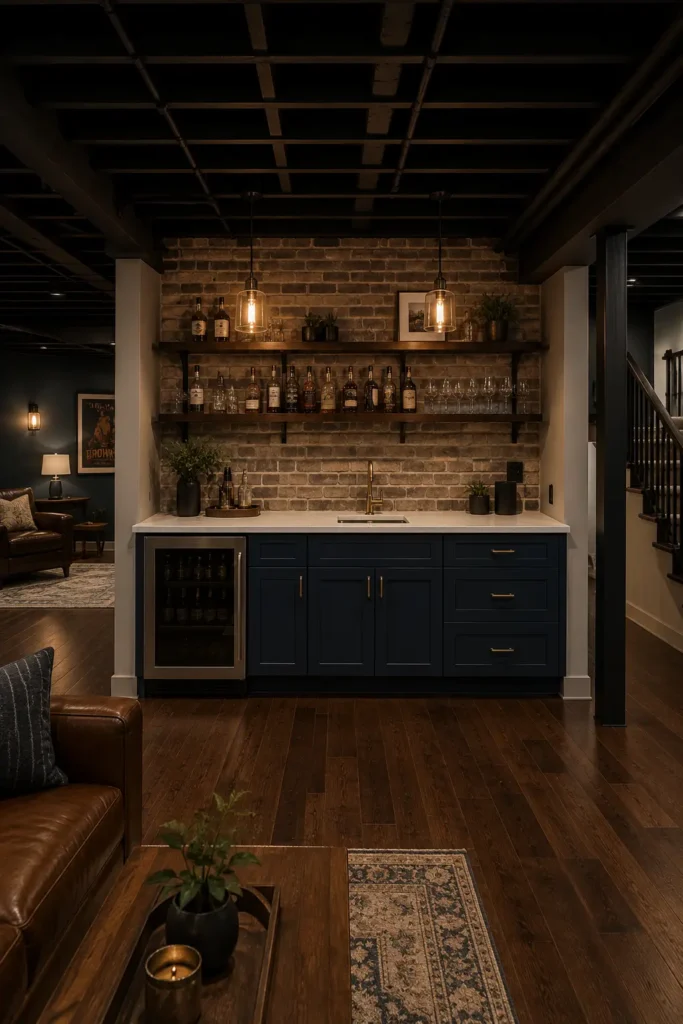
- Creates a dedicated entertaining zone that makes the basement feel like a destination
- Pendant lighting instantly anchors the space and adds a warm, moody bar atmosphere
- Dark cabinetry paired with warm lighting produces an upscale feel on any budget
- A small bar sink means guests never need to go upstairs for drinks
- Open shelving keeps glassware visible and accessible while adding a styled display
A wet bar with the right pendant lighting transforms a basement from a lower level into a true destination. The moment warm light pools over a well-styled bar counter, the entire mood shifts. That’s why many designers recommend investing in statement pendant fixtures before finalizing cabinetry — lighting sets the emotional tone first. Pair dark navy or forest green cabinets with warm-toned pendants and open shelving, and you have a setup that rivals a professional bar. Guests will never want to go back upstairs.
Floating Wood Shelves
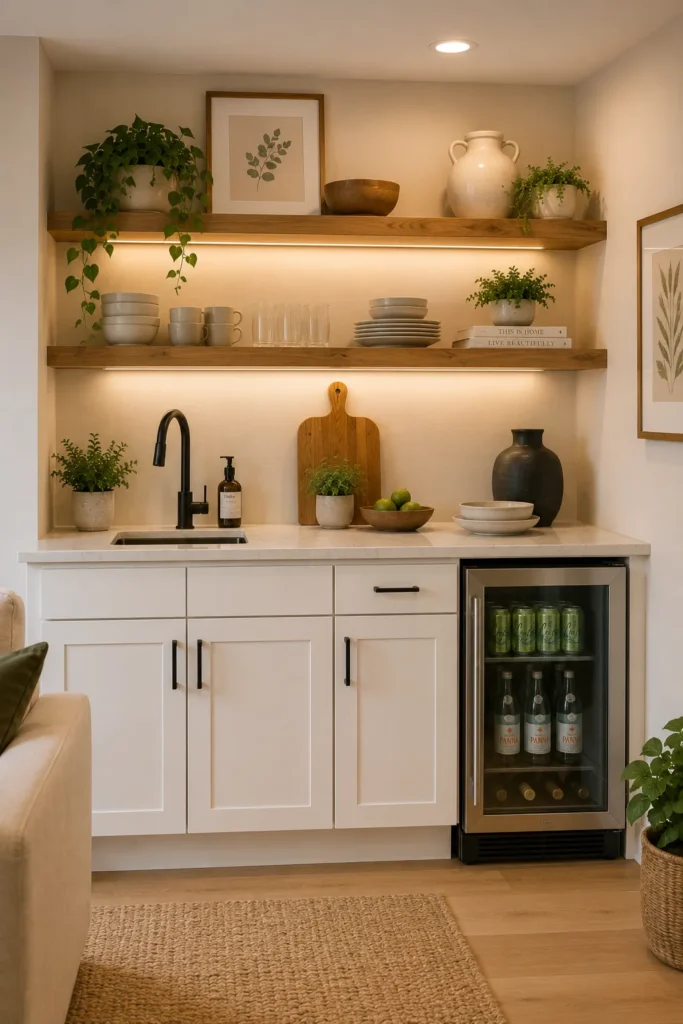
- Keeps basement kitchenettes feeling open visually
- Adds storage without heavy upper cabinets
- Makes lower-level spaces feel brighter instantly
- Perfect for displaying dishes and decor neatly
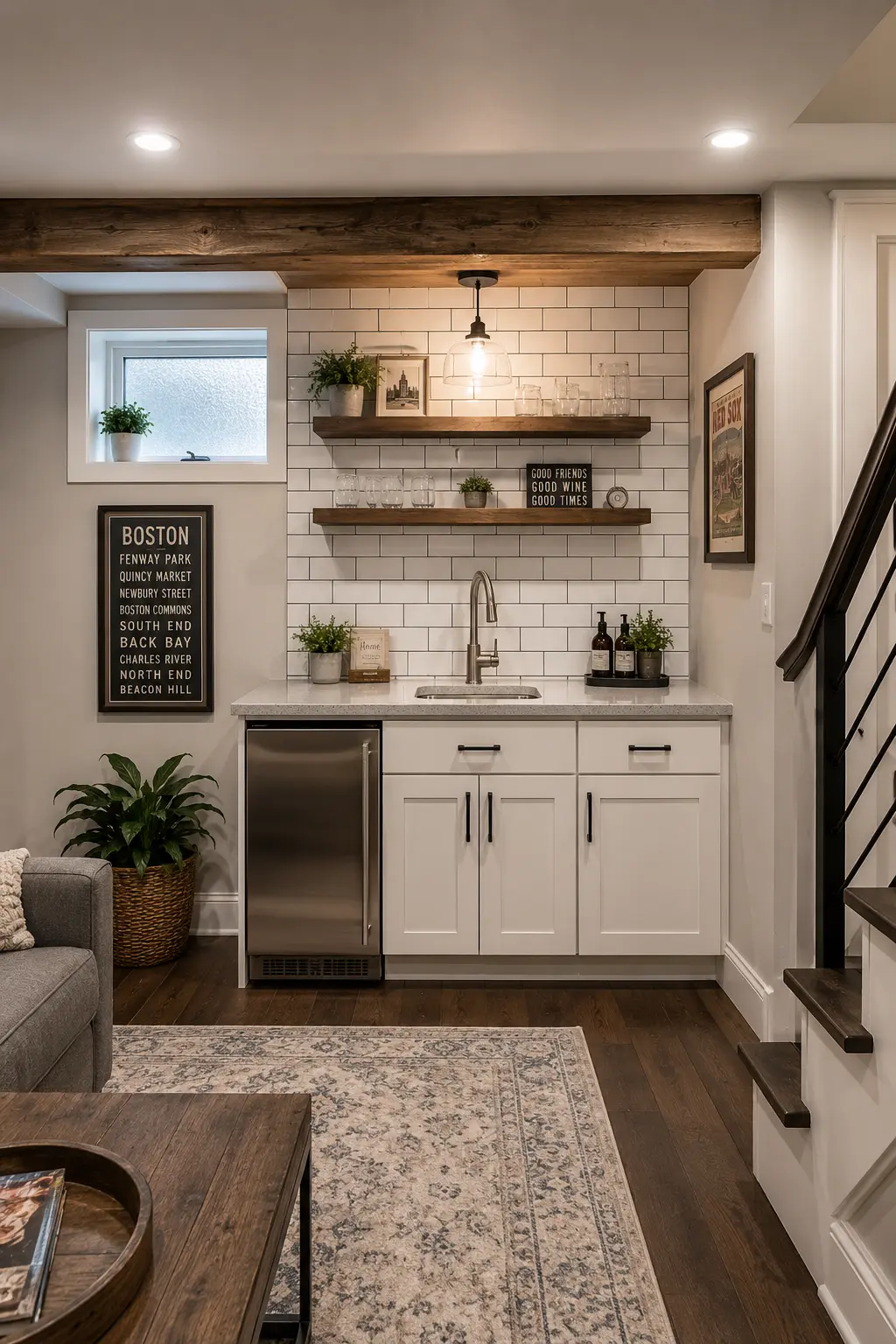
Floating wood shelves instantly make basement kitchenette areas feel more spacious by removing the heaviness of bulky upper cabinets visually. Open shelving keeps walls feeling lighter while still offering practical storage for dishes and decorative accents nearby. I’ve seen this work especially well in lower-level spaces where oversized cabinetry can make ceilings appear lower and layouts feel cramped.
This decor upgrade also improves flexibility because open shelving makes organization feel cleaner and more visually balanced downstairs. In my experience, lightly styled oak shelves with neutral ceramics create the calmest and brightest appearance overall. That’s why many designers recommend floating shelves in basement kitchenettes to create airy Pinterest-inspired spaces that feel modern, welcoming, and naturally open.
Compact Bar Cart Setup
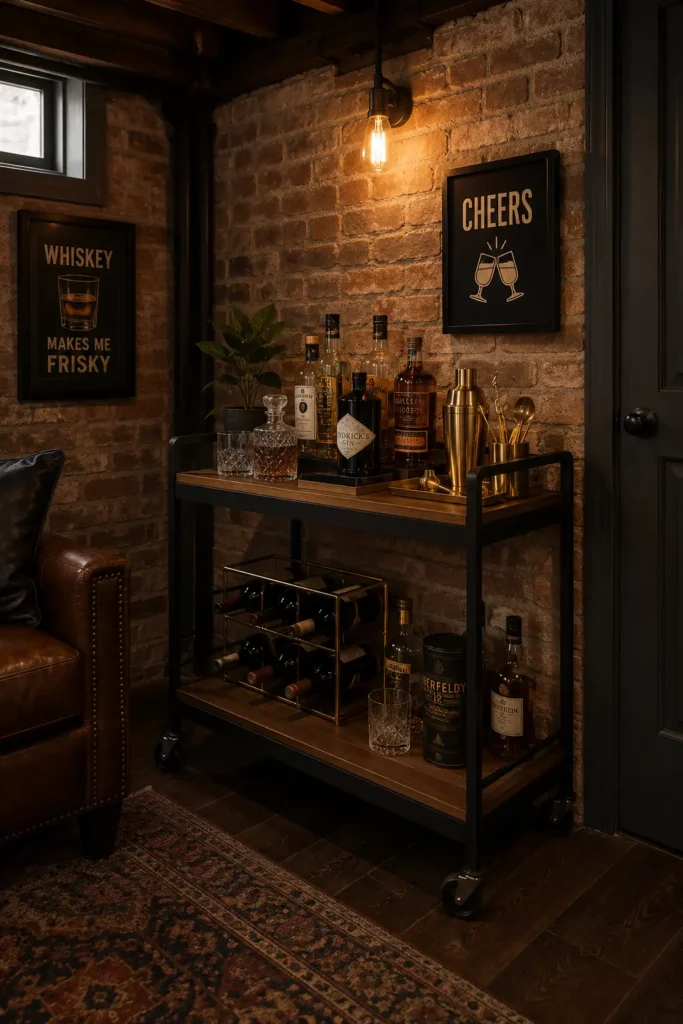
- Adds a functional drink station without requiring any construction or cabinetry work
- Portable design means you can reposition it anytime the layout changes
- Works beautifully in small basement corners that would otherwise sit empty
- Instantly makes the lower level feel like a curated, intentional space
- Mix metals and wood tones on the cart for a layered, high-end look on a budget
A basement corner that once felt forgotten can become the most talked-about spot in your home with one simple addition. A compact bar cart brings instant function and personality to lower-level spaces without a single nail in the wall. I’ve noticed that even a budget-friendly cart styled with the right glassware and a few bottles looks incredibly polished. It creates a clear “entertaining zone” that guests naturally gravitate toward. For small basements especially, a bar cart does the heavy lifting of a full kitchenette setup — in a fraction of the space and cost.
Butcher Block Countertop Station
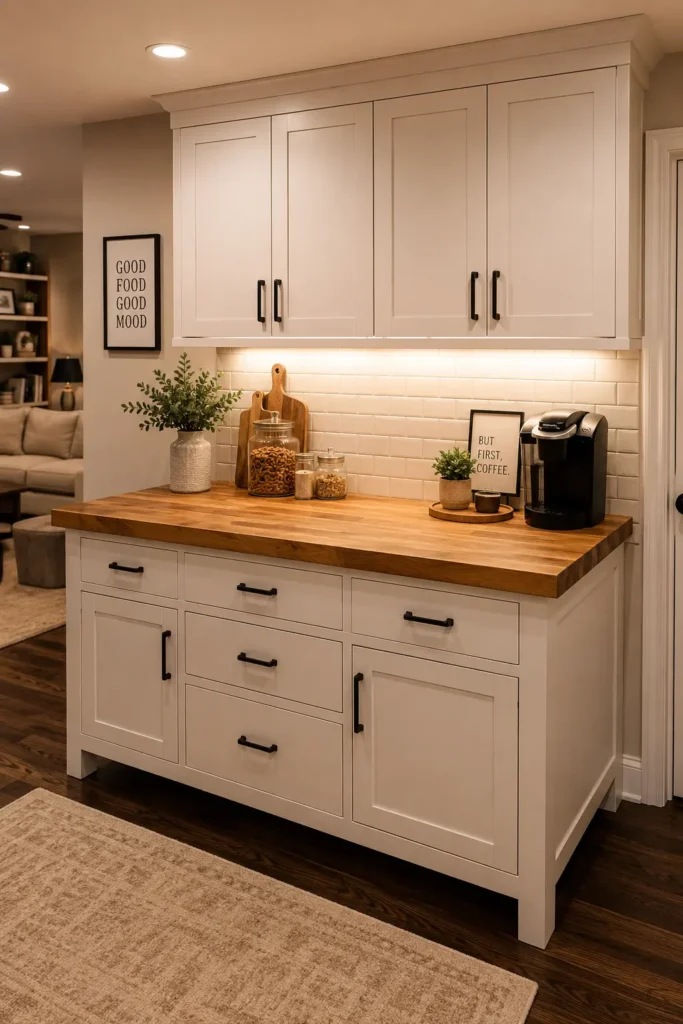
- Butcher block adds warmth and texture that cold stone or laminate simply cannot replicate
- Works as both a prep surface and a visual centerpiece — genuinely two jobs in one
- Easier to install than stone and significantly more affordable for basement builds
- Sanding and re-oiling can refresh the surface for years, making it a long-lasting investment
- Pairs beautifully with white cabinetry, dark hardware, and subway tile for a timeless look
There is something about a butcher block countertop that instantly makes a basement kitchenette feel warm, lived-in, and intentional. Unlike granite or quartz, butcher block brings an organic, tactile quality that works especially well in lower-level spaces, which can sometimes feel cold or dim. In my experience, it is one of the most impactful upgrades you can make per dollar spent — the visual transformation is immediate and significant. Pair it with under-cabinet LED lighting to make the grain glow beautifully in the evening. It handles prep work just as well as it handles compliments from every guest who sees it.
Warm Pendant Lighting
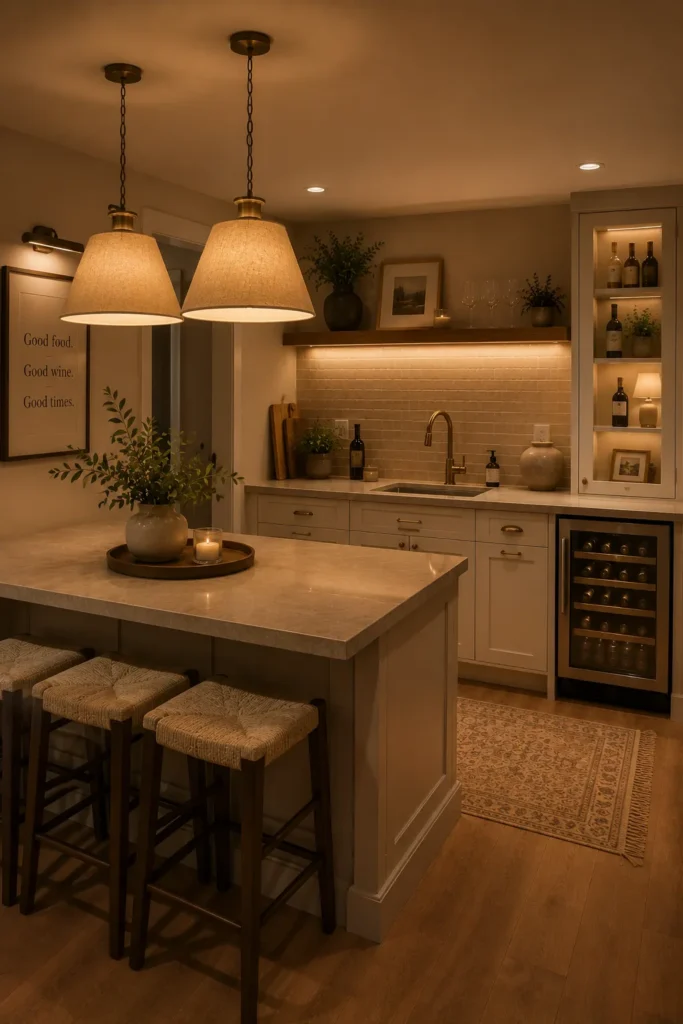
- Brightens basement spaces with soft layered lighting
- Makes lower levels feel warmer and more welcoming
- Creates a stylish focal point above islands
- Adds cozy atmosphere during evenings instantly
Warm pendant lighting instantly transforms basement kitchenette spaces by adding softness and brightness to lower-level layouts that often feel dark or flat visually. Layered lighting creates warmth while helping countertops and dining areas feel more inviting for everyday use. I’ve seen this work especially well in finished basements where overhead lighting alone creates harsh shadows and colder atmospheres downstairs.
This lighting upgrade also improves the overall mood because warm pendants naturally create a cozy focal point above islands and seating areas. In my experience, oversized fixtures with soft warm bulbs create the most balanced and comfortable basement atmosphere. That’s why many designers recommend layered pendant lighting to create Pinterest-worthy lower-level spaces that feel bright, relaxing, and beautifully welcoming.
Mini Fridge With Open Shelving
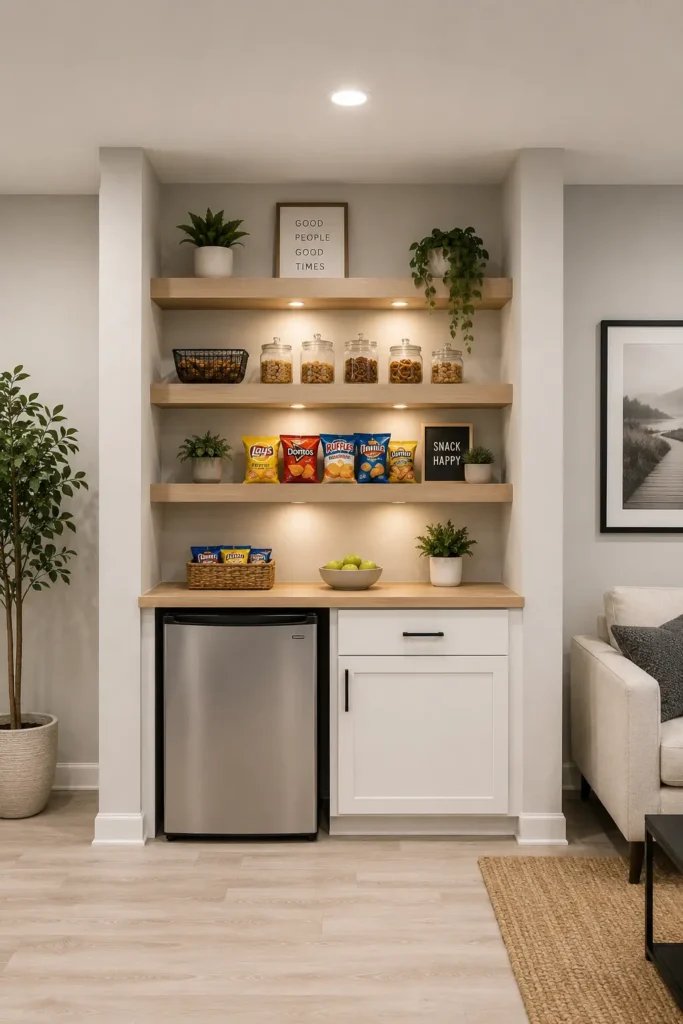
- A mini fridge paired with open shelves creates a complete snack and drink station in minimal square footage
- Open shelving above the fridge adds vertical storage without closing in the space visually
- Style the shelves with baskets, jars, and a small plant to make it feel curated, not cluttered
- This combo works especially well in basement guest rooms or entertainment areas
- Keeps the layout flexible — shelves can hold anything from glasses to board games
One of the smartest lower-level upgrades you can make is pairing a mini fridge with a run of open floating shelves directly above it. This simple combo punches well above its weight — it handles cold storage, display, and everyday organization all at once. That’s why many designers recommend this setup for basement renovations where budget and space are both limited. The open shelving keeps the room feeling airy rather than boxed in, while the fridge below handles all your entertaining essentials. Choose warm wood shelves against a light wall for a look that feels both modern and welcoming.
Two-Tone Cabinet Design
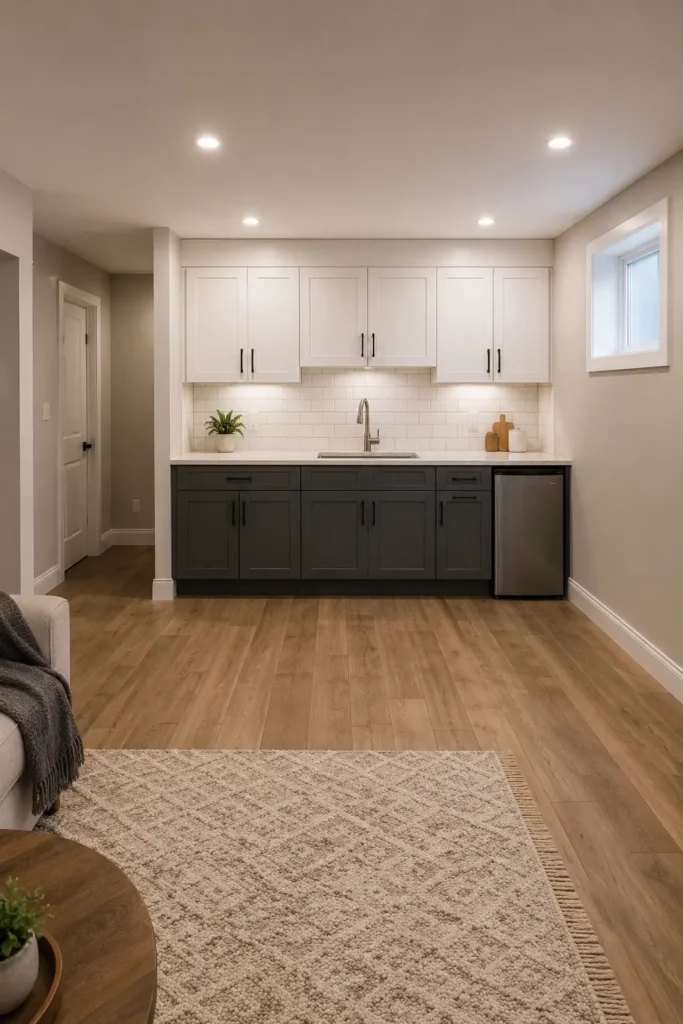
- Two-tone cabinets add visual depth and sophistication without requiring any extra square footage
- Keeping upper cabinets light and lower cabinets dark grounds the space while preventing the room from feeling top-heavy
- This approach breaks up the monotony of all-white or all-dark basement kitchens in a highly intentional way
- Swapping just the lower cabinet doors to a darker shade is an affordable refresh that looks like a full renovation
- The contrast photographs beautifully — making it one of the most Pinterest-saved basement kitchen styles
Two-tone cabinetry is one of those design choices that looks like it required a big budget but can actually be achieved with a coat of paint and new hardware. The visual contrast between light upper cabinets and darker lower ones creates a layered, intentional look that makes even the most compact basement kitchenette feel professionally designed. I’ve noticed that this style performs exceptionally well on Pinterest because it offers something visually interesting at every level of the frame. It also works with nearly any countertop or flooring combination, which makes it one of the most versatile and beginner-friendly upgrades available for lower-level kitchen spaces.
Subway Tile Backsplash Accent
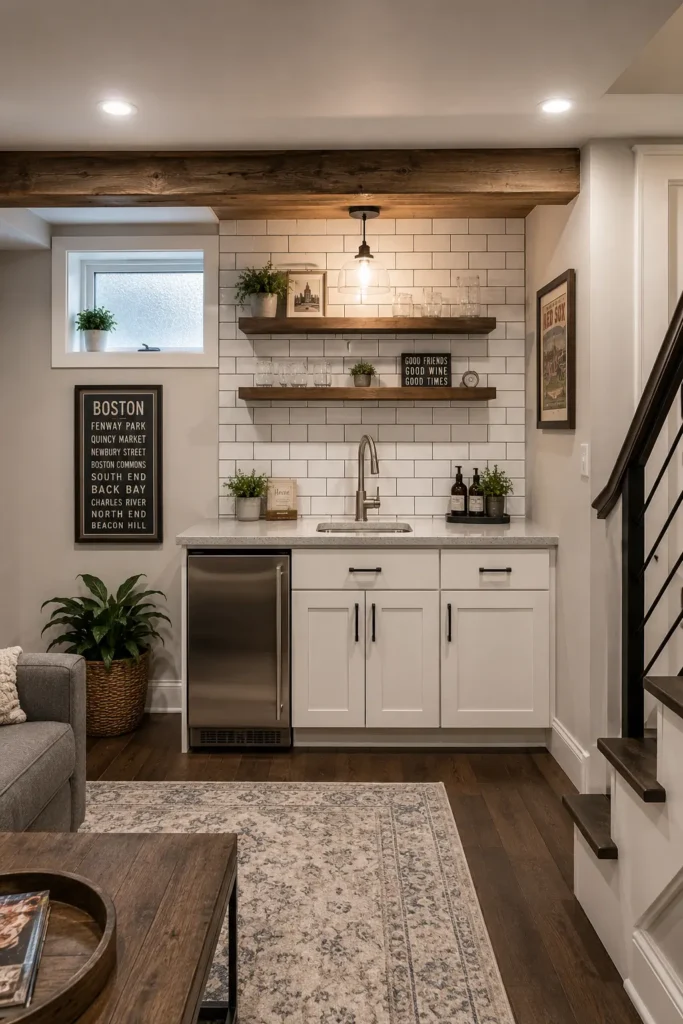
- White subway tile with dark grout is timeless — it never looks dated and suits almost every basement style
- The backsplash protects walls behind the sink while instantly elevating the entire area visually
- Dark grout lines are far more forgiving with everyday splashes, stains, and basement moisture
- Even a small backsplash installation — just one wall — creates a strong kitchen identity in the space
- Beveled subway tiles catch light differently than flat tiles, adding subtle dimension and texture
A subway tile backsplash is one of the fastest ways to signal that a basement space was designed with real intention. It draws the eye immediately, frames the sink area beautifully, and adds a layer of texture that painted walls simply cannot deliver. In my experience, even covering just the sink wall with subway tile makes the entire lower-level kitchen feel finished and polished. The white-and-dark-grout combination is especially smart for basements — it handles moisture, resists visible staining, and photographs beautifully for anyone sharing their space on Pinterest or planning a future home listing.
Curved Bar Stools
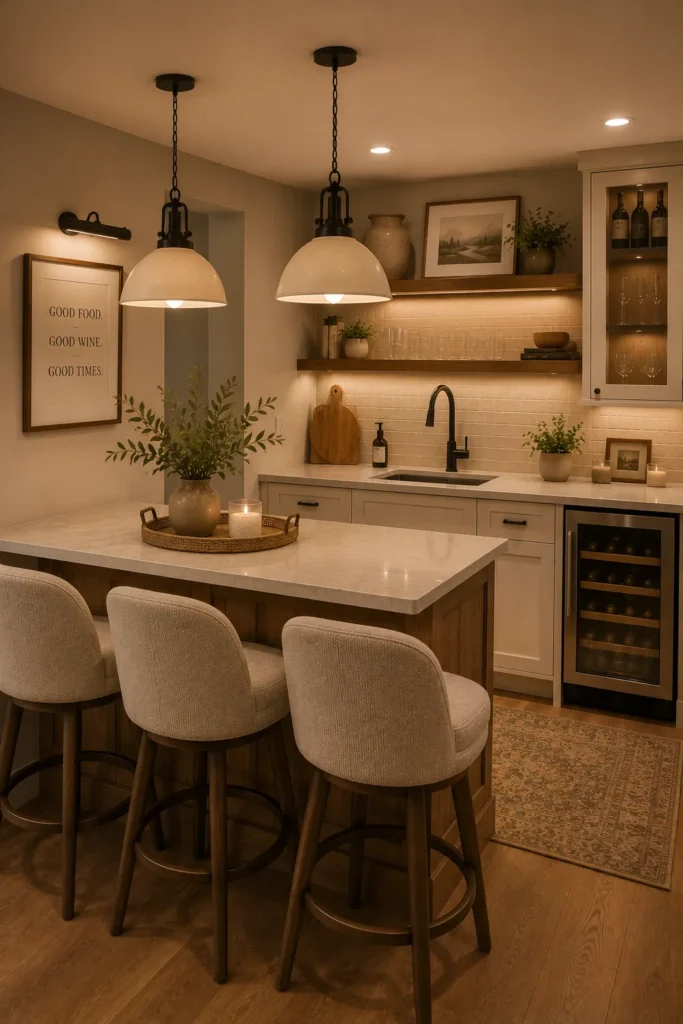
- Softens sharp lines in basement kitchenettes
- Adds comfort and warmth to seating areas
- Makes entertaining spaces feel more inviting
- Works beautifully with modern neutral designs
Curved bar stools instantly soften basement kitchenette layouts by adding rounded shapes that balance stone surfaces, cabinetry, and straight architectural lines beautifully. Upholstered seating also creates a cozier atmosphere that makes lower-level kitchens feel warmer and more welcoming overall. I’ve noticed this idea works especially well in modern basements where softer furniture shapes prevent spaces from feeling too cold or rigid visually.
This seating choice also improves comfort because curved stools naturally feel more relaxed and supportive during meals or gatherings downstairs. In my experience, textured neutral fabrics create the most inviting and visually balanced basement atmosphere overall. That’s why many designers recommend rounded seating to create cozy Pinterest-inspired lower-level kitchen spaces that feel stylish, comfortable, and thoughtfully designed for entertaining.
Under-Stair Storage Kitchen
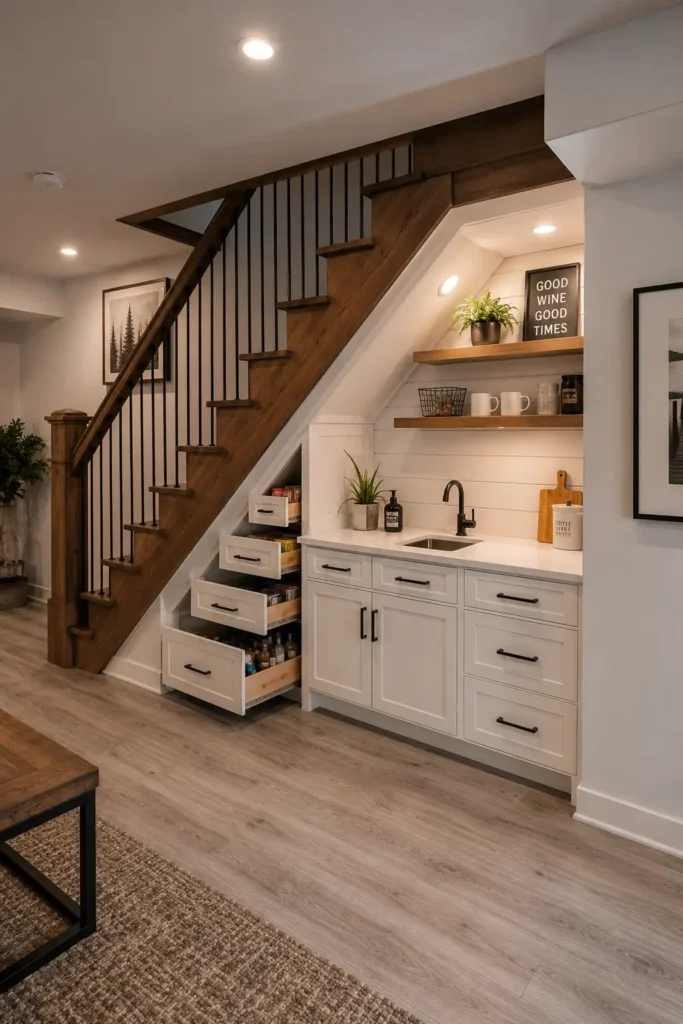
- Transforms completely wasted under-stair space into a hardworking, fully functional kitchen zone
- Custom pull-out drawers fit perfectly into the angled geometry that standard cabinets cannot fill
- Adding a small sink here creates a surprisingly complete prep and cleanup station in minimal footprint
- The built-in look feels intentional and custom — far more polished than freestanding furniture solutions
- Works especially well in basements where the staircase lands directly into the main living or entertaining area
The space beneath a basement staircase is one of the most underused opportunities in any home renovation. Most homeowners walk past it every single day without realizing it holds enough room for a complete lower-level kitchen nook. I’ve seen this transformation work remarkably well — what was once a dark, dusty triangle becomes a fully functional prep station with drawers, a countertop, and even a small sink tucked neatly inside. The angled ceiling of the staircase actually adds character rather than limitation. With the right lighting and cabinetry finish, this setup looks like it was always meant to be there.
Built-In Wine Storage
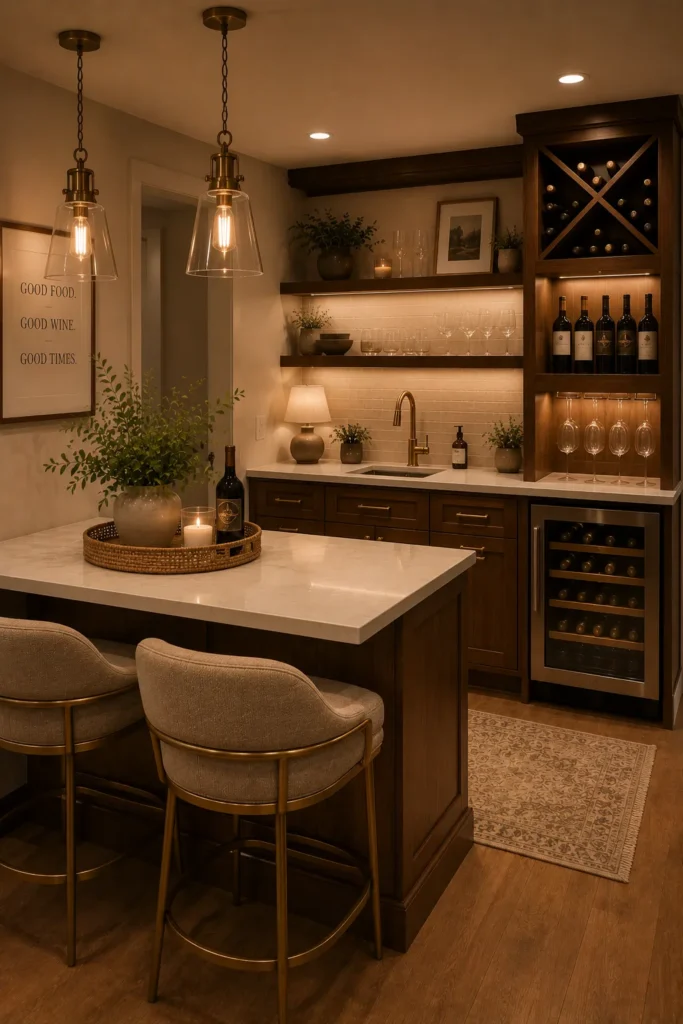
- Keeps entertaining essentials neatly organized
- Adds a luxurious custom-built appearance
- Makes basement kitchenettes feel more functional
- Creates visual interest without extra clutter
Built-in wine storage instantly upgrades basement kitchenette layouts by creating organized display space that feels custom and visually polished downstairs. Dedicated wine shelving keeps bottles neatly arranged while also adding warmth and texture to cabinetry walls naturally. I’ve seen this work especially well in entertainment-focused basements where stylish storage helps lower-level spaces feel more intentional and complete overall.
This storage feature also improves functionality because drinks remain accessible during gatherings without overcrowding countertops or cabinets visually. In my experience, combining warm wood shelving with soft accent lighting creates the most inviting basement atmosphere. That’s why many designers recommend built-in wine storage to create elegant Pinterest-inspired lower-level kitchens that feel practical, luxurious, and beautifully designed for entertaining guests comfortably.
Pegboard Tool and Supply Wall
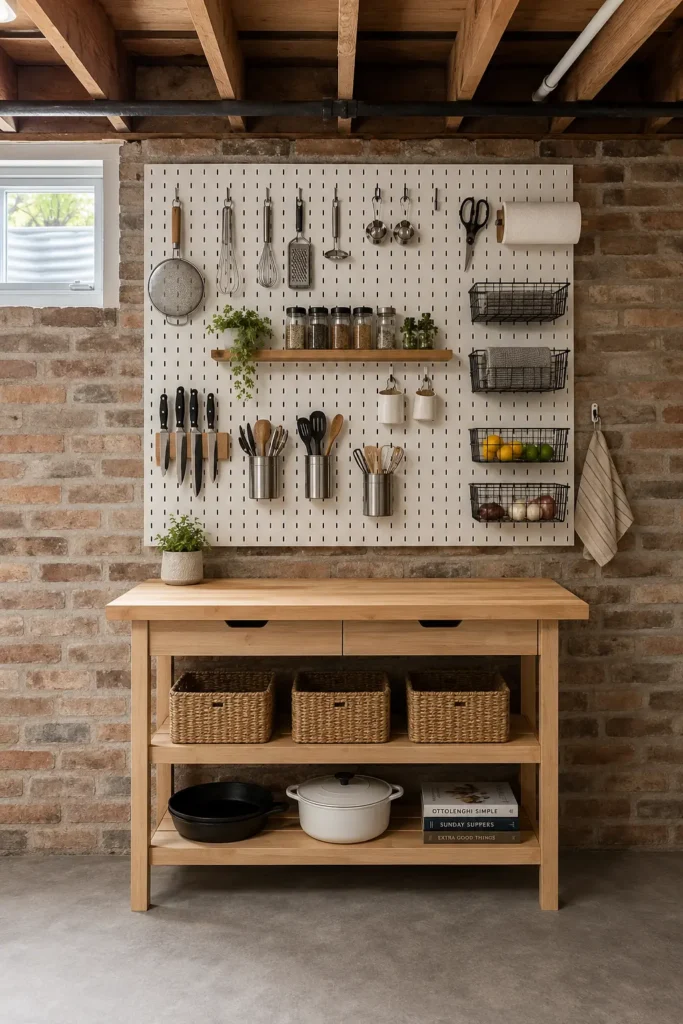
- Turns a blank basement wall into a fully functional, customizable storage system overnight
- Hooks and baskets can be rearranged anytime — no tools, no commitment, no damage to walls
- Keeps countertops completely clear, which makes even a tiny prep area feel spacious and usable
- Great for storing utensils, small appliances, spice jars, and cutting boards all in one visible spot
- A painted pegboard in a contrasting color becomes a design feature, not just a storage solution
A pegboard wall is one of those ideas that looks simple but completely transforms how a small basement kitchen functions day to day. Instead of cramming drawers and cabinets into limited square footage, you move storage vertically — freeing up every inch of counter space below. I’ve seen this work beautifully in compact basement setups where there is simply no room for additional cabinetry. The beauty of pegboard is its total flexibility — rearrange it in minutes as your needs change. Choose a bold color or keep it neutral, but either way, it makes the entire lower-level prep area feel intentional, organized, and surprisingly stylish.
Sliding Barn Door Concealment
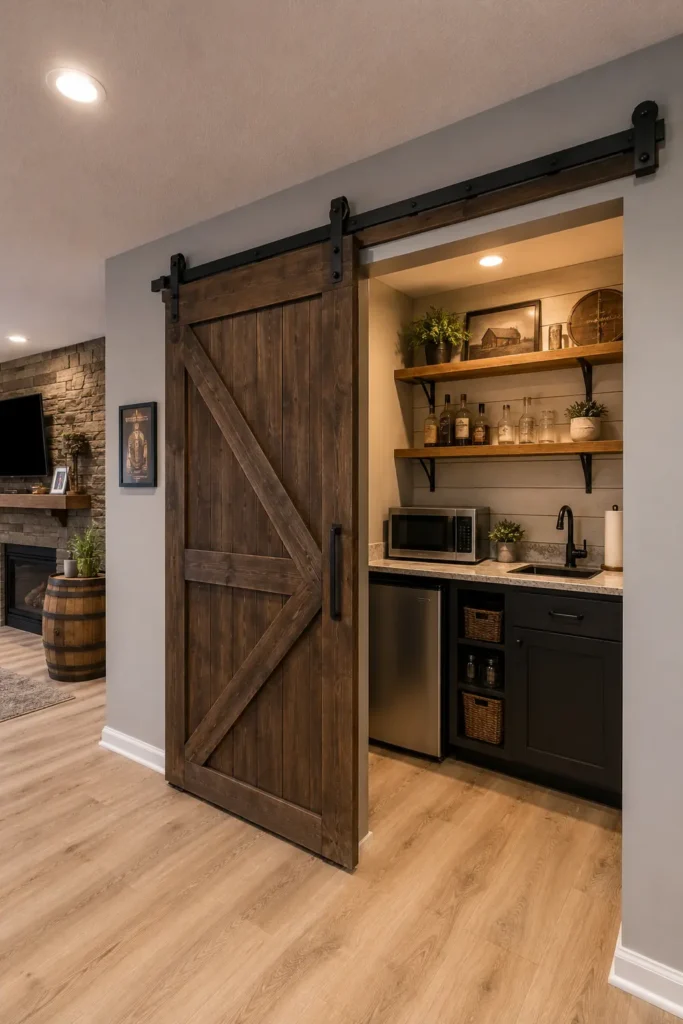
- A sliding barn door lets you completely hide the kitchenette when it’s not in use — keeping the basement looking clean
- The barn door itself becomes a strong decorative feature that adds rustic character to the lower-level space
- Sliding doors require zero swing clearance, which is a significant advantage in tight basement layouts
- When open, the door frames the kitchenette beautifully — creating a defined, intentional zone within the room
- Dark wood barn doors against light walls create high contrast that photographs exceptionally well for Pinterest
One of the smartest design moves in a basement kitchenette is giving yourself the ability to simply close it away. A sliding barn door does exactly that — hiding counters, appliances, and shelving behind one beautiful panel when entertaining calls for a cleaner look. In my experience, homeowners who add a barn door concealment to their lower-level kitchen consistently say it is one of their favorite decisions. It solves the “messy kitchen” problem without any construction. The door adds warmth, texture, and that scroll-stopping rustic detail that performs incredibly well on visual platforms like Pinterest.
Built-In Beverage Station
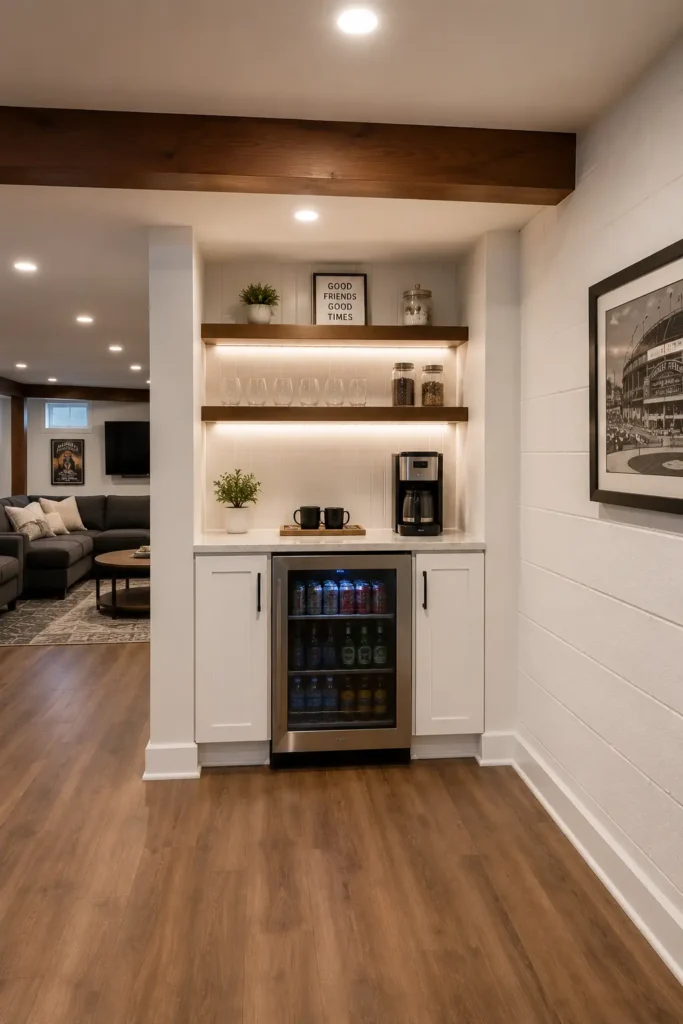
- A dedicated beverage station makes the basement a fully self-sufficient entertaining space for any occasion
- Built-in beverage fridges keep drinks perfectly chilled without taking up valuable countertop or floor space
- Open shelving above the station creates a styled display area for glasses, a coffee maker, or a small espresso machine
- LED strip lighting under the shelves adds a warm glow that makes the station feel like a premium bar feature
- This setup works equally well for a family movie room, a game room, or an adult entertaining lounge downstairs
A built-in beverage station completely redefines how a basement functions during gatherings. Instead of guests constantly heading upstairs for drinks, everything they need is right there — cold, organized, and beautifully displayed at eye level. That’s why many interior designers treat the beverage station as the true heart of a lower-level entertaining space rather than an afterthought. Pair a sleek beverage fridge with warm LED shelf lighting and a few well-chosen glasses on open shelving, and the result looks far more expensive than it actually is. It is one of the highest-impact, most practical upgrades you can add to any finished basement kitchen area.
Chalkboard Wall Menu Display
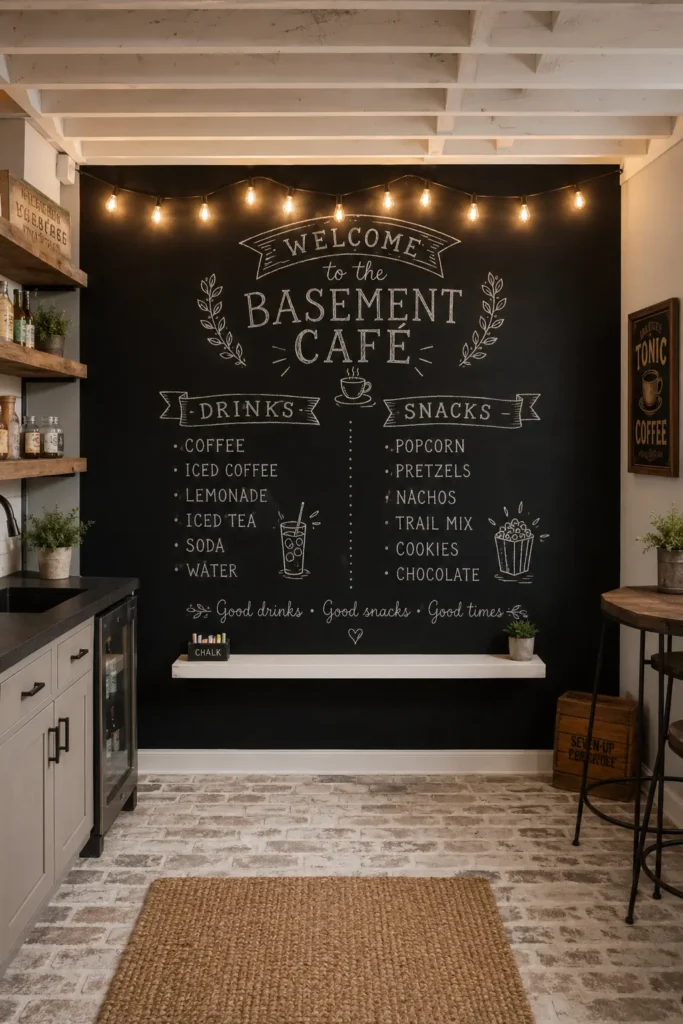
- A chalkboard wall adds a playful, café-inspired personality to the basement that no other finish can replicate
- It doubles as functional signage — write the weekly menu, drink specials, or game night snack list directly on the wall
- Chalkboard paint is one of the most affordable accent wall options available, requiring only one specialty paint product
- The matte black surface absorbs light rather than reflecting it, which adds depth and drama to lower-level spaces
- String lights along the top edge of the chalkboard turn this wall into a warm, atmospheric focal point after dark
Few design ideas deliver as much personality per dollar as a chalkboard accent wall inside a basement kitchen space. It transforms a plain painted wall into something interactive, expressive, and endlessly changeable — which makes it especially popular with families, entertainers, and anyone who loves a relaxed café atmosphere at home. I’ve tried this in several basement makeover projects and the reaction is always the same: people walk in, smile, and immediately reach for the chalk. Pair it with Edison bulb string lights draped along the top, and this wall becomes the most photographed corner of the entire lower level without question.
Floating Cabinet With Microwave Nook
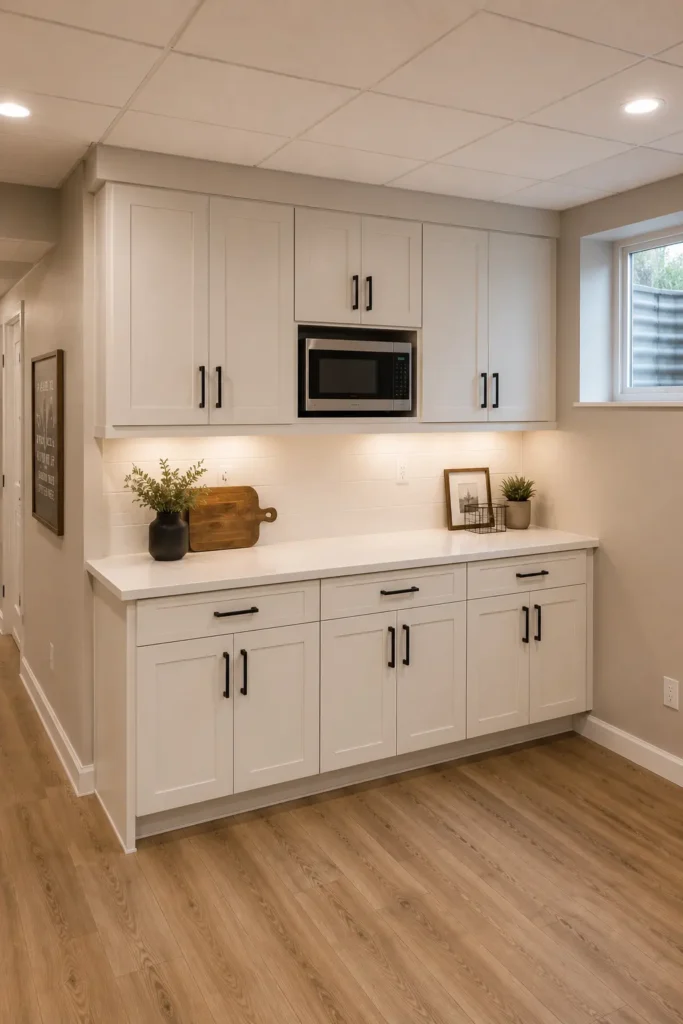
- Floating cabinets free up floor space, making the basement feel larger and less cramped
- A built-in microwave nook keeps the appliance off the counter and fully integrated into the design
- The floating look works especially well in low-ceiling basements where tall cabinets would feel visually heavy
- Under-cabinet lighting below the floating unit adds warmth and makes the counter more functional at night
- This setup delivers a true kitchen feel without requiring a full remodel or significant construction work
Most people assume a basement needs a full renovation to feel like a real kitchen — but a well-placed floating cabinet with a microwave nook completely changes that perception. This single wall installation delivers storage, appliance space, and countertop area in one cohesive unit. That’s why many designers recommend it as the anchor piece for any basement kitchenette ideas project, especially in open-plan lower levels where visual continuity matters. The floating design keeps the floor visible, which tricks the eye into seeing a larger room. Add warm LED lighting beneath and the whole space shifts from cold basement to boutique.
Conclusion
Small design upgrades can completely change how a basement kitchenette looks and feels throughout everyday life. Warm lighting, layered textures, smart storage, and cozy seating help lower-level spaces feel brighter, more functional, and far more inviting without overwhelming the layout. I’ve seen how thoughtful basement designs often turn unused lower levels into favorite gathering spots for relaxing and entertaining comfortably. These basement-kitchenette ideas are meant to inspire practical changes that make downstairs spaces feel stylish, warm, and beautifully finished. Save your favorite ideas to Pinterest, try a few in your own home, and share this article with anyone wanting a more welcoming and functional lower-level kitchen area.
FAQs
How do I make a basement kitchenette feel brighter?
Use warm layered lighting, reflective surfaces, and lighter finishes to help lower-level spaces feel more open.
What flooring works best in basement kitchenettes?
Luxury vinyl plank and moisture-resistant flooring work well because they are durable and basement-friendly.
Are wet bars good for small basements?
Yes, compact wet bars create functional entertaining areas without requiring a full kitchen downstairs.
What colors work best in basement kitchenettes?
Warm neutrals, soft whites, earthy wood tones, and muted charcoal shades create cozy balanced spaces.