10 Easy Steps to Build a Beautiful Natural Swimming Pool
A natural swimming pool combines the beauty of a backyard pond with the enjoyment of a traditional swimming pool. Instead of relying heavily on chlorine and harsh chemicals, it uses aquatic plants, biological filtration, and thoughtful landscaping to keep the water clean and healthy.
Whether you’re creating a peaceful garden retreat or a family-friendly swimming space, learning how to build a natural swimming pool starts with careful planning. Follow these practical steps to create a sustainable, beautiful, and refreshing backyard oasis that blends seamlessly with nature.
1. Choose the Location
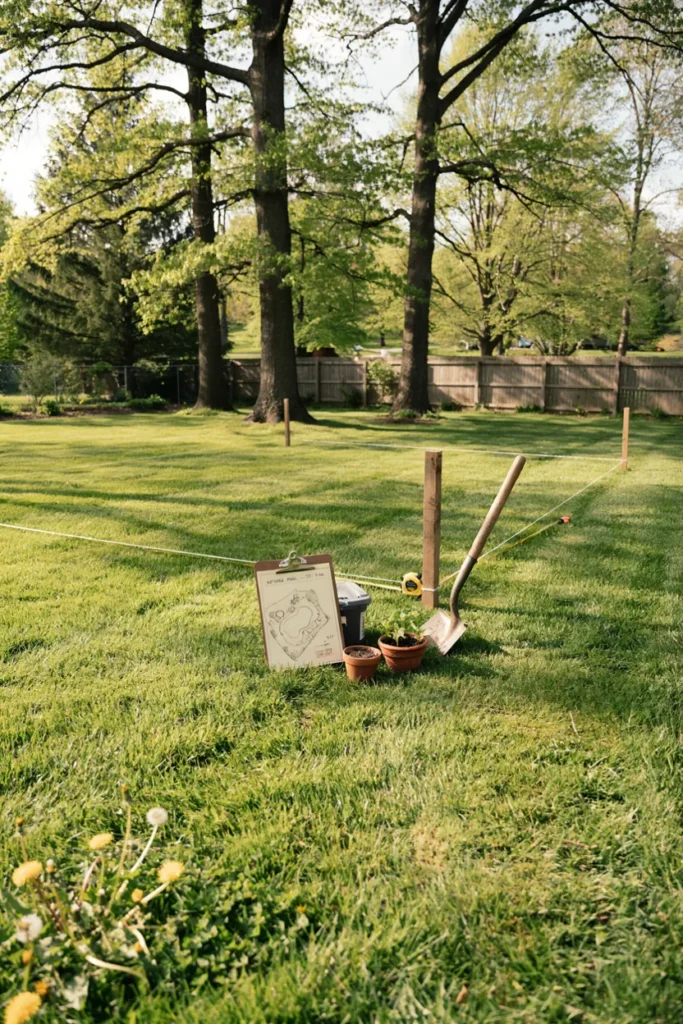
Selecting the right location is the first step toward building a successful natural swimming pool. Choose a sunny, level area with good drainage and enough room for both the swimming section and the regeneration zone. Avoid placing the pool beneath large trees because falling leaves increase maintenance and reduce water quality. A carefully planned location also makes construction easier while helping the finished pool blend naturally into the surrounding landscape.
- Why You’ll Love It: Creates the perfect foundation for a healthy natural pool.
- Best For: Large gardens, open yards, and sunny landscapes.
- Budget Tip: Choose a naturally level area to reduce excavation costs.
If you love eco-friendly outdoor spaces, you’ll also enjoy these freshwater DIY pool ideas. For more backyard inspiration, browse these secret backyard garden ideas.
2. Plan Pool Dimensions
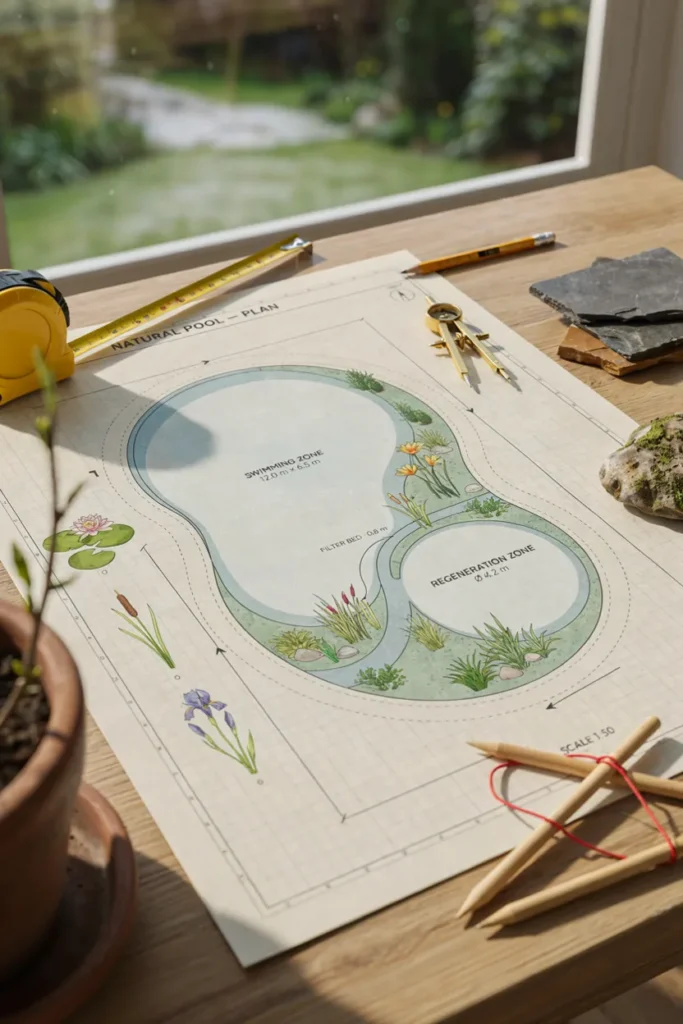
A well-planned layout improves both the appearance and performance of your natural swimming pool. Separate the swimming area from the plant regeneration zone while allowing enough space for comfortable movement around the pool. Curved layouts often blend more naturally into the landscape than sharp corners. Careful planning before excavation helps reduce mistakes and creates a pool that feels balanced, functional, and visually connected to your backyard.
- Why You’ll Love It: Creates a balanced layout that’s both practical and beautiful.
- Best For: DIY builders planning custom backyard pools.
- Budget Tip: Sketch your design before purchasing materials.
3. Excavate the Pool
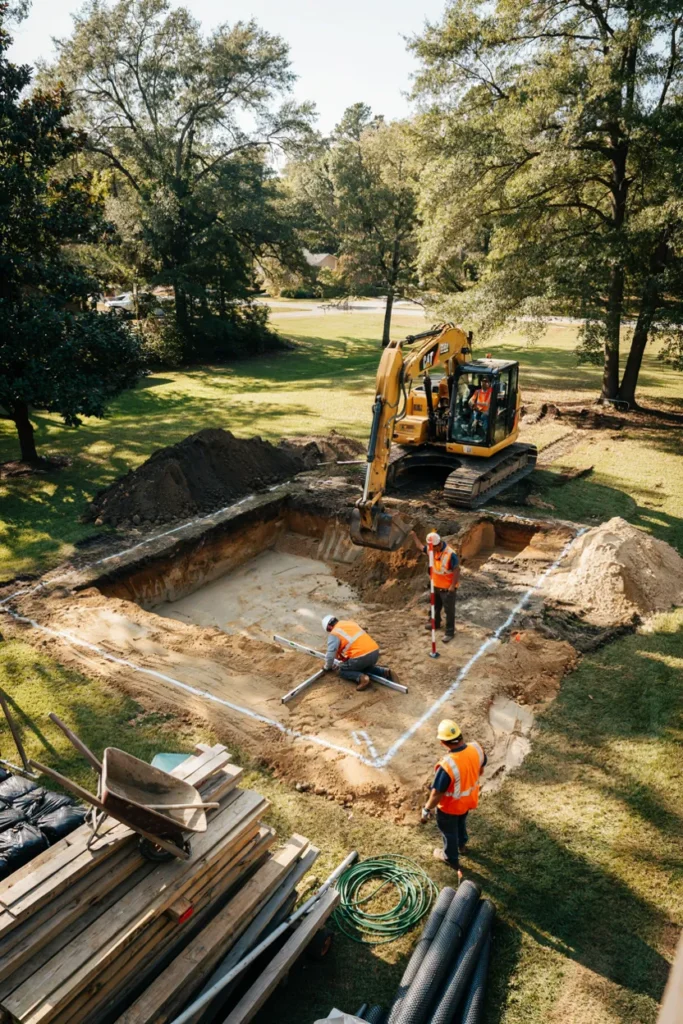
Excavation transforms your design into reality by creating the pool’s swimming and regeneration zones. Dig gradually while maintaining smooth transitions between shallow and deep areas. Compact the soil carefully before moving to the next stage to improve long-term stability. Accurate excavation also simplifies liner installation and creates natural-looking contours that make the finished pool resemble a peaceful swimming pond rather than a traditional backyard pool.
- Why You’ll Love It: Provides the shape that defines the entire project.
- Best For: New natural swimming pool installations.
- Budget Tip: Rent excavation equipment instead of hiring full-service contractors.
4. Create Plant Zone
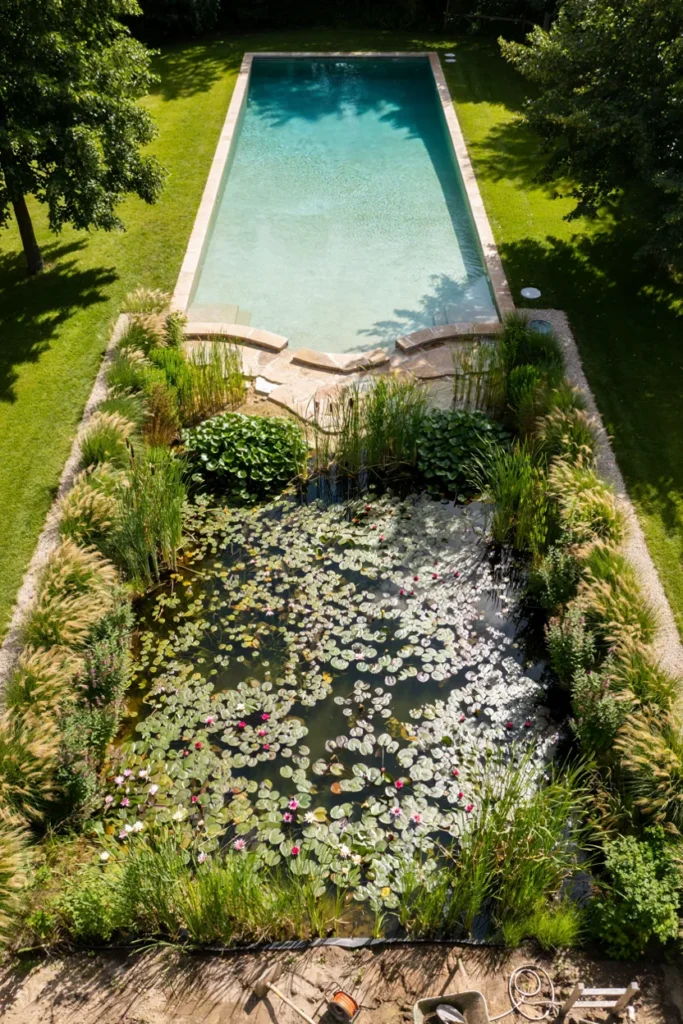
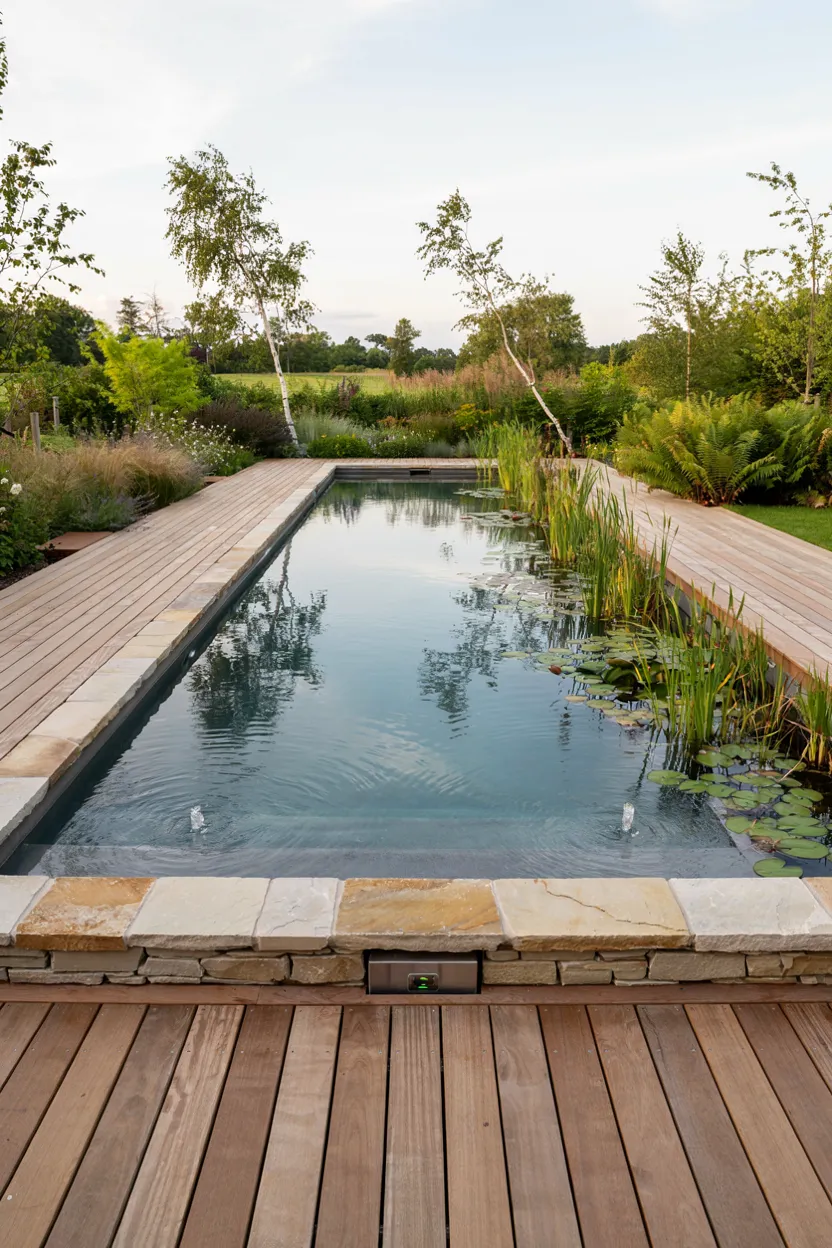
The regeneration zone naturally filters the water using aquatic plants, gravel, and beneficial microorganisms. Fill this section with a variety of native water plants that absorb excess nutrients while supporting healthy biological activity. A properly designed plant zone improves water clarity, reduces algae growth, and creates a beautiful natural appearance that blends perfectly into the surrounding garden landscape.
- Why You’ll Love It: Keeps water clean while adding natural beauty.
- Best For: Eco-friendly backyard swimming pools.
- Budget Tip: Purchase young aquatic plants that will grow over time.
5. Install Waterproof Liner
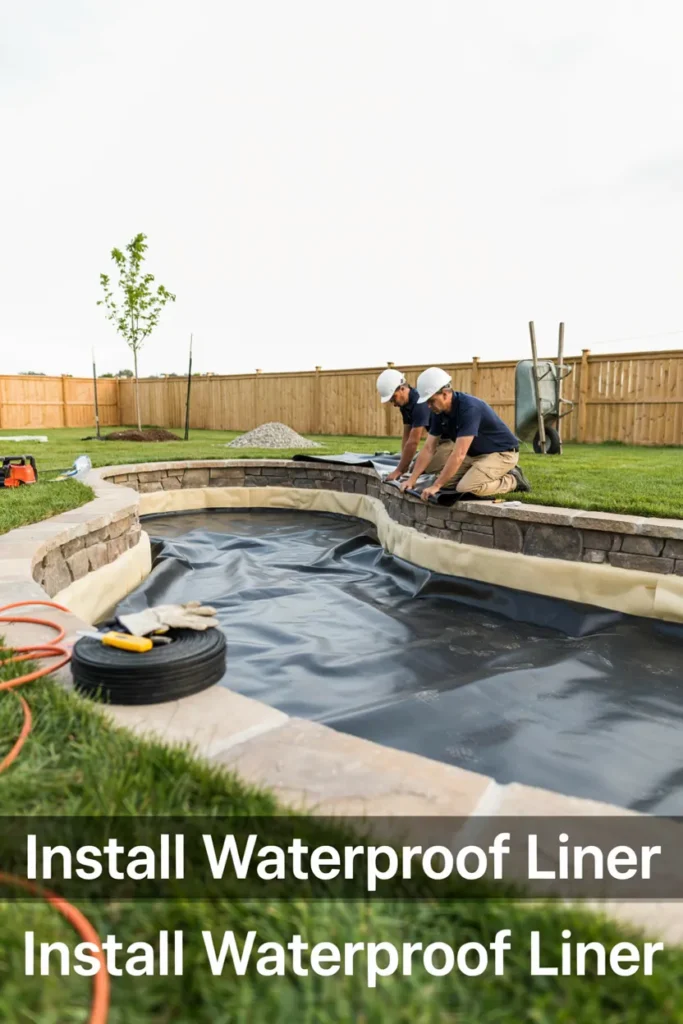
A durable waterproof liner creates the barrier that keeps your natural swimming pool watertight for years. Before laying the liner, remove sharp stones and roots, then install a protective underlayment to prevent punctures. Carefully smooth out wrinkles and secure the edges around the pool. Taking extra time during this stage reduces future repairs while creating a reliable foundation for the remaining construction process.
- Why You’ll Love It: Protects your pool and prevents costly water leaks.
- Best For: Every natural swimming pool project.
- Budget Tip: Invest in a quality EPDM liner for longer-lasting performance.
6. Build Natural Filtration
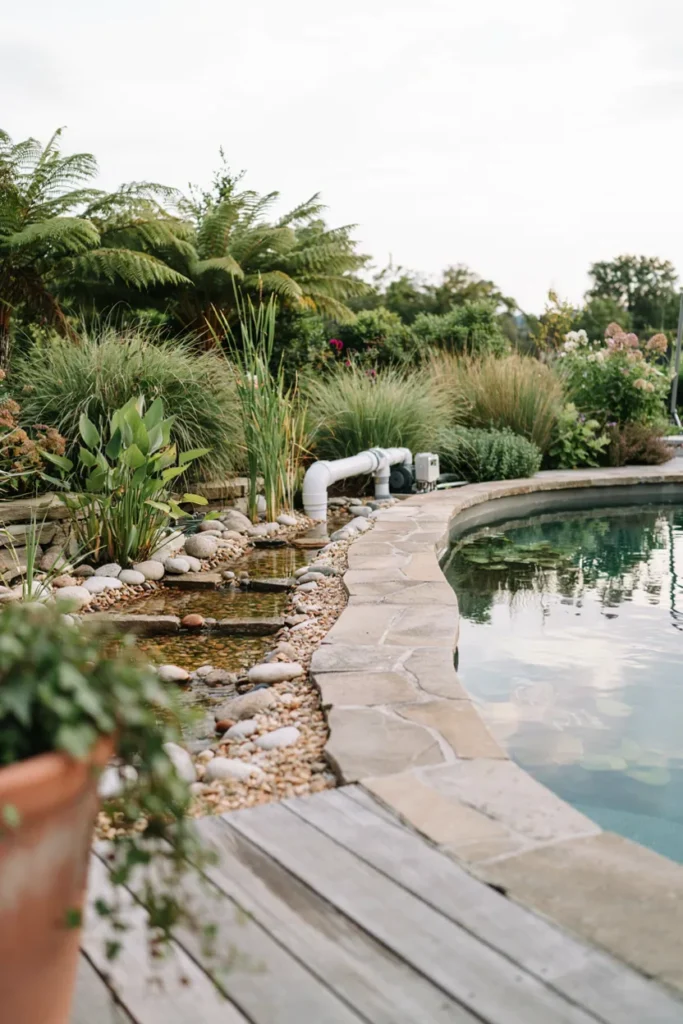
Natural filtration replaces traditional chemical systems by using gravel beds, beneficial bacteria, and aquatic plants to clean the water. Install a biological filter that slowly moves water through the regeneration zone before returning it to the swimming area. This eco-friendly approach creates healthy, balanced water while reducing chemical use. A properly designed filtration system is essential for maintaining clear, refreshing water throughout the swimming season.
- Why You’ll Love It: Keeps the water naturally clean with minimal chemicals.
- Best For: Sustainable and eco-friendly swimming pools.
- Budget Tip: Build your own gravel filter instead of purchasing expensive commercial systems.
7. Add Water Circulation
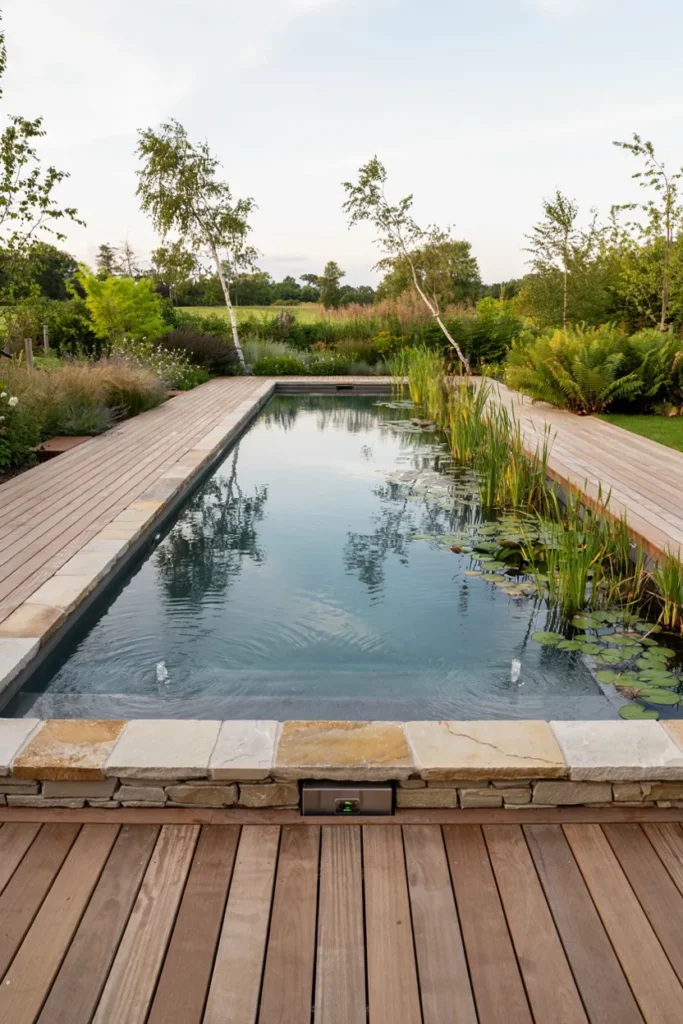
Consistent water circulation keeps your natural pool healthy by preventing stagnant water and supporting biological filtration. Install an energy-efficient pump that gently moves water between the swimming zone and the regeneration area. Hidden plumbing maintains a clean appearance while ensuring even water flow. Proper circulation improves oxygen levels, supports aquatic plants, and helps maintain crystal-clear water with less maintenance.
- Why You’ll Love It: Improves water quality and supports natural filtration.
- Best For: New and existing natural swimming pools.
- Budget Tip: Choose an energy-efficient circulation pump to reduce electricity costs.
8. Place Rocks and Gravel
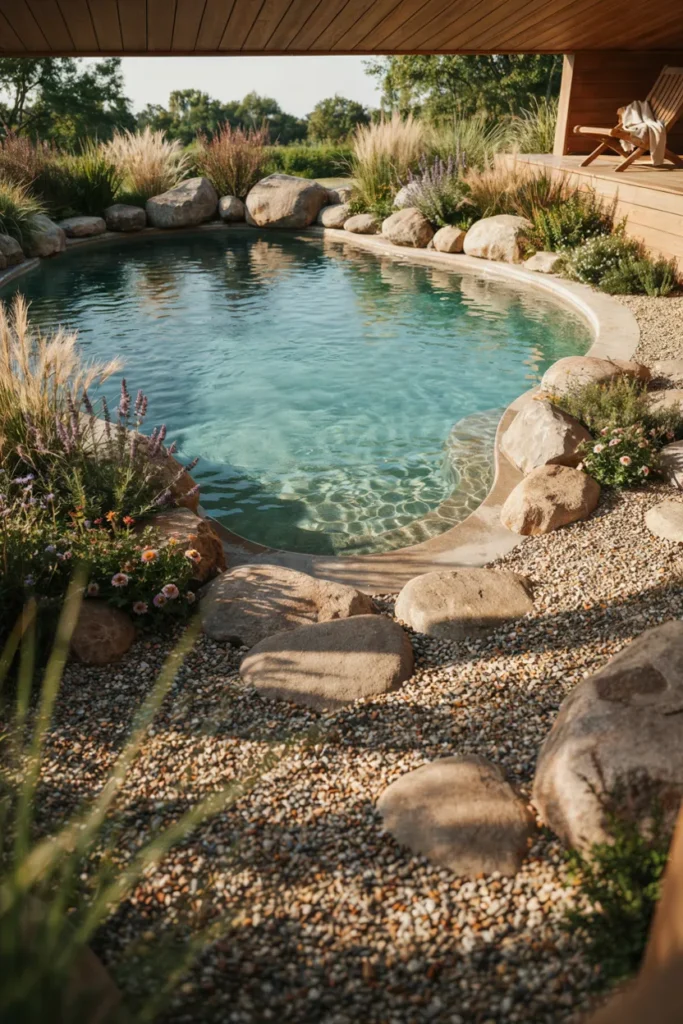
Natural rocks and decorative gravel help your swimming pool blend beautifully into the surrounding landscape. Large boulders create attractive borders while smaller gravel improves drainage and supports beneficial bacteria within the filtration system. Mixing different stone sizes adds texture and depth, making the pool feel more like a natural pond than a traditional backyard swimming pool.
- Why You’ll Love It: Creates an authentic natural appearance with minimal maintenance.
- Best For: Rustic, woodland, and nature-inspired landscapes.
- Budget Tip: Source local river rock to reduce transportation and material costs.
9. Plant Aquatic Vegetation
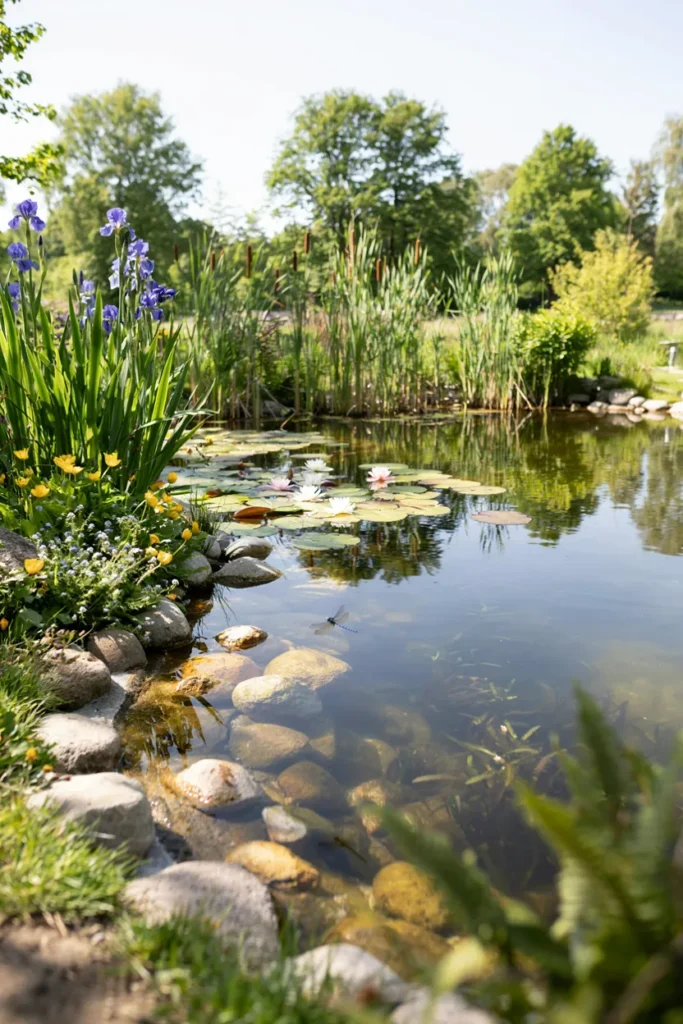
A healthy selection of aquatic plants keeps your natural swimming pool clean while adding color, texture, and movement throughout the landscape. Combine floating plants, submerged oxygenators, and marginal species to create a balanced ecosystem. Native varieties usually perform best because they adapt well to local conditions and require less maintenance. As the plants mature, they naturally improve water clarity while creating a peaceful environment filled with birds, butterflies, and other beneficial wildlife.
- Why You’ll Love It: Creates natural beauty while improving water quality.
- Best For: Eco-friendly gardens and wildlife-friendly landscapes.
- Budget Tip: Start with smaller native plants that will naturally spread over time.
10. Finish with Landscaping
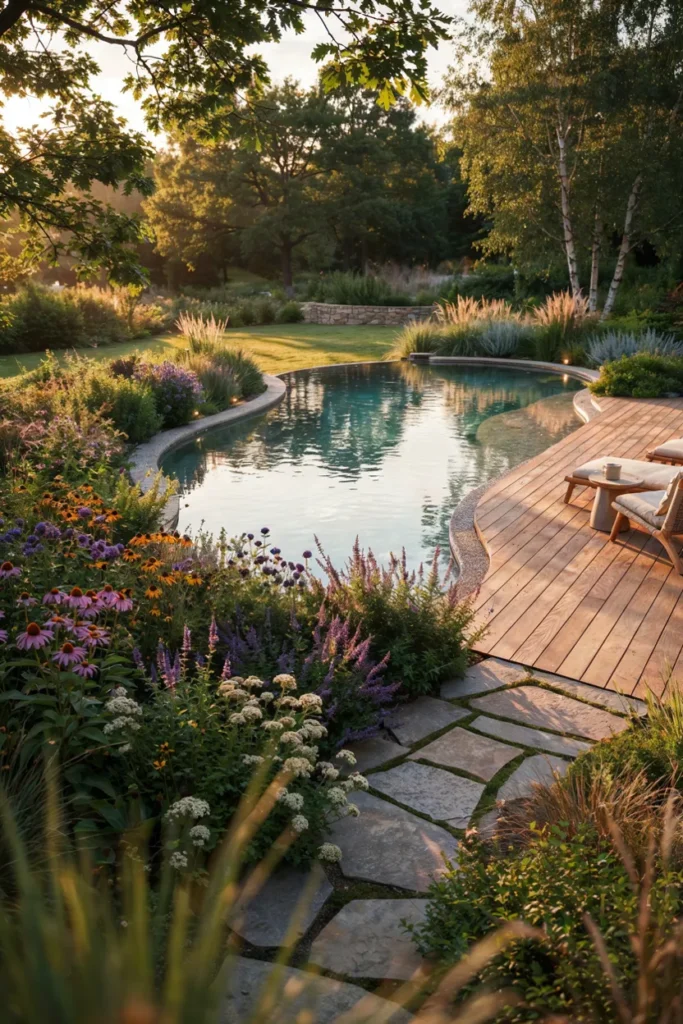
Thoughtful landscaping transforms a completed swimming pool into a beautiful backyard retreat. Surround the pool with native flowers, ornamental grasses, natural stone pathways, and comfortable seating to create inviting outdoor living spaces. Soft landscape lighting extends usability into the evening while highlighting key garden features. Blending the pool into its surroundings makes the entire project feel established, peaceful, and perfectly connected to the natural environment.
- Why You’ll Love It: Completes the project with a polished, natural appearance.
- Best For: Every backyard style, from rustic to modern.
- Budget Tip: Use locally available plants and stone to reduce landscaping expenses.
Conclusion
Building a natural swimming pool takes careful planning, but the result is a refreshing outdoor retreat that blends beautifully with nature. By choosing the right location, installing an effective biological filtration system, adding aquatic plants, and finishing with thoughtful landscaping, you can enjoy crystal-clear water without relying heavily on chemicals. With regular care and seasonal maintenance, your natural swimming pool will become a relaxing backyard destination that offers beauty, sustainability, and years of enjoyable swimming.
FAQs
How does a natural swimming pool stay clean?
Natural swimming pools stay clean through biological filtration, aquatic plants, beneficial bacteria, gravel beds, and continuous water circulation instead of relying primarily on chlorine or other harsh chemicals.
Are natural swimming pools expensive to build?
The total cost depends on the pool size, excavation, filtration system, landscaping, and materials. While the initial investment can be similar to a traditional pool, long-term chemical and maintenance costs are often lower.
Do natural swimming pools require maintenance?
Yes. Regular maintenance includes trimming aquatic plants, removing leaves and debris, checking the circulation system, and monitoring overall water quality. However, many homeowners appreciate the reduced chemical use and the naturally balanced ecosystem.