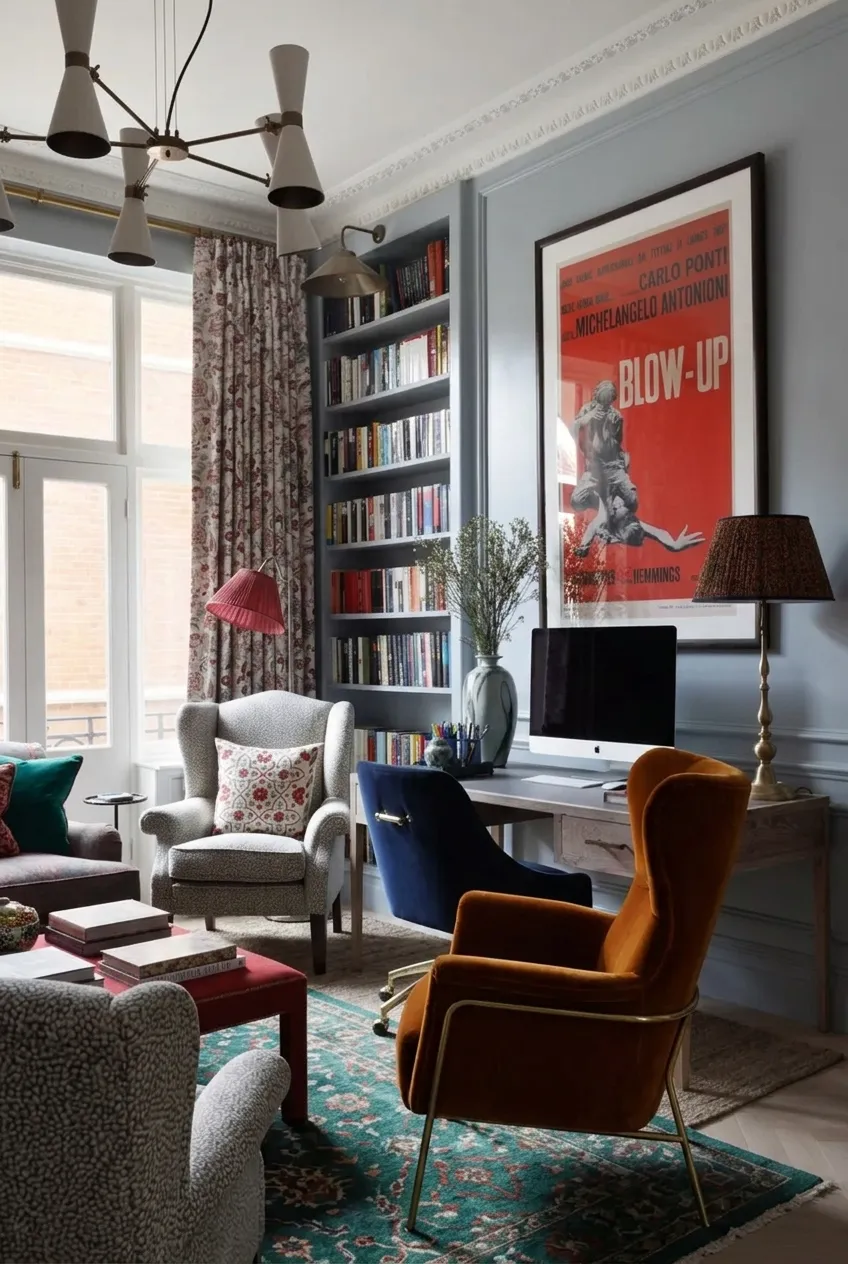
11 Smart Ideas for Adding a Desk to Your Living Room
Working from home doesn’t have to mean sacrificing a whole room for an office. A well-placed desk can slot right into your living room without disrupting the flow or the style of the space. Whether you have a full wall to dedicate or just a quiet corner, there’s a way to make it work beautifully.
In my experience helping friends set up small home offices, the trick is almost always about blending function with the room’s existing style rather than fighting against it. A desk that feels like part of the design, not an obvious add-on, is what makes a living room workspace actually feel good to use every day. Here are 11 smart, stylish ideas for adding a desk to your living room.
Choose a Fold-Away Secretary Desk
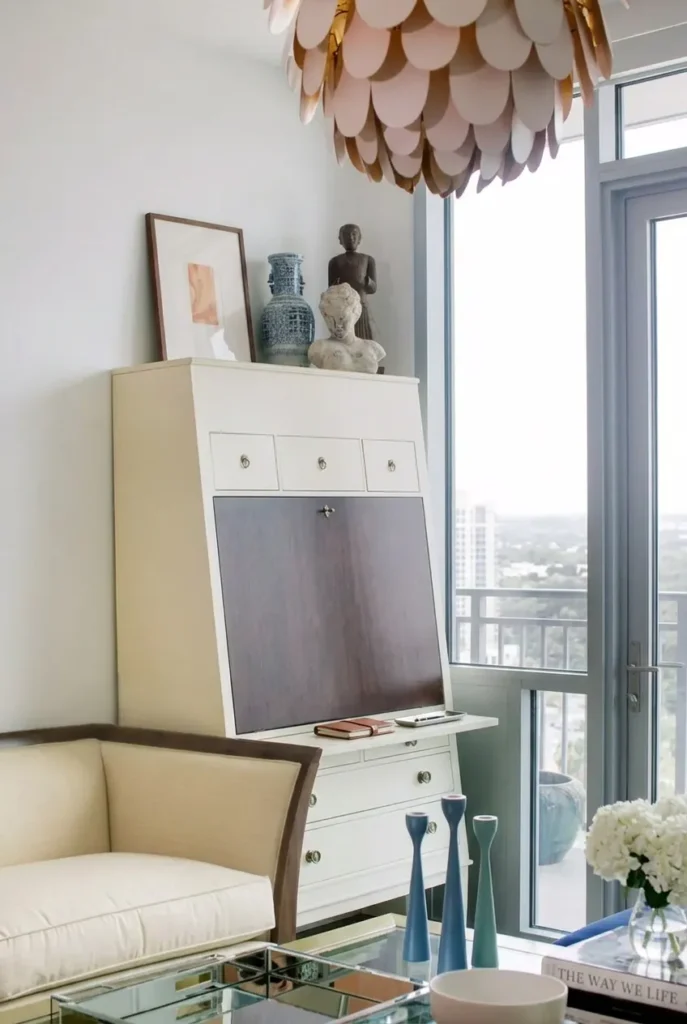
A secretary desk is one of the smartest choices for a living room office because it folds up and disappears when the workday ends. These sleek, vertical pieces take advantage of wall space without eating into your floor plan, and they instantly look tidy once closed.
- Why You’ll Love It: Hides your workspace completely at the end of the day.
- Best For: Small living rooms or anyone who wants a no-clutter look.
- Budget Tip: Vintage secretary desks are often more affordable than new ones and full of character.
Let a Bold Accent Chair Complete the Look
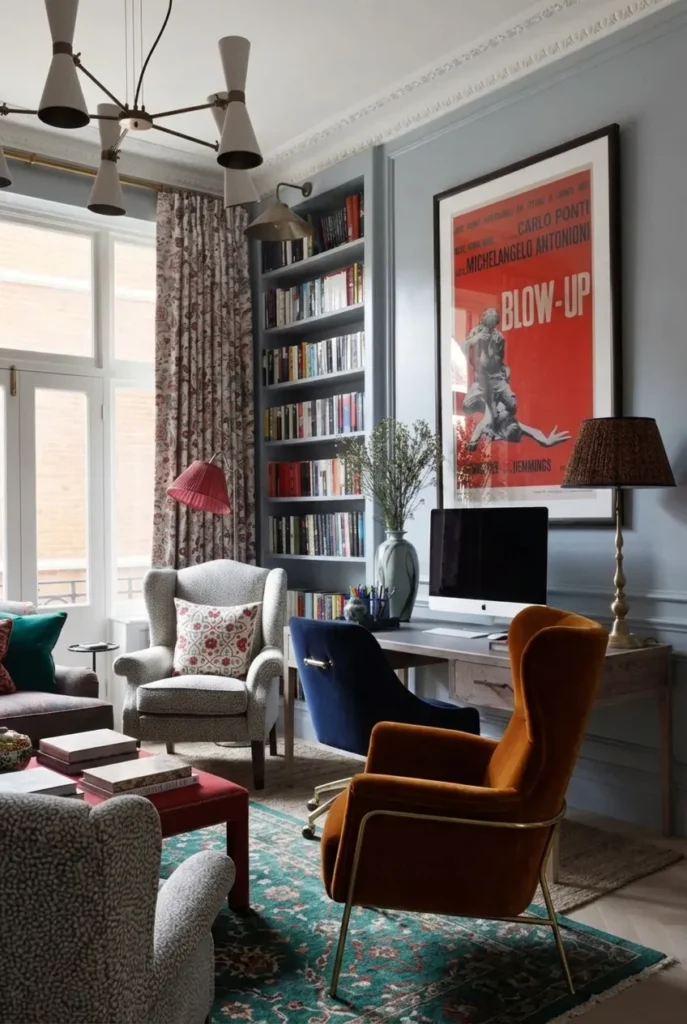
Positioning your desk against the wall opposite your seating area means it can double as a focal point, especially when paired with a bold accent chair. A velvet chair in a color that ties into your existing palette makes the whole setup feel like part of the room’s design, not an office wedged into it.
- Why You’ll Love It: Turns your desk chair into a stylish design feature.
- Best For: Living rooms with an existing bold color scheme.
- Budget Tip: One statement chair can update the whole look without replacing the desk itself.
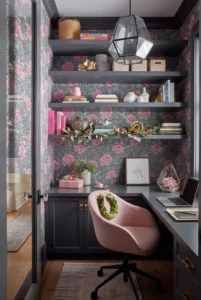
Paint the Desk Wall to Match the Room
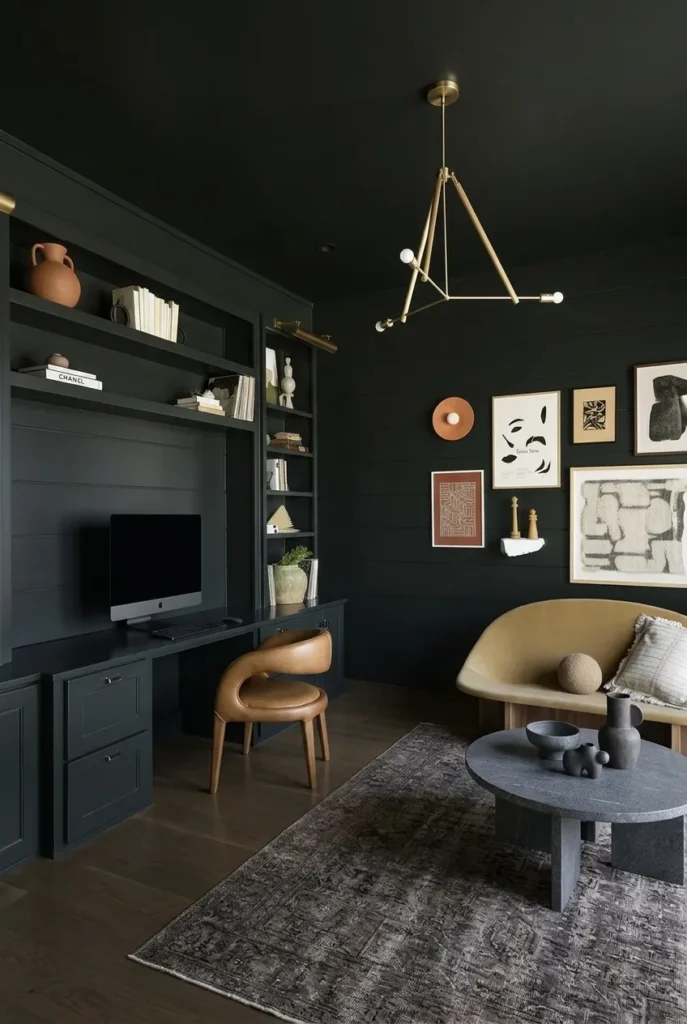
Painting your desk and built-in storage the same dark, moody color as the surrounding wall helps the workspace recede visually, inviting focus rather than distraction. I’ve noticed this trick works especially well in rooms that already lean cozy or dramatic in tone.
- Why You’ll Love It: Creates a calm, focused zone that doesn’t feel separate from the room.
- Best For: Living rooms with dark, moody, or contemporary color palettes.
- Budget Tip: A single can of paint can transform an existing desk and shelving unit.
Choose a Glass-Top Desk by the Window
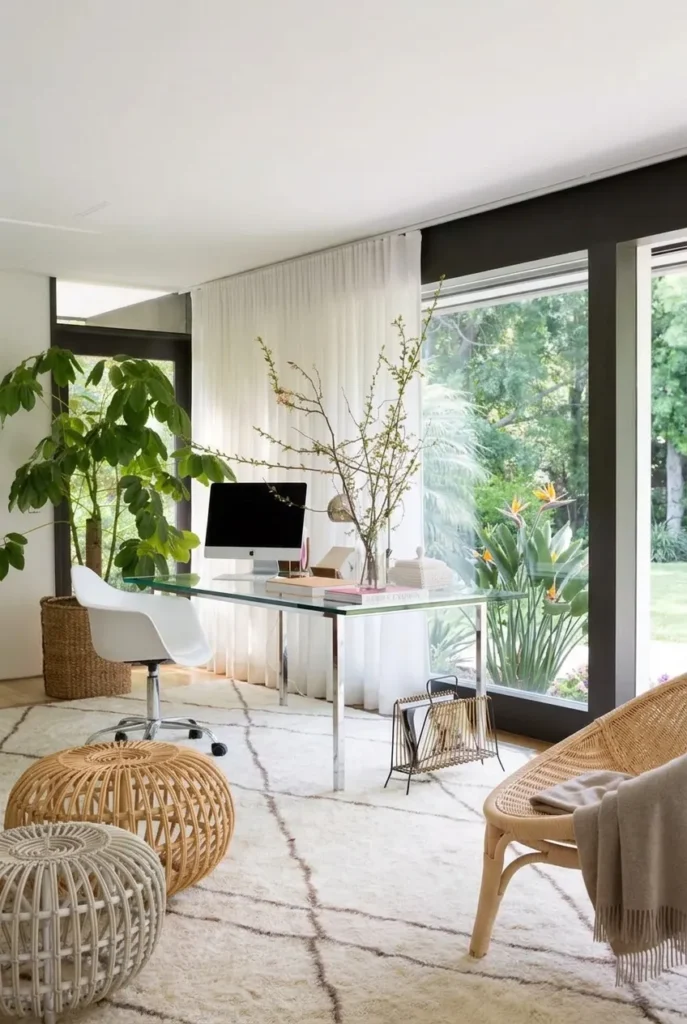
A glass-top desk placed near floor-to-ceiling windows creates a workspace that feels light, open, and almost invisible. This works beautifully in modern or midcentury living rooms where you want the desk to feel more like a design accent than a bulky piece of furniture.
- Why You’ll Love It: Feels open and airy instead of heavy or cluttered.
- Best For: Bright living rooms with large windows.
- Budget Tip: Pair an affordable glass desk with lightweight curtains to control glare.
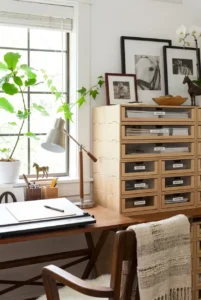
Add a Vintage Midcentury Wall Unit
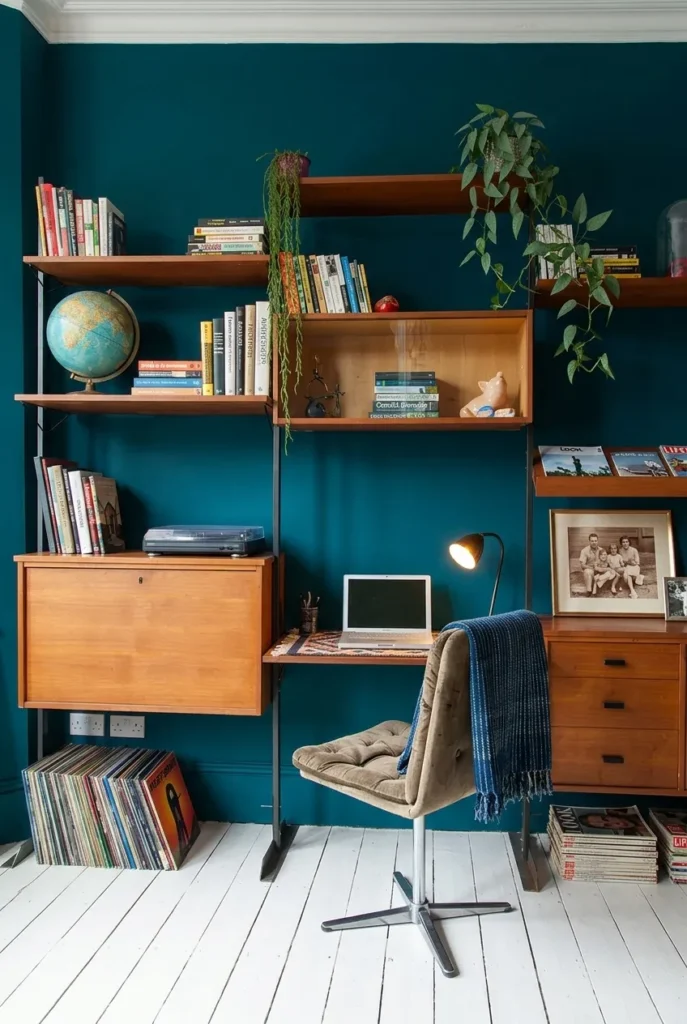
A vintage midcentury modular wall unit brings warm wood tones and built-in storage to your living room workspace while still feeling collected and stylish. Paired with a fresh coat of paint on the surrounding wall, it can become one of the most striking features in the room.
- Why You’ll Love It: Combines storage, style, and workspace in one piece.
- Best For: Living rooms with vintage or eclectic decor styles.
- Budget Tip: Secondhand shops and marketplace listings are great sources for authentic vintage units.
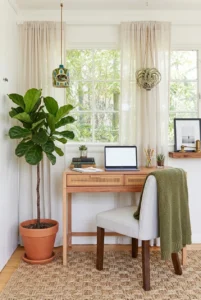
Mount a Small Wall-Hung Desk
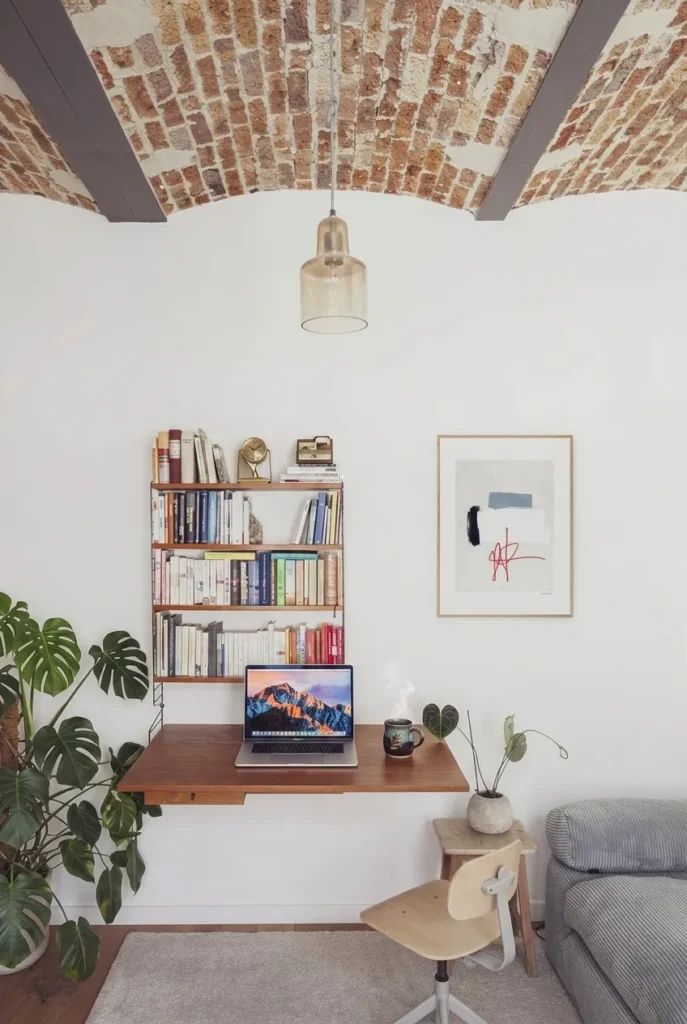
If a full desk feels like too much, a small wall-mounted desk that doubles as a bookshelf offers just enough space for a laptop and a cup of coffee. This is one of the easiest ways to add a workspace without committing significant floor space.
- Why You’ll Love It: Takes up almost no floor space while still being fully functional.
- Best For: Small apartments or living rooms with limited square footage.
- Budget Tip: Wall-mounted desks are typically less expensive than traditional desk and chair sets.
Tuck the Desk Behind the Sofa
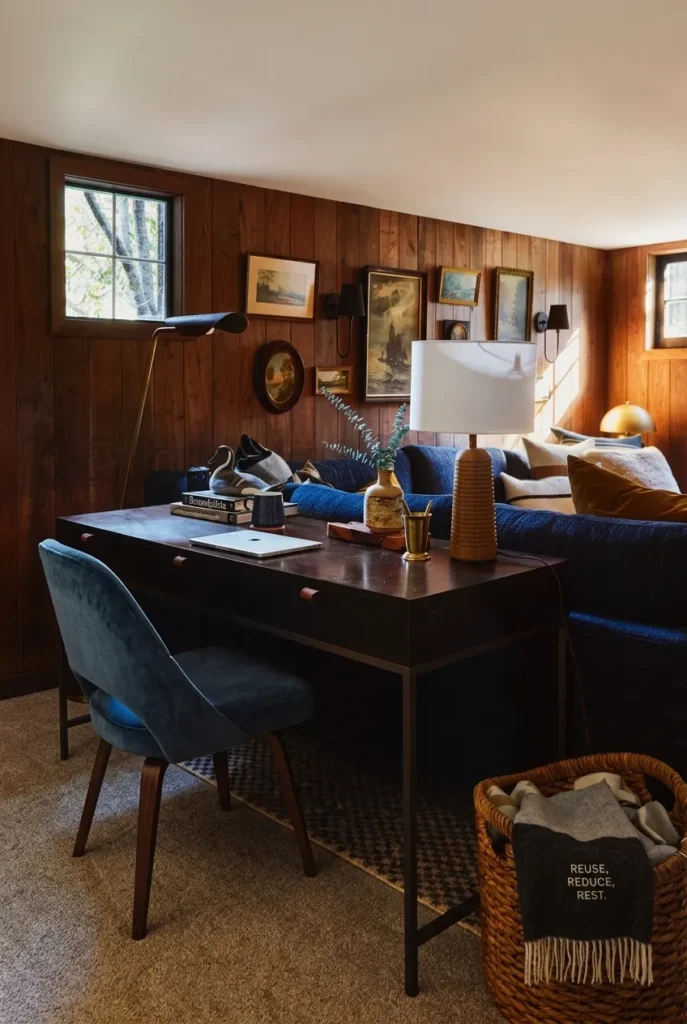
Positioning a desk against the back of a large sectional sofa lets it disappear from view once the workday is done. Matching the desk’s wood tone or chair upholstery to the sofa helps the whole setup feel cohesive rather than like two separate rooms competing for attention.
- Why You’ll Love It: Creates a workspace that blends seamlessly into your seating area.
- Best For: Larger living rooms or family rooms with a sectional sofa.
- Budget Tip: Reuse an existing side chair as your desk chair to save on furniture costs.
Slot a Sleek Desk Between Furniture
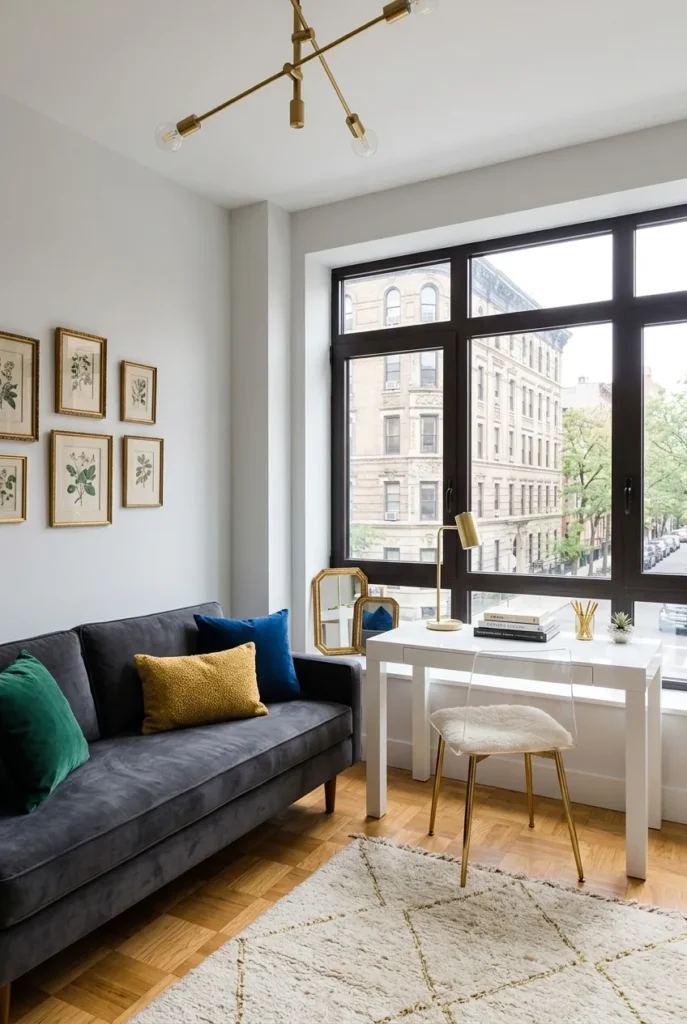
A glossy, clean-lined desk fitted into the gap between your sofa and a window can practically vanish into the room when it’s not in use. Adding gold-toned accents through the lighting or frames nearby ties the small workspace into the rest of the room’s finishes.
- Why You’ll Love It: Makes use of awkward gaps without adding visual bulk.
- Best For: City apartments or smaller living rooms needing every inch to count.
- Budget Tip: A simple white desk is often the most affordable way to achieve this blended look.
Define the Desk Nook with an Accent Wall
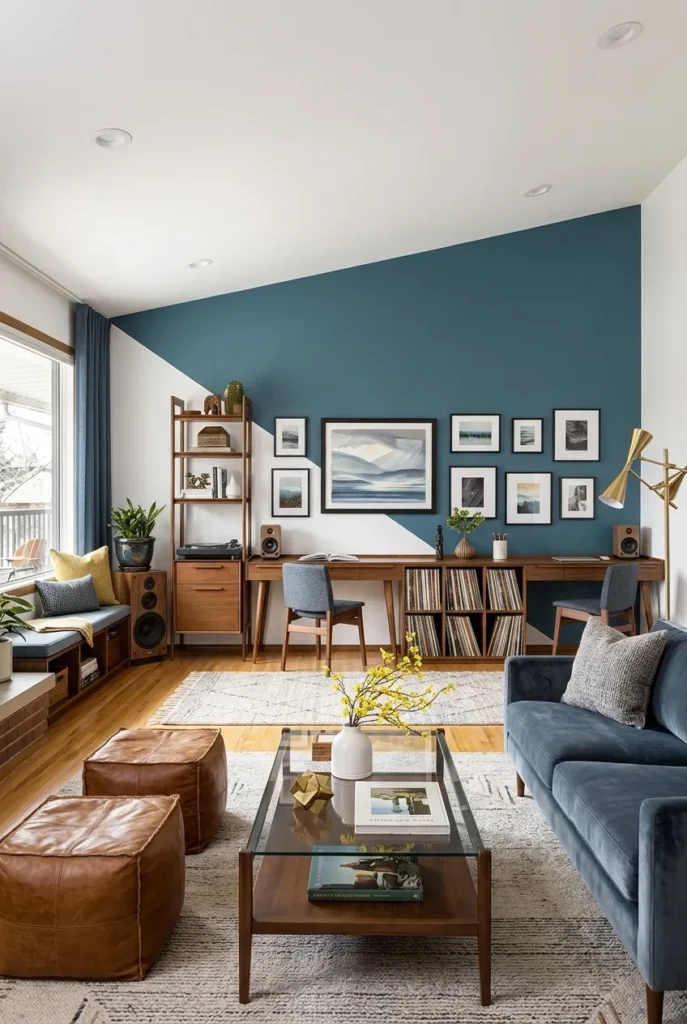
Pairing your desk and bookshelf with a painted accent wall behind it gives the workspace a defined sense of place within the larger room. This is also a great opportunity to display a hobby collection, like vinyl records, that can be enjoyed during work hours and beyond.
- Why You’ll Love It: Gives your workspace its own identity within an open room.
- Best For: Living rooms where the desk needs a clear visual boundary.
- Budget Tip: Paint is one of the cheapest ways to define a zone without adding furniture.
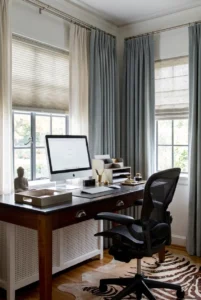
Position the Desk to Face the Room
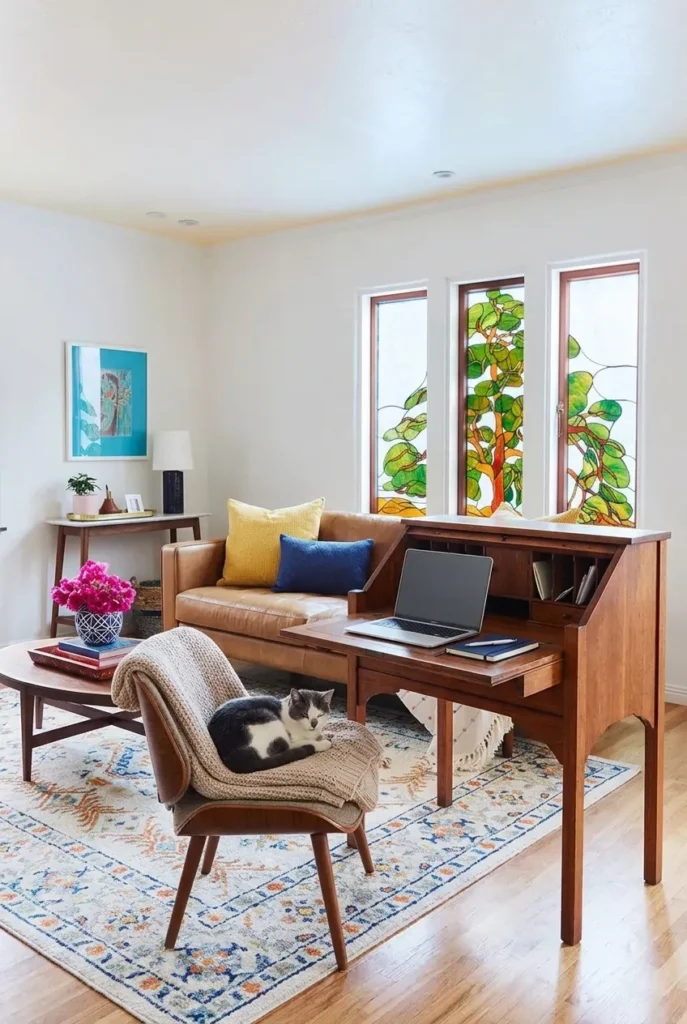
Rather than pushing your desk up against a window, try angling it to face inward toward the room instead. This reduces glare on your screen and distraction from outside views, while also letting you see who’s entering the room instead of being startled from behind.
- Why You’ll Love It: Reduces glare and distraction while keeping you aware of the room.
- Best For: Anyone who finds window views too distracting while working.
- Budget Tip: This is a free layout change, just rearrange the furniture you already have.
Create a Desk Nook Under the Stairs
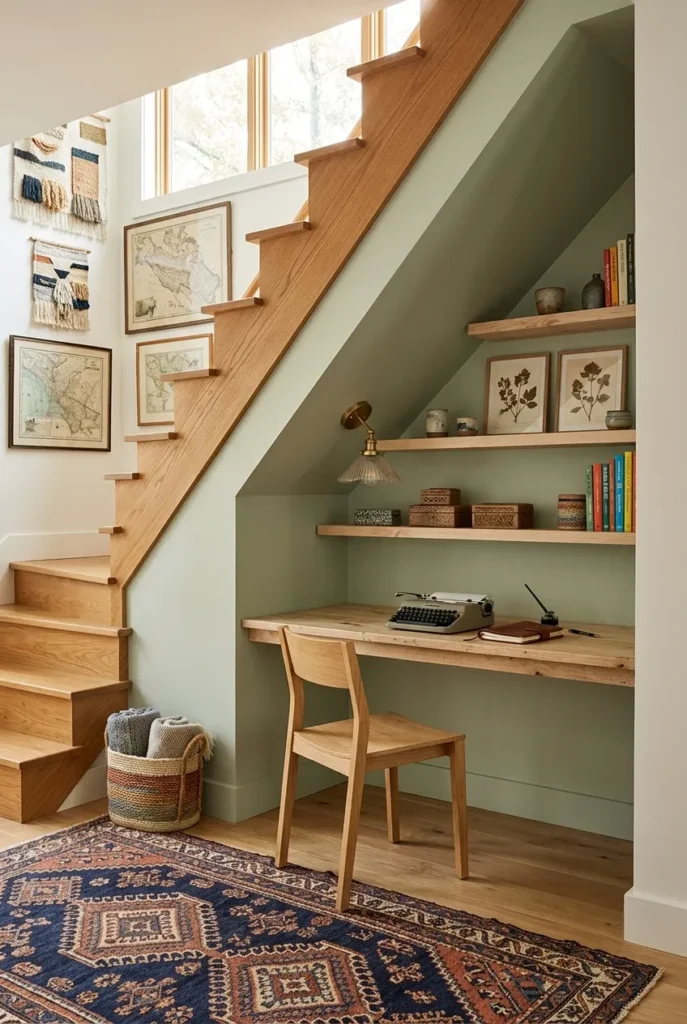
If your living room includes a staircase, the awkward space underneath it can become a surprisingly functional desk nook. Adding a small light fixture and a few floating shelves makes this often-wasted area feel purposeful and cozy.
- Why You’ll Love It: Makes use of a space that would otherwise go unused.
- Best For: Homes with an open staircase in or near the living room.
- Budget Tip: A custom-fit desk isn’t required, a simple table can work just as well.
Conclusion
Adding a desk to your living room doesn’t mean giving up on style or comfort, it just means choosing the right piece and placement for your space. Whether you’re working with a spacious layout or a small apartment corner, these 11 ideas show that a home workspace can feel like a natural, stylish part of your living room rather than an obvious addition. Pick the approach that fits your space best, and enjoy a workspace you’ll actually want to sit down at every day.
Frequently Asked Questions
How do I hide a desk in a small living room?
Fold-away secretary desks, wall-mounted desks, and console tables are all great options for hiding a workspace in a small living room. In my experience, choosing furniture that serves double duty, like a console table that becomes a desk, is one of the most effective ways to save space without sacrificing function.
Where is the best place to put a desk in an open-concept living room?
Corners, the space behind a sofa, or an area near a window that faces inward tend to work best in open-concept living rooms, since they offer a natural boundary without requiring a separate room. Adding a room divider or open shelving unit can further define the workspace if you want a clearer sense of separation.
How can I make my living room desk feel less like an office?
Matching the desk’s finish to your existing furniture, using a stylish chair instead of a typical office chair, and styling the surrounding area with books, plants, or art all help a desk blend into the living room rather than standing out as an office. I’ve seen this work particularly well when the desk shares a color palette with the rest of the room’s decor.