
11 Home Office Storage & Organization Ideas for a Stylish, Clutter-Free Workspace
Keeping a home office organized can make everyday work feel much easier. From paperwork and office supplies to electronics and books, smart storage helps everything stay within reach without allowing clutter to take over your workspace. Whether you have a dedicated office, a shared room, or a tiny desk tucked into an unused corner, the right storage setup can make a noticeable difference.
These home office storage ideas show how to use shelves, drawers, baskets, cabinets, and even overlooked spaces in practical ways. I’ve noticed that the most functional workspaces are not necessarily the largest ones. A simple storage system that gives every item a designated place can make a small office feel calmer, cleaner, and easier to work in.
Custom Storage for Office Supplies
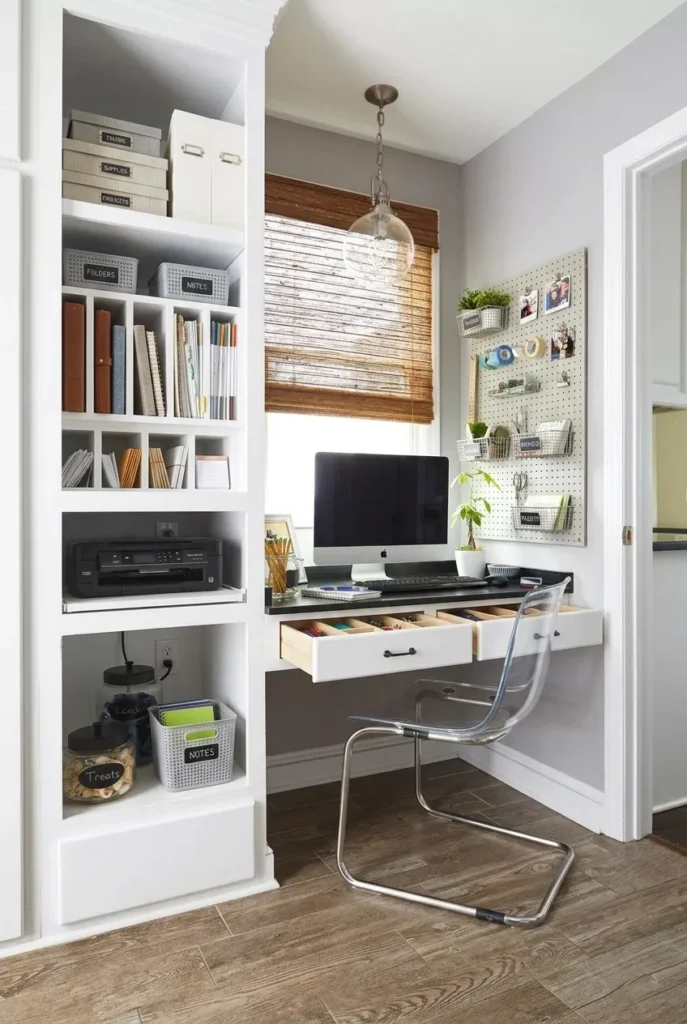
Make a compact home office more efficient with shelving designed to accommodate different types of supplies. Smaller compartments are useful for folders, notebooks, envelopes, and documents, while wider shelves can hold storage boxes and larger office essentials. Keep the printer close to a power source and use desk drawers for smaller items that you reach for regularly.
- Why You’ll Love It: Gives every office essential a dedicated place while keeping supplies easy to reach.
- Best For: Small home offices and built-in workspaces.
- Budget Tip: Combine inexpensive shelves with labeled storage boxes instead of investing in fully custom cabinetry.
Shared Home Office Storage for Two
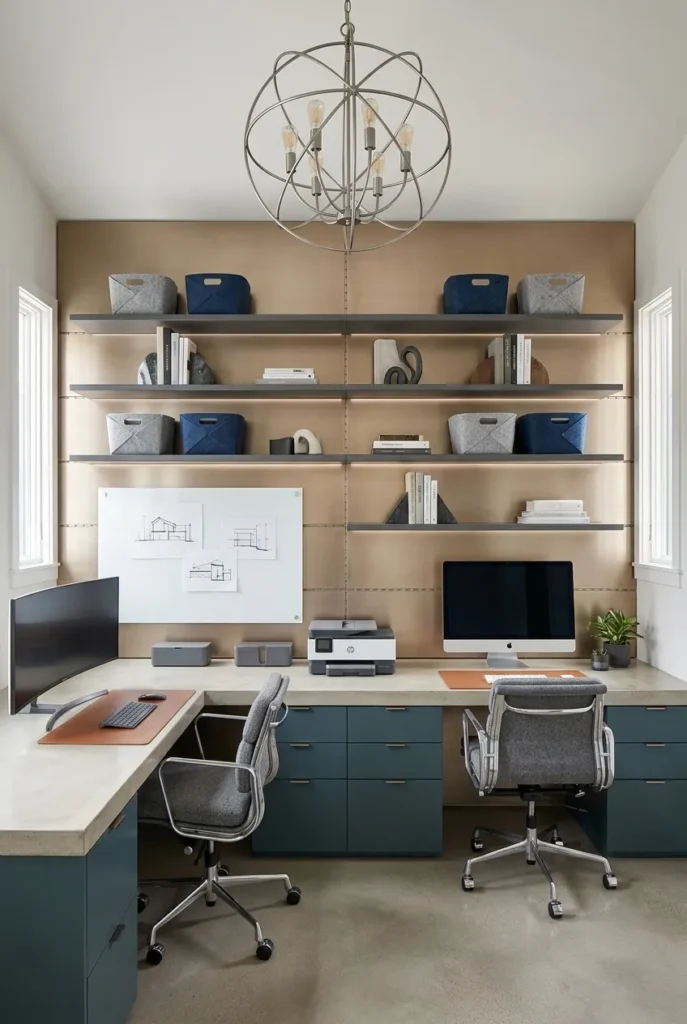
When two people work from home, an efficient storage system can prevent the workspace from becoming crowded. A long desk or tabletop can provide separate work zones, while filing cabinets underneath offer convenient space for documents. Install matching shelves above the desks to create additional room for books, baskets, and everyday supplies.
- Why You’ll Love It: Gives two people room to work while keeping shared supplies organized.
- Best For: Couples, siblings, and shared home offices.
- Budget Tip: Use one long countertop with separate drawer units underneath to create an affordable double workstation.
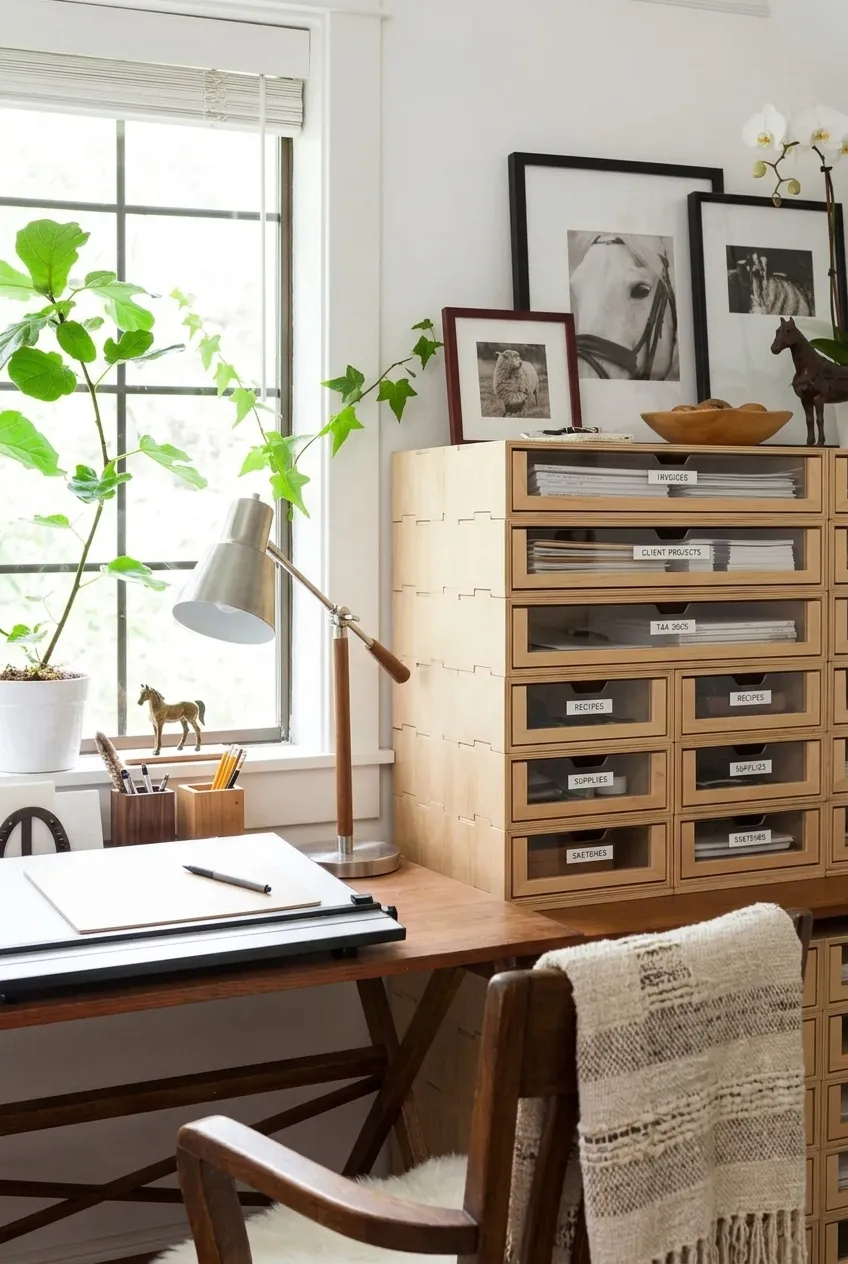
Stackable Drawer Organization
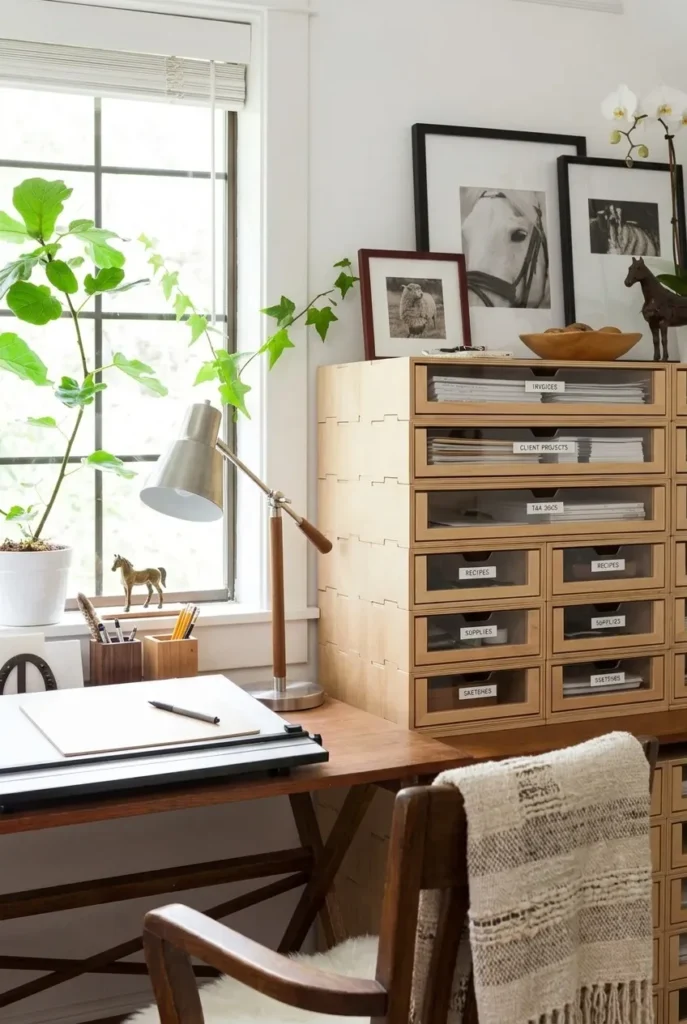
Paperwork can quickly pile up, even when most work is handled digitally. Instead of relying on a traditional filing cabinet, try stackable drawers that can be arranged vertically. Choose a simple finish that blends with your office furniture and label each drawer according to its contents.
- Why You’ll Love It: Keeps paperwork contained without the bulk of a traditional filing cabinet.
- Best For: Small offices and people who regularly handle printed documents.
- Budget Tip: Look for stackable plastic or wooden drawer organizers that can grow with your storage needs.
Organized Desktop Accessories
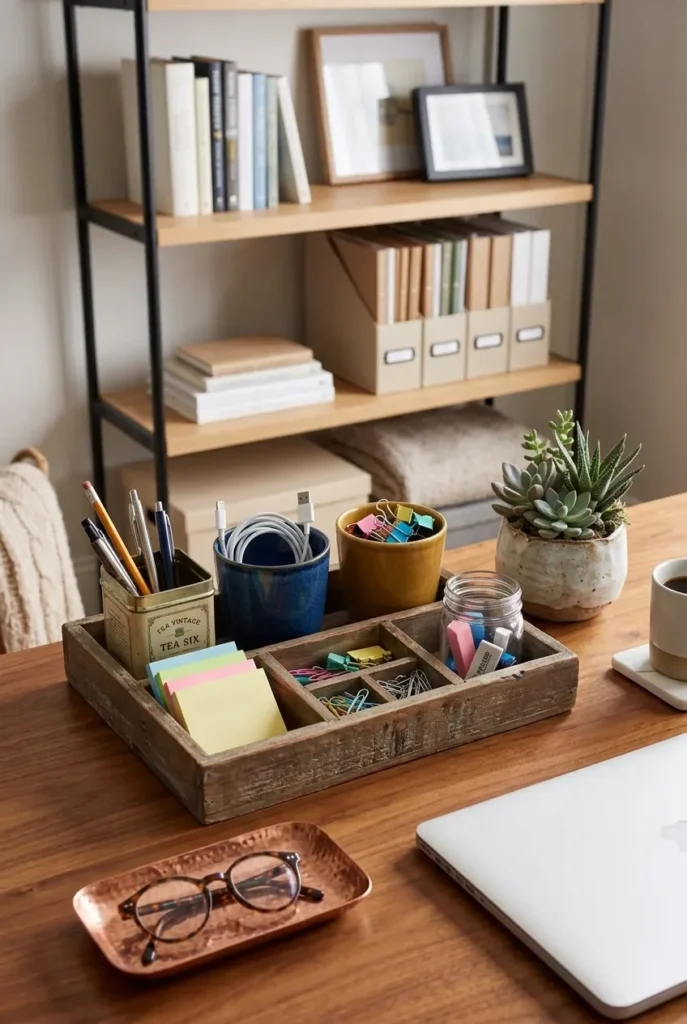
Keep the surface of your desk clear by grouping small supplies in trays, cups, and desktop caddies. Pens, pencils, paper clips, sticky notes, chargers, and other frequently used items can each have an assigned location. This simple approach makes it easier to find what you need without digging through drawers.
- Why You’ll Love It: Reduces small-item clutter and keeps everyday supplies within easy reach.
- Best For: Busy desks and compact workspaces.
- Budget Tip: Repurpose small containers, jars, or kitchen organizers as inexpensive desktop storage.
Floating Desk and Overhead Shelves
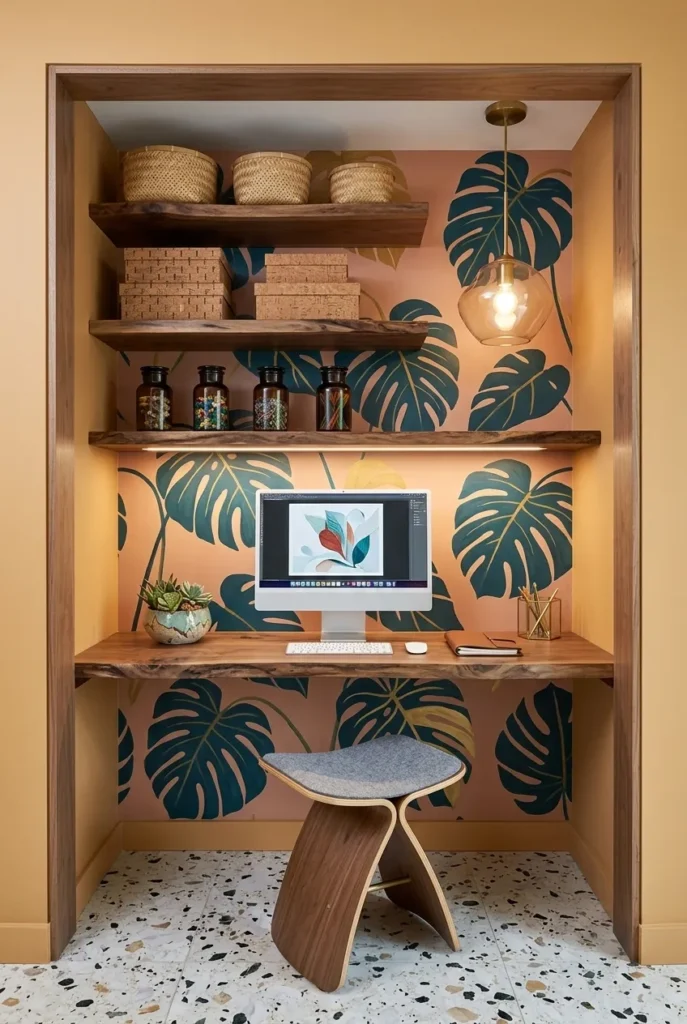
An unused closet or narrow wall can become a practical office with a floating desk and shelves mounted above it. Use the vertical area for baskets, boxes, notebooks, and paperwork while keeping the desk surface reserved for active work. A colorful backdrop or wallpaper can also give the small workspace more personality.
- Why You’ll Love It: Creates a complete workspace without using much floor space.
- Best For: Closets, homework stations, and small home offices.
- Budget Tip: Install a simple floating shelf and wall-mounted desktop instead of purchasing bulky office furniture.
Bookshelf as a Workspace Divider
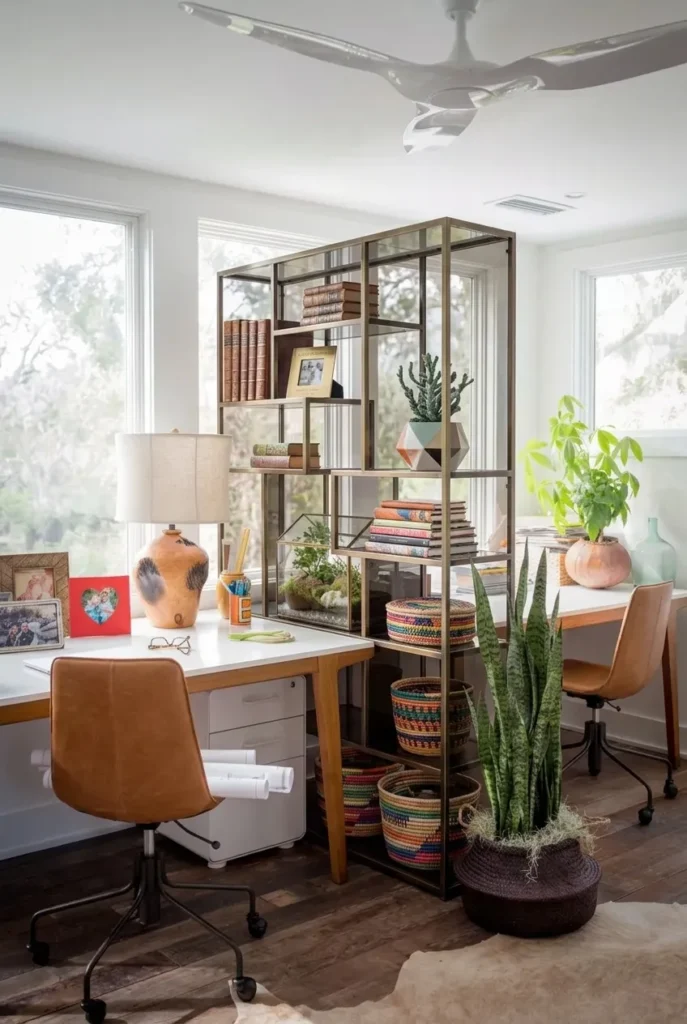
A bookshelf can do double duty when a home office needs to share a room with another person or activity. Place an open shelving unit between two desks or work areas to create a subtle visual boundary. Use the shelves for books, baskets, plants, framed photos, and other decorative pieces.
- Why You’ll Love It: Separates work areas while adding useful storage.
- Best For: Shared offices, family workspaces, and open-plan rooms.
- Budget Tip: Choose an affordable open bookcase that can be moved or reused in another room later.
Smart Storage in an Alcove Office
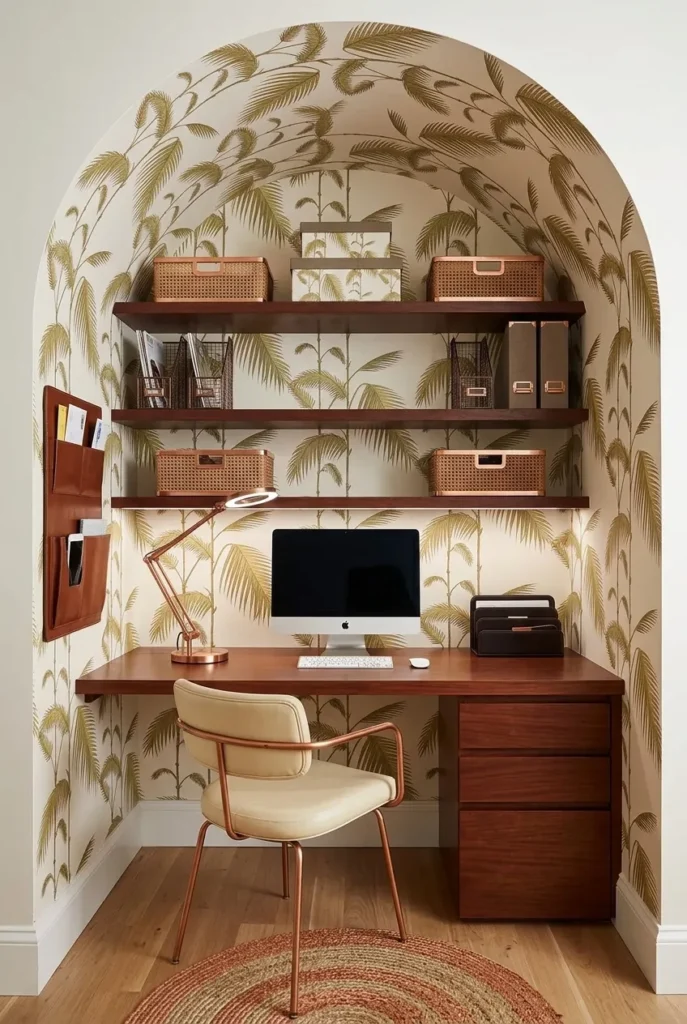
A recessed nook can become an efficient home office when every inch is used thoughtfully. Choose a compact desk with drawers for frequently used supplies and add floating shelves above it. Baskets, stacking boxes, magazine holders, and document organizers can keep paperwork under control without filling the desktop.
- Why You’ll Love It: Turns an unused architectural nook into a dedicated work zone.
- Best For: Arched alcoves, recessed walls, and awkward corners.
- Budget Tip: Use matching baskets and inexpensive floating shelves to give the area a coordinated appearance.
Repurposed Cubby Storage
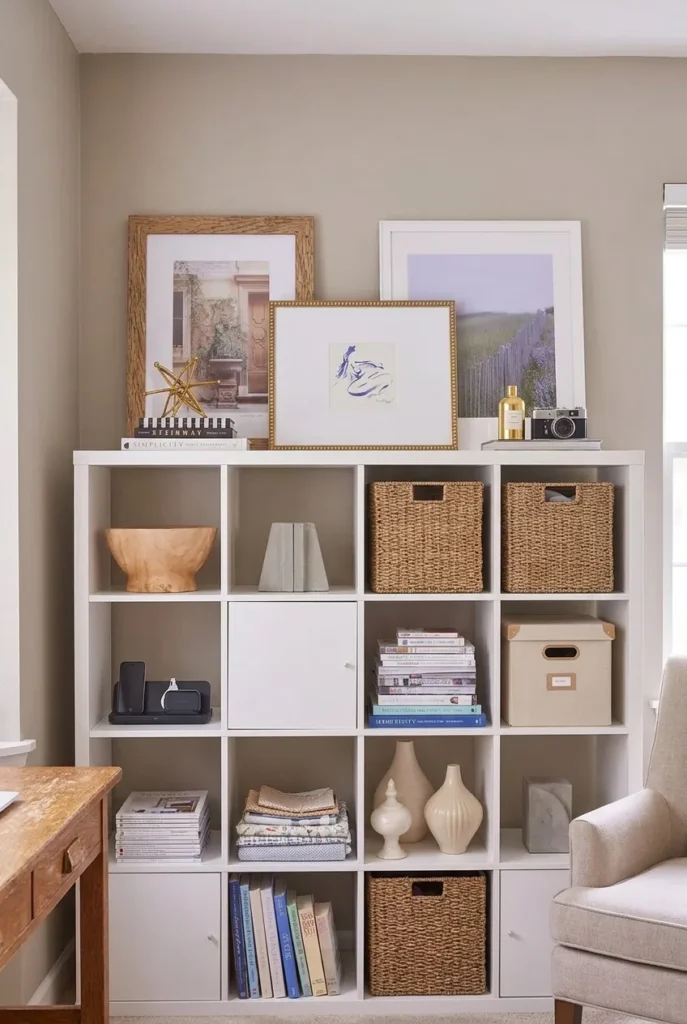
Cube storage units are surprisingly useful in a home office. A unit that once held toys or bedroom accessories can be reused for books, files, craft supplies, electronics, and baskets. Leave a few compartments open for decorative objects to prevent the storage wall from looking too crowded.
- Why You’ll Love It: Offers flexible compartments for both storage and display.
- Best For: Family offices, craft rooms, and budget-friendly workspaces.
- Budget Tip: Repurpose an existing cube organizer before buying new office furniture.
Floor-to-Ceiling Office Shelving
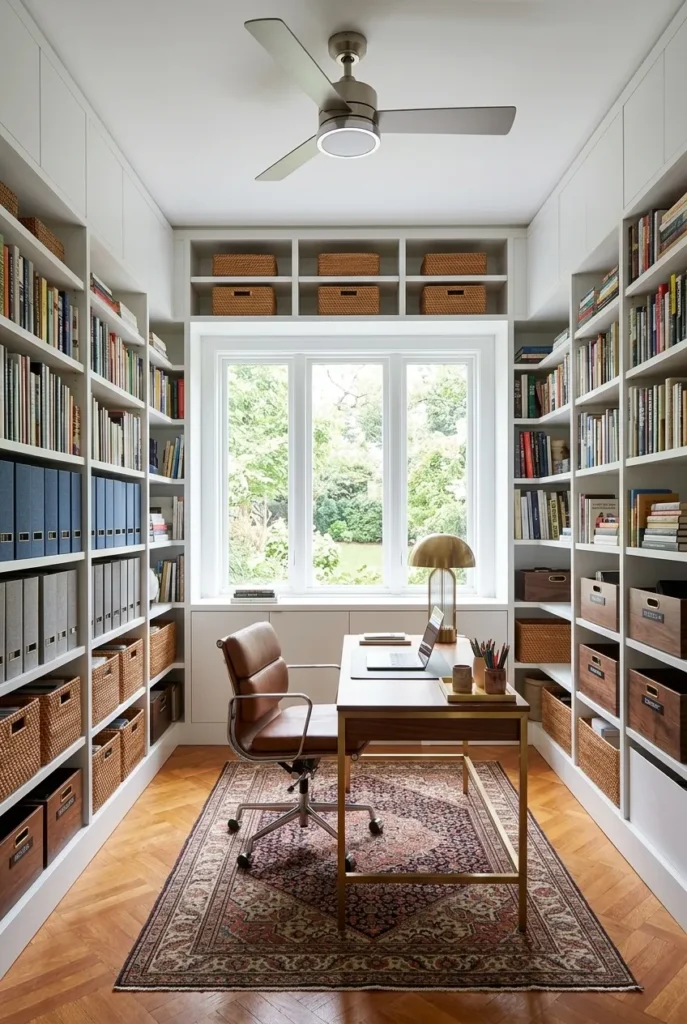
If your work requires a large collection of books, files, supplies, or equipment, use the walls for storage instead of filling the floor with furniture. Floor-to-ceiling shelving provides generous capacity while leaving the central area open for a desk and chair. Matching baskets and containers can help maintain a clean appearance.
- Why You’ll Love It: Provides substantial storage while preserving valuable floor space.
- Best For: Dedicated home offices, readers, and supply-heavy workspaces.
- Budget Tip: Combine tall bookcases with matching storage bins to create a built-in-inspired look.
Maximized Cloffice Storage
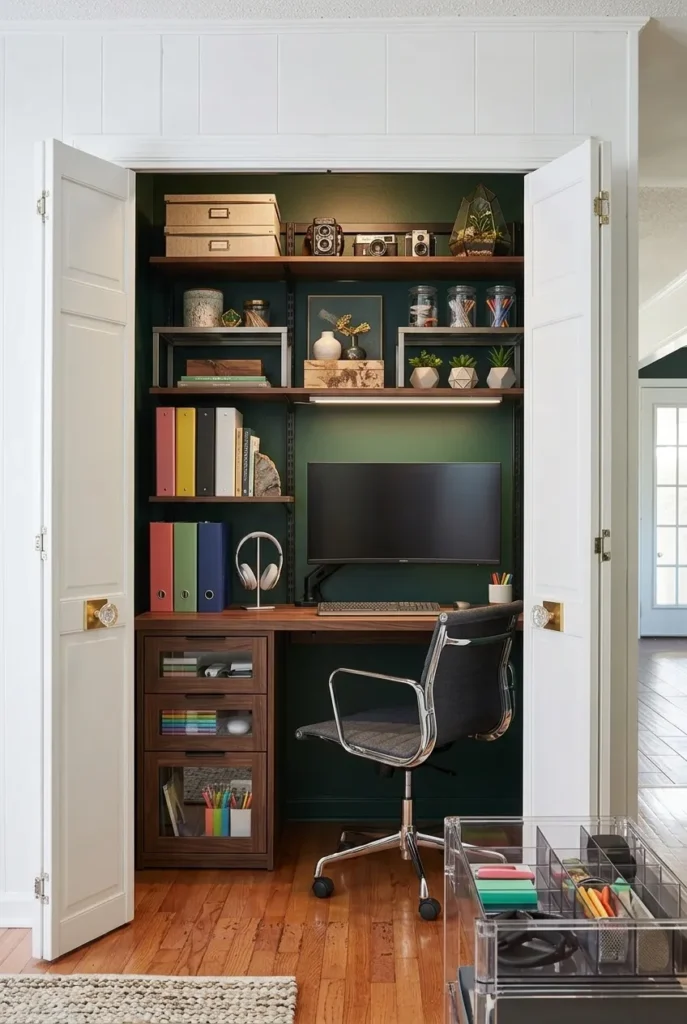
A closet can become a surprisingly functional home office when storage is planned vertically. Install a compact desk with drawers and use the wall above it for shelves. Store everyday supplies at eye level and place less frequently used items higher up to make the limited space easier to manage.
- Why You’ll Love It: Creates a dedicated office even when you do not have an extra room.
- Best For: Small homes, apartments, and unused closets.
- Budget Tip: Combine a basic desktop with drawer units and inexpensive wall shelves for a practical cloffice setup.
Minimalist Home Office Storage
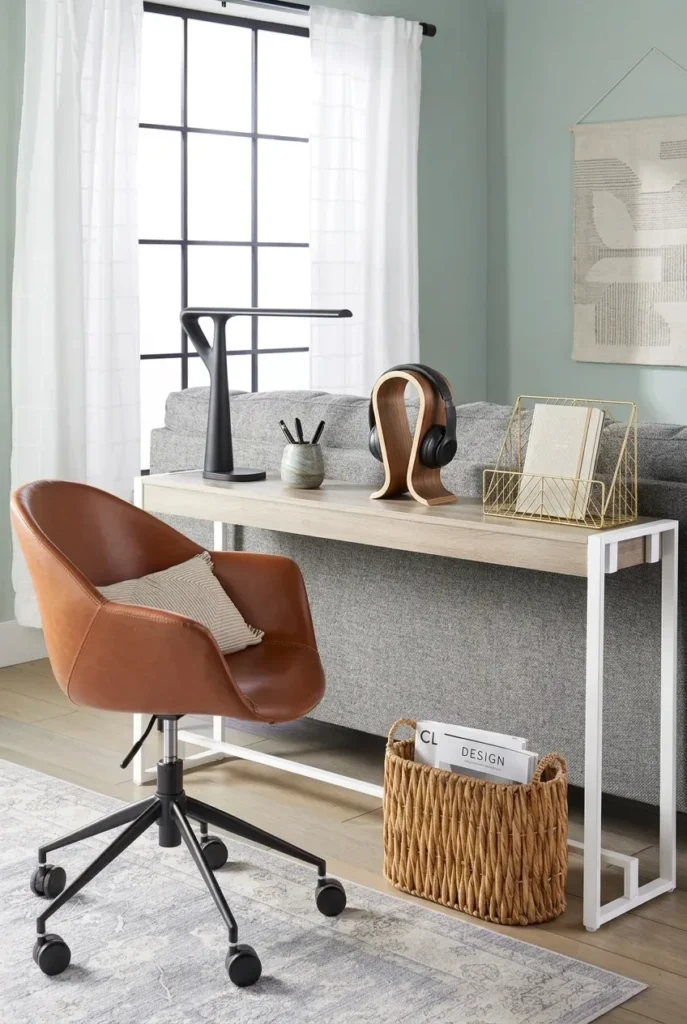
A minimalist workspace does not need to be completely empty. The goal is to keep only the items you use regularly on or near the desk. A slim console, small organizer, pencil holder, and headphone stand can provide enough storage for everyday essentials while keeping the room visually calm.
- Why You’ll Love It: Creates a clean workspace without sacrificing useful storage.
- Best For: Small offices, living room workstations, and minimalist interiors.
- Budget Tip: Choose multifunctional furniture and reuse decorative containers to keep the setup simple and affordable.
Conclusion
A well-organized home office does not require a huge room or expensive built-in furniture. Shelves, baskets, drawers, cubbies, and vertical storage can make even a compact workspace easier to manage. The key is to choose storage based on the supplies you actually use and give frequently handled items a convenient home.
Whether you are organizing a shared office, creating a cloffice, or simply trying to clear a crowded desk, small changes can make the workspace feel more comfortable and productive. Start with the area that causes the most clutter, choose one practical storage solution, and build from there.
FAQs
How can I add storage to a small home office?
Use vertical wall space with floating shelves, tall bookcases, pegboards, and wall-mounted cabinets. A floating desk can also free up floor space while providing room underneath for baskets or drawer units.
What should I store in a home office?
Common office storage items include paperwork, notebooks, writing supplies, electronics, chargers, books, printer supplies, files, and small equipment. Keep frequently used items close to the desk and place occasional-use items in higher or less accessible storage.
How do I keep my home office from becoming cluttered?
Give each type of item a designated storage location and return supplies after use. Closed cabinets and labeled baskets are helpful for hiding visual clutter, while a small desktop organizer can keep frequently used items under control.